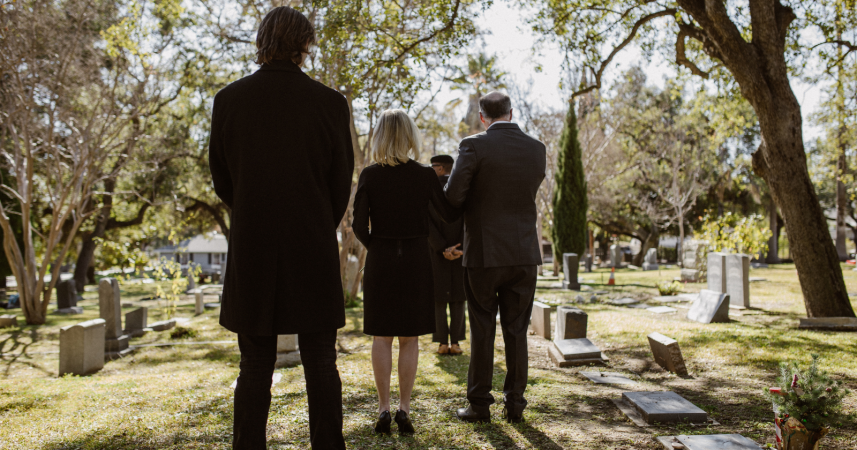
In hushed tones, a funeral director revealed the heartbreaking truth about services where ninety-three years of life barely fills four chairs — and why the silence in that room speaks louder than any eulogy ever could.

Add VegOut to your Google News feed. 
That funeral director's words stopped me cold.
We were standing in the hallway after my neighbor's service, and he said it so quietly, almost like he was confessing something he'd never told anyone before. "You know what's worse than the services for young people who died too soon? The ones where someone lives nine decades and barely fills the front row."
He went on to describe those sparse gatherings where everyone avoids eye contact, where the silence feels heavier than grief, where the unspoken question hangs in the air like incense: How does someone live so long and leave so little trace in other hearts?
I've thought about that conversation every day since. Because the truth he was dancing around is this: we're all terrified of dying alone, but what we should really fear is living in a way that ensures we will.
The myth of automatic connection
We tell ourselves comfortable lies about relationships. That family bonds are unbreakable. That old friendships never really die. That if we're good people, somehow connection will just happen naturally, like moss growing on a stone.
But connection requires intention. It requires showing up when it's inconvenient, reaching out when you're tired, and most importantly, being vulnerable enough to need others before they need you.
After my divorce, I watched my social circle shrink like wool in hot water. Couples who'd invited us to dinner parties suddenly didn't know what to do with just me. The phone stopped ringing. The invitations dried up. I told myself they were busy, that it wasn't personal. But loneliness doesn't care about your rationalizations.
The art of staying visible
Have you ever noticed how easy it is to disappear? You skip one book club meeting, then two. You send regrets to a birthday party. You text instead of calling, then eventually stop texting too. Before you know it, you're a ghost in your own life, present but not really there.
When my second husband was diagnosed with Parkinson's, I almost made this mistake. Those seven years of caregiving could have swallowed me whole. There were days when leaving the house felt impossible, when the weight of watching him fade made me want to fade too.
But I forced myself to stay visible. I kept going to church, even when I showed up with red eyes and uncombed hair. I maintained my weekly coffee date with a friend, even if it meant hiring someone to sit with him for an hour. These weren't acts of selfishness; they were acts of survival.
Being the friend who shows up
There's a difference between the friend who texts "thinking of you" and the friend who appears at your door with soup. Both matter, but only one leaves footprints in your life.
I learned this distinction the hard way. For years, I was a champion texter, a sender of cards, a keeper-upper via social media. I thought I was maintaining my friendships. But when I joined a widow's support group after losing my husband, I discovered what real showing up looks like.
These women didn't just send condolences; they came to the house. They didn't just offer help; they showed up and did the dishes. They taught me that presence is a language all its own, one that says "you matter" more eloquently than any words ever could.
Now I try to be the friend who shows up. When someone's in the hospital, I visit. When there's a funeral, I attend. When a friend is struggling, I appear with coffee and time to listen. It's not always convenient. Sometimes it's downright difficult. But I think about those empty funeral services and I show up anyway.
The courage to need people
Here's what nobody tells you about building lasting connections: you have to be willing to need people before they need you. Pride is loneliness in a three-piece suit.
In my teaching years, I prided myself on being the reliable one, the helper, the one who had it all together. But that kind of independence is actually a wall. It tells people you don't need them, and eventually, they believe you.
The turning point came when I had to ask a friend from church to drive me to a medical appointment because I couldn't drive myself home afterward. Such a small thing, but I almost didn't ask. I almost took a taxi rather than impose. But I asked, and she not only drove me but stayed with me, brought me lunch, and shared stories that made me laugh when I desperately needed to.
That vulnerability opened a door. Suddenly, she felt comfortable asking me for things too. Our friendship deepened because I'd given her the gift of being needed.
Building a life worth witnessing
Virginia Woolf wrote, "I have lost all faith in biographies. They are always misleading." She was talking about books, but I think the same applies to funerals. The measure of a life isn't in the eulogy; it's in the people who show up to hear it.
Every day, we're writing the guest list for our own funeral. Not through grand gestures or memorable achievements, but through the accumulated weight of small kindnesses, consistent presence, and genuine connection.
My widow's support group has become my chosen family. We've seen each other through remarriages, grandchildren, health scares, and countless ordinary Wednesdays. We show up for each other's celebrations and sorrows. When one of us eventually goes, the others will fill those funeral home chairs, not out of obligation but out of love earned through years of showing up.
Final thoughts
That funeral director was trying to tell me something important: a long life doesn't automatically mean a connected life. Connection takes work. It takes courage. It takes the humility to need others and the generosity to be needed in return.
So ask yourself: Who would show up for you? More importantly, who are you showing up for? Because in the end, the size of our funeral isn't about popularity or success. It's about whether we had the courage to let people close enough to miss us when we're gone.
The good news is, it's never too late to start showing up, to start reaching out, to start building the kind of connections that outlast us. Every day is a chance to ensure that when our story ends, there are people who want to hear how it's told.
What’s Your Plant-Powered Archetype?
Ever wonder what your everyday habits say about your deeper purpose—and how they ripple out to impact the planet?
This 90-second quiz reveals the plant-powered role you’re here to play, and the tiny shift that makes it even more powerful.
12 fun questions. Instant results. Surprisingly accurate.