Grocery shopping hits differently when you grew up lower middle class. These 9 little habits and instincts stay with you for life, long after your budget changes.
Grocery shopping looks simple from the outside.
Grab food. Pay. Leave.
But if you grew up lower-middle-class, it is never just that. It is layered with habits, mental math, quiet stress, and tiny rules you still follow even when you do not need to.
You can earn more money, move cities, change diets, or even go fully vegan like I did, and yet somehow the grocery store still hits a nerve.
Here are nine things that tend to stick around longer than we expect.
1) Price tags feel louder than everything else
Do you notice prices before anything else?
Not the brand. Not the ingredients. Not the layout of the store.
Just the number.
Growing up lower-middle-class wires your brain to scan price tags automatically. Even now, I can walk into a store and immediately clock what costs too much before I notice what I actually want.
Behavioral science helps explain this. When resources are tight early on, the brain learns to prioritize cost as a survival cue. That habit does not switch off later. It just runs quietly in the background.
Even when I can afford something, there is often a pause. A small internal check.
Do I really need this? Is there a cheaper version nearby?
That pause never fully disappears.
2) Buying full-price items feels uncomfortable
There is a specific kind of discomfort that comes with paying full price.
No sale tag. No coupon. No loyalty discount.
Just paying what it costs.
For many people who grew up lower-middle-class, full price feels like a mistake, even when it is reasonable. Somewhere deep down, it feels like you failed to optimize.
I still catch myself waiting for discounts on basics. Beans. Oat milk. Pasta. Things I buy every week.
Logically, I know my time has value too. Emotionally, it feels safer to wait.
This is scarcity thinking in action. When you grow up needing to stretch every dollar, saving money feels like winning. Spending without strategy feels risky, even if it is not.
3) Meals are planned around sales, not cravings
What are you in the mood for tonight?
That question can feel oddly foreign if you grew up lower-middle-class.
Meals were often built around what was affordable, what was on sale, or what was already in the pantry. Cravings came second. Budget came first.
I still do this without thinking. I check what is discounted and then mentally build meals backward from there. Lentils are cheap this week. Great. We are having lentils.
It is practical. It is efficient. It is also a habit that sticks.
Even now, when I could choose based purely on taste, my brain still starts with constraints. That is not necessarily a bad thing. It just shows how early patterns shape adult decisions.
4) Store brands feel oddly comforting
There is a comfort in store brands when you grew up buying them out of necessity.
They were not the exciting option. They were the affordable one. The dependable one.
That loyalty often lingers. Even when the name brand is within reach, the generic version feels familiar. Safe. Honest.
I notice this most with staples. Rice. Frozen vegetables. Canned goods. There is a quiet pride in knowing you do not need the fancy version to eat well.
This connects to identity too. Choosing store brands can feel like staying grounded. Like remembering where you came from, even when your circumstances change.
5) Checkout never feels fully relaxing
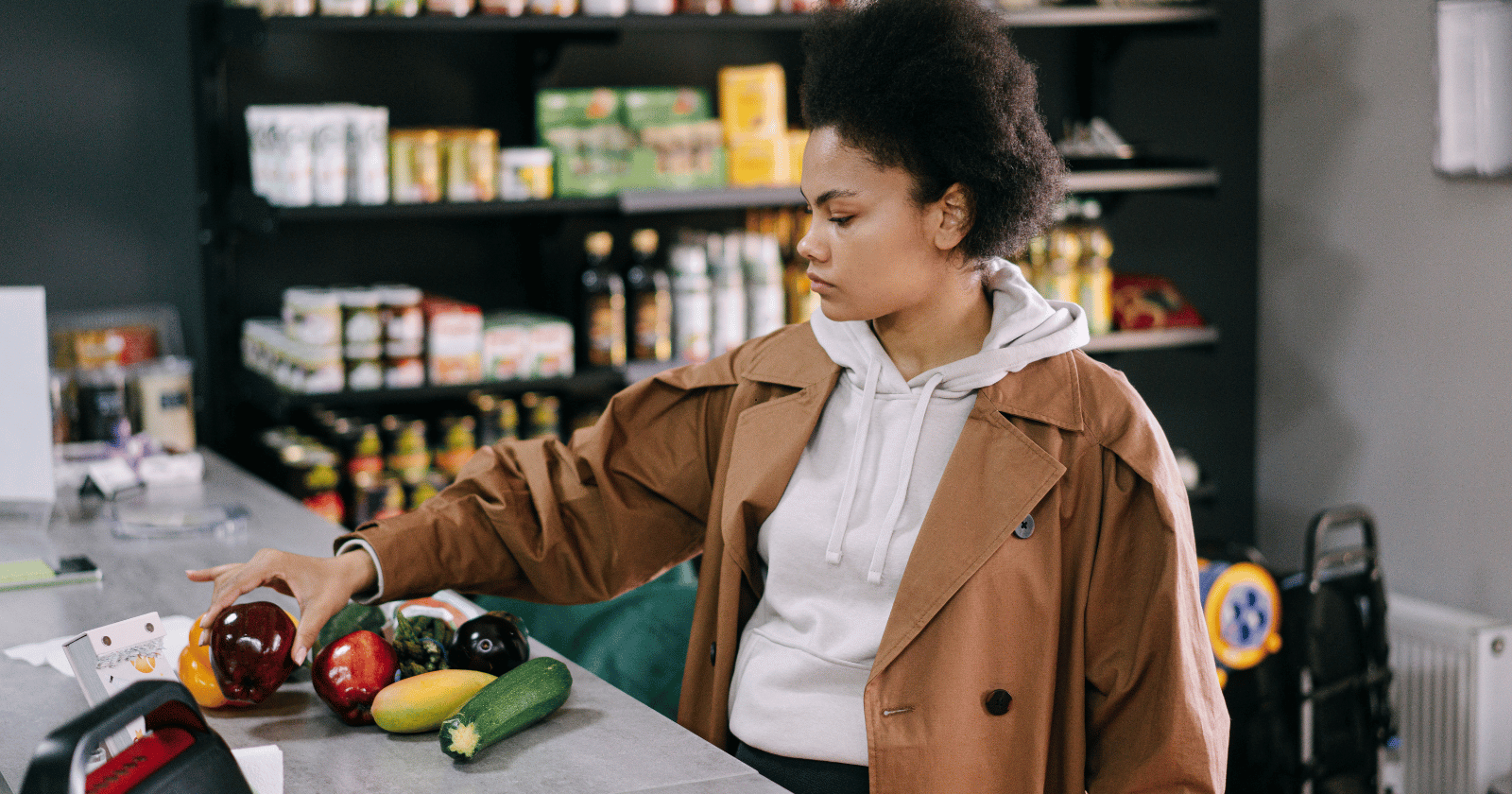
I have mentioned this before but checkout anxiety is very real.
There is a specific tension that shows up as you unload groceries onto the belt. You mentally tally the total. You brace for surprises.
What if it costs more than expected? What if something rings up wrong? What if you miscalculated?
Even if you have plenty of money in your account, that moment can still trigger a low-level stress response.
Psychologists call this a conditioned reaction. Your body remembers moments when checkout totals mattered a lot. When a few extra dollars could throw off the whole week.
You stand there, calm on the outside, alert on the inside.
6) Wasting food feels almost painful
Throwing food away hits differently when you grew up lower-middle-class.
A wilted vegetable is not just compost. It is guilt.
An expired item is not just a lesson. It feels like a failure.
I still push produce to its limits. I freeze things. I repurpose leftovers. I get creative in ways that sometimes surprise people who did not grow up counting groceries carefully.
This habit aligns well with veganism and sustainability. But the emotional root is older than any ethical framework. It comes from a time when waste felt dangerous.
You learn early that wasting food means wasting money. And wasting money meant stress.
That lesson sticks.
7) You feel judged by your cart, even when no one is watching
Have you ever rearranged your groceries on the belt?
Put the healthier items up front. Hide the indulgent ones.
That behavior often traces back to class-based self-awareness.
When you grow up lower-middle-class, there is often a constant awareness of being seen and evaluated. Grocery shopping becomes public. Your choices are visible.
Even now, I sometimes catch myself curating my cart like it tells a story about who I am. Rationally, no one cares. Emotionally, it still feels like it matters.
This is not about insecurity. It is about early social awareness. You learned that appearances had consequences. You stay alert.
8) Buying in bulk feels like a form of safety
Bulk buying is not always about saving money. Sometimes it is about security.
If you grew up in a household where money was tight but stable enough to function, you probably learned to stock up when you could. Having extra felt like relief.
I still do this with nonperishables. If something I use often is affordable, I buy more than I need. Not because I am panicking, but because it feels responsible.
Researchers describe this as future buffering. When the future once felt uncertain, you learn to prepare whenever possible.
Even when life feels calmer, the instinct remains.
9) Grocery shopping never becomes emotionally neutral
For some people, grocery shopping is boring.
For others, it is fun.
For many who grew up lower-middle-class, it is something else entirely.
It is practical. Emotional. Strategic. Familiar.
It carries echoes of childhood. Watching parents calculate totals. Hearing conversations about what could wait until next week.
I enjoy grocery shopping now. I like discovering new plant-based products. I like experimenting with food. But there is always an undercurrent of awareness.
That undercurrent never fully leaves you.
And maybe that is not a flaw. Maybe it is just proof that early environments shape us in ways that last.
The bottom line
Grocery shopping is one of those everyday tasks that quietly reveals our past.
If you grew up lower-middle-class, you probably recognized more than a few of these patterns. They are not signs you are stuck. They are signs you adapted.
You learned how to navigate limits. How to plan. How to pay attention.
Those skills do not disappear when your circumstances change. They just show up in subtler ways, aisle after aisle, cart after cart.
And honestly, that awareness can be a strength if you let it be.
If You Were a Healing Herb, Which Would You Be?
Each herb holds a unique kind of magic — soothing, awakening, grounding, or clarifying.
This 9-question quiz reveals the healing plant that mirrors your energy right now and what it says about your natural rhythm.
✨ Instant results. Deeply insightful.