Millennial parents are rewriting the parenting rulebook, and Boomer grandparents aren’t always thrilled about it. From teaching consent and emotional awareness to redefining success and gender roles, these new approaches are raising eyebrows—and some remarkably self-aware kids.
Every generation has its “wait, what are you doing?” moment when watching the next one raise kids.
For Boomers, watching Millennials parent has been educational, to put it mildly.
The world Millennials grew up in, full of shifting values, new tech, mental health awareness, and social change, shaped how they see parenting.
And it’s a far cry from the “because I said so” approach many of their parents took.
So, here are nine things Millennial parents are teaching their kids that make Boomer grandparents clutch their pearls.
Let’s dive in.
1) Feelings aren’t something to “tough out”
Many Millennials grew up hearing “stop crying” or “you’re fine” when they were clearly not fine. So now, they’re doing the opposite.
Millennial parents are teaching their kids that emotions are signals, not weaknesses. When a kid cries, they don’t shut it down.
They lean in: “You seem frustrated. Want to talk about it?”
To Boomers, this can look like coddling. To Millennials, it’s emotional intelligence in action.
They’ve seen firsthand how bottling things up can lead to burnout, anxiety, and resentment.
Now they’re raising kids who know it’s okay to feel things and that talking about them doesn’t make you soft.
2) Consent starts early
This one tends to really throw older generations.
Millennial parents are teaching kids that they don’t have to hug Grandma if they don’t want to.
That might sound shocking if you grew up in a “go give Aunt Linda a kiss” household, but it’s part of a bigger shift.
They’re introducing consent not as a heavy topic, but as everyday language.
“Do you want a hug or a high-five?”
“Is it okay if I brush your hair right now?”
The idea isn’t to reject affection. It’s to give kids agency over their own bodies.
Boomers often interpret this as disrespectful or cold, but for Millennials, it’s teaching them to assert boundaries and self-respect from the start.
3) Gender norms are optional
When I was a kid, boys got trucks and girls got dolls. Simple. Now, not so much.
Millennial parents are embracing gender fluidity in everyday life, letting kids wear, play with, and explore whatever feels right to them.
You’ll find little boys painting their nails, little girls building Lego robots, and plenty of kids rocking both.
Boomers sometimes see this as confusing kids. But Millennials see it as freedom.
Why teach children to shrink themselves to fit into outdated boxes?
After all, the goal isn’t to make kids fit in. It’s to help them feel comfortable being who they are.
4) Mental health is part of daily life
Millennial parents are raising a generation that talks about therapy the way Boomers talked about dentists.
They’re open about anxiety, depression, and stress, not just when things are bad, but proactively.
They talk about deep breaths, practicing mindfulness, or “taking a mental health day” the same way you’d talk about brushing teeth.
Boomer grandparents often think it’s overkill. “When we were kids, we just got on with it.”
But Millennials have seen what happens when you don’t get on with it, when generations bottle up their trauma, self-medicate, or pass on unspoken pain.
For Millennials, mental health isn’t a side topic. It’s foundational.
5) The environment matters even at snack time
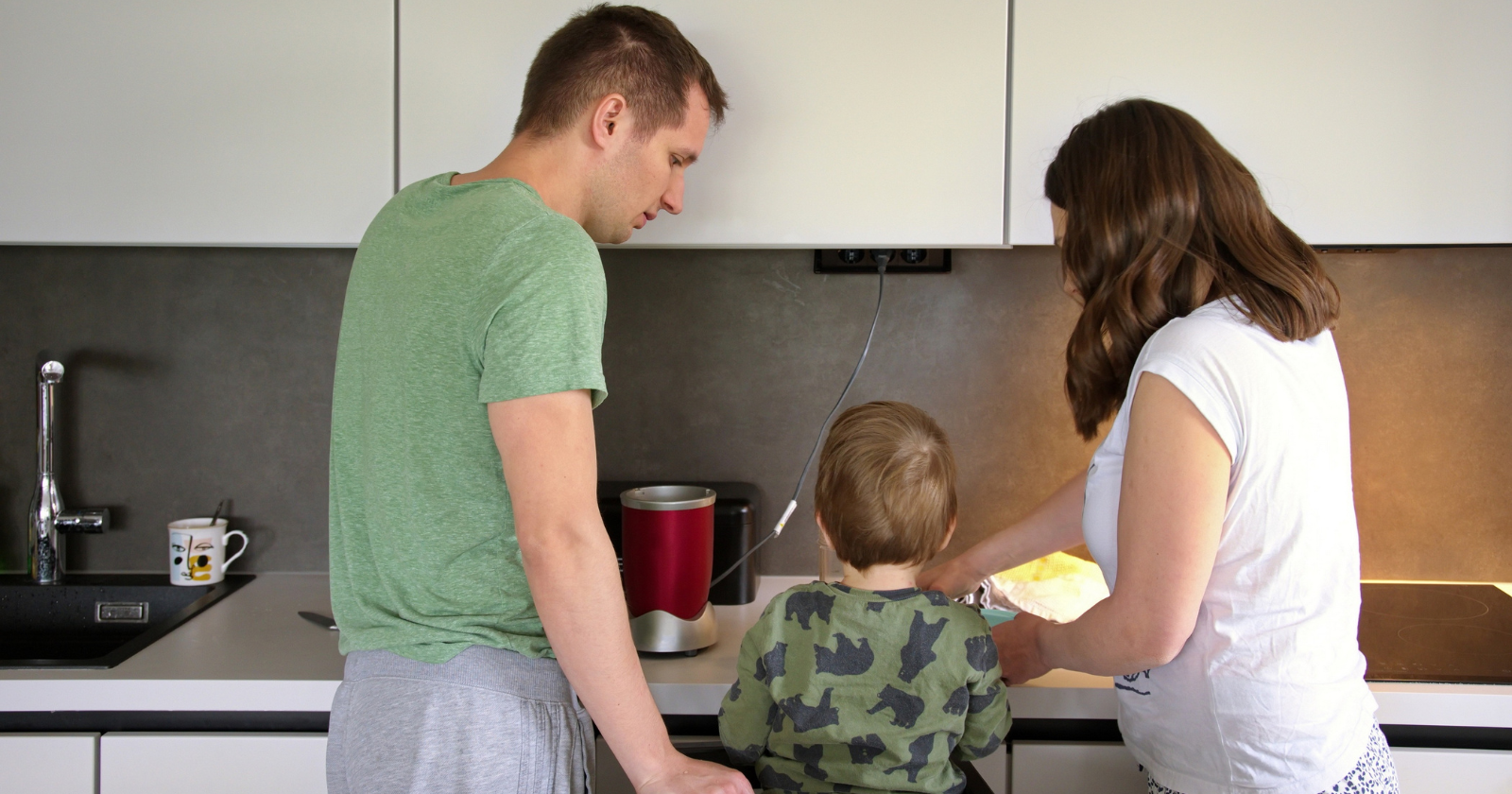
Millennial parents are raising eco-conscious mini-humans.
They talk about recycling, composting, and choosing snacks without plastic wrappers.
Many of them are vegan or plant-based (guilty), and they’re passing that awareness along, not as guilt, but as mindfulness.
Boomers might see this as excessive or impractical. “We didn’t have to think about this stuff.”
And that’s true, they didn’t. The climate crisis wasn’t front and center in the 1970s like it is today.
But Millennials know that teaching kids to care for the planet is just another form of love.
It’s future-oriented parenting, and yes, sometimes it means turning down the lights just to prove a point.
6) Talking back isn’t disrespect, it’s dialogue
This one is probably the biggest generational tension point.
Boomers grew up believing that authority shouldn’t be questioned. Parents talked; kids listened. End of story.
Millennial parents, on the other hand, are okay with a little debate.
They encourage kids to ask why. To question rules. To express disagreement respectfully.
It’s not about losing authority, it’s about teaching critical thinking.
Sure, it can sound like defiance to a grandparent’s ears. But to Millennials, it’s practice for adulthood, learning how to have a voice, not just follow orders.
I remember once telling my niece she didn’t have to agree with me, but she had to explain her reasoning. She did, brilliantly.
And it made me realize how powerful that kind of parenting is.
7) Work-life balance is modeled, not preached
Millennials grew up watching their parents work themselves to exhaustion.
Boomers wore “hard work” like a badge of honor, 60-hour weeks, no vacations, constant hustle.
Now, Millennials are flipping the script. They’re showing their kids that rest isn’t laziness, it’s maintenance.
You’ll hear Millennial parents say things like, “I need to take a break, my brain’s tired,” or “Let’s have a slow morning today.”
They’re teaching kids that burnout isn’t a badge, it’s a warning sign.
This doesn’t mean they’re raising slackers. It means they’re raising humans who understand that productivity and peace can coexist.
8) Diversity isn’t a lesson, it’s a given
For Boomers, diversity was something to learn about.
For Millennials, it’s the water they swim in.
They’re raising kids who see friends of different races, cultures, and family structures as normal, not special, not exceptional. Just normal.
Representation matters, and Millennial parents know it. They choose books, toys, and media that reflect the real world.
They talk about social justice, empathy, and inclusion at the dinner table, not as a lecture, but as part of life.
To some Boomer grandparents, this can feel political. But to Millennials, it’s just honest.
The world is diverse, and kids should see that from day one.
9) Success looks different now
Boomers were taught that success meant stability: a house, a job, a family.
Millennials know the world doesn’t work that way anymore.
They’re teaching their kids that success can mean creativity, freedom, or happiness, not just wealth.
That it’s okay to try things, fail, change paths, or take breaks when needed.
That a fulfilled life doesn’t have one blueprint.
Boomers might see this as aimless. Millennials see it as real.
And maybe, just maybe, their kids will grow up without the existential dread of feeling “behind” at 30.
The generational tug-of-war
If you’ve ever watched a Millennial parent and a Boomer grandparent navigate these differences, it can be both funny and tense.
One’s saying “Don’t spoil them.” The other is saying, “We’re teaching empathy.”
One’s insisting “We never needed that growing up.” The other is quietly thinking, “Yeah, and look how that worked out.”
It’s not that Boomers were wrong. They were parenting for a different world.
But Millennials are parenting for this one, a world that’s faster, more connected, and more complex.
And while that horrifies some grandparents, it’s also producing some emotionally intelligent, self-aware, and thoughtful kids.
The takeaway
Every generation thinks the next one is doing it wrong.
But maybe that’s the point. Parenting evolves because the world evolves.
Millennial parents aren’t perfect. They overthink, they read too many parenting blogs, and yes, they sometimes negotiate with toddlers like hostage negotiators.
But they’re also deeply intentional. They care about raising humans who are kind, aware, and emotionally healthy.
If that horrifies a few grandparents along the way, so be it.
The world could probably use a little more of what these kids are learning.
If You Were a Healing Herb, Which Would You Be?
Each herb holds a unique kind of magic — soothing, awakening, grounding, or clarifying.
This 9-question quiz reveals the healing plant that mirrors your energy right now and what it says about your natural rhythm.
✨ Instant results. Deeply insightful.