What feels fancy depends on what you grew up with. Some stores feel like luxury to lower-middle-class shoppers, but many upper-class people have never even walked in. Here are nine of them.

Add VegOut to your Google News feed. 
Crafting “fancy” is kind of a weird human hobby when you think about it.
We don’t just buy things. We buy stories about ourselves. We buy the feeling of leveling up. We buy the vibe.
And depending on where you grew up, certain stores feel like you’ve made it, even when you’re just there for paper towels and oat milk.
What’s funny is that “fancy” isn’t universal. A lot of upper-class people have a totally different idea of what counts as upscale. Some of the places that feel like luxury to a lower-middle-class shopper are places they genuinely never visit.
Let’s talk about those stores. Not to shame anyone. I love a good “I’m treating myself” errand run. But to unpack how class, psychology, and environment shape what we consider high-status.
Here are nine stores that often carry that “wow, this is nice” energy for lower-middle-class folks, while many upper-class people either avoid them completely or don’t even think of them as an option.
1) Whole Foods
Whole Foods is basically the cathedral of expensive groceries for a lot of people.
It’s the lighting. The artisanal labels. The wall of supplements that makes you feel like your immune system is a personal project.
I still remember the first time I walked into one and saw someone casually filling a cart with organic berries like it was nothing. That moment stuck with me.
For a lower-middle-class shopper, Whole Foods isn’t just a grocery store. It’s aspirational. It’s where you go when you want to feel healthy, successful, and slightly upgraded.
Upper-class people often skip it, not because it’s too expensive, but because it’s too mainstream. They’ll shop at local gourmet markets, farmers markets, boutique grocery stores, or just get deliveries without thinking about it.
Whole Foods is “fancy” in a visible way. Upper-class fancy is usually quieter.
2) Costco
Costco has this strange status energy.
It’s a warehouse where you can buy a kayak and a gallon of pesto. But it’s also a place that makes people feel smart and secure.
If you grew up in a home where money was tight, buying in bulk feels like stability. It feels like you’re prepared for life.
Costco is the store where people casually say, “We get our olive oil there,” like they’re sharing a sacred finance tip.
Upper-class people do shop there sometimes, but a lot don’t. They don’t want the crowds. They don’t want the time commitment. They don’t want to wrestle a cart through a parking lot that feels like a battle arena.
They’ll pay more for convenience. To them, time is the luxury.
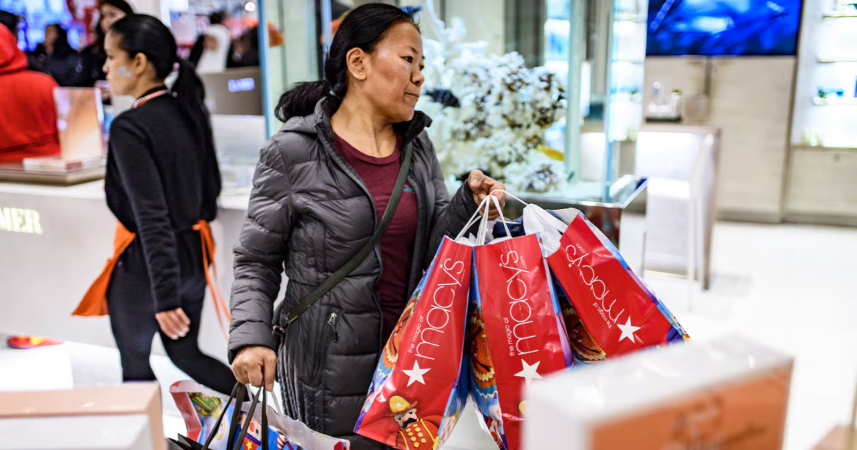
3) Macy’s
Macy’s still has that department store magic for people who grew up going once or twice a year.
It’s where you bought your first “real” coat. Or your interview outfit. Or the cologne you wore when you wanted to feel like an adult.
For lower-middle-class shoppers, Macy’s feels polished. It feels like you’re stepping into a higher tier of life.
Upper-class people often don’t shop there because it reads as mid-tier. It’s too coupon-heavy. Too promotional. Too focused on big sales.
They’re more likely to buy fewer pieces, but better ones, from brands that don’t need to shout “SALE” to feel valuable.
Macy’s is “fancy” if Target was your baseline. If Nordstrom was your baseline, it’s just another store.
4) Nordstrom Rack
Nordstrom Rack is pure treasure hunt energy.
You go in thinking, maybe I’ll find something amazing. Maybe I’ll score a designer label for half the price. Maybe I’ll walk out with a coat that makes me look like I own property.
For lower-middle-class shoppers, it feels like a hack. Like you’re getting access to a world you weren’t supposed to be in, but you found the side door.
Upper-class people often avoid it because it’s chaotic. It takes time. It’s unpredictable. You have to dig.
And if there’s one rule of upper-class shopping, it’s that luxury should feel easy.
Nordstrom Rack is fun. It’s not easy.
5) Williams Sonoma

Williams Sonoma is where you go to pretend you cook like you’re on a Netflix series.
Even if you don’t cook at all, the store makes you feel like you could. Like you might start making your own sauces. Like your kitchen might become a lifestyle.
For a lot of lower-middle-class shoppers, this store represents adulthood. Matching dishes. Dinner parties. A house that smells like fresh bread instead of stress.
Sometimes you’re just buying a spatula, but emotionally you’re buying the idea of becoming someone who has it together.
Upper-class people often skip it because they buy directly from high-end brands, shop local, or already have kitchen tools they inherited or invested in long ago.
Williams Sonoma is aspirational fancy. Upper-class fancy is usually less performative.
6) Crate & Barrel
Crate & Barrel is the home store version of calm.
Neutral tones. Clean lines. Furniture that makes you think, maybe I should stop buying things that look like they came from three different eras.
If you grew up with mismatched plates and hand-me-down couches, walking into Crate & Barrel can feel like stepping into a life where everything matches.
Even if you only buy a candle or a set of glasses, you feel like you’re moving toward a “put together” life.
Upper-class shoppers often don’t go because it’s still mass-market. They tend to hire designers, buy vintage, or look for one-of-a-kind pieces.
Crate & Barrel is upscale in a way that’s obvious. Upper-class design is often about subtlety and uniqueness.
7) Sephora
Sephora is intimidating in the best way.
It’s bright. It’s glossy. It smells expensive. And everyone inside looks like they already know their undertones.
For lower-middle-class shoppers, Sephora is “I’m treating myself” territory. You go there when you want to feel confident and upgraded, even if you’re only buying one product and hoping no one asks if you need help.
It feels high-status because it’s curated and trendy. It’s full of brands that sound like they should come with a personal stylist.
Upper-class people absolutely buy beauty products, but many don’t shop Sephora. They go to luxury department store counters, boutique brands, dermatologists, or subscription services. Or someone else handles the errand.
Sephora is an experience. Upper-class shopping tends to remove the experience and keep the convenience.
8) The Apple Store
The Apple Store is one of the best examples of how a brand can sell identity.
For a lot of lower-middle-class people, buying Apple products feels like a milestone. It’s not just a laptop. It’s a MacBook. It’s not just a phone. It’s an iPhone.
And the store itself amplifies that feeling. It’s sleek. Minimal. Almost futuristic. Like you’re stepping into a world where everyone is productive and emotionally balanced.
Upper-class people also buy Apple products, but many never step into the Apple Store. They order online. They buy through corporate accounts. They already have someone who handles tech.
The Apple Store feels fancy when the purchase feels like a big deal. If buying a new laptop is casual, the store becomes unnecessary.
9) The Cheesecake Factory
This one is going to get reactions, but it’s true.
For a lot of lower-middle-class families, The Cheesecake Factory is an event. Birthdays. Graduations. Anniversaries. Or just that feeling of “we made it through the week.”
The menu is huge. The portions are massive. The interior looks like a fancy hotel lobby. The prices are high enough to feel special.
It’s abundance-based luxury. You leave full, satisfied, and slightly amazed by how many options existed.
Upper-class people often skip it because it’s a chain. It’s loud. It’s crowded. It feels like a spectacle.
They tend to prefer small restaurants with short menus, seasonal ingredients, and a quieter vibe.
Upper-class dining often signals exclusivity and restraint. Cheesecake Factory signals celebration and plenty.
That’s why it feels fancy to some people and totally unappealing to others.
The bottom line
What we call “fancy” usually has less to do with the store and more to do with what it represents.
Stability. Progress. Belonging. Comfort. The feeling of becoming someone who has options.
If you grew up watching every dollar, a store that sells premium versions of everyday things can feel like a portal into a different life.
And that’s not embarrassing. That’s human.
The real shift as people move up the ladder is this: luxury becomes less about what’s visible and more about what’s invisible.
Time. Ease. Privacy. Control.
If you walk into one of these places and feel that little spark of “wow,” don’t judge it.
Just notice it.
Your brain is telling you a story.
And once you understand the story, you get to decide what it means.