Guests may smile and act polite, but bathrooms reveal more than people realize. Here are eight bathroom items lower-middle-class families often keep that visitors instantly notice, even if they never say a word.
Let’s be real.
You can learn a lot about someone from their bathroom.
Not in a weird snoopy way. In a “this room tells the truth” kind of way.
Because the bathroom is the one place people don’t usually curate for attention, yet every guest ends up in there at some point. And that makes it revealing.
If you grew up lower-middle-class, you know the vibe. The bathroom wasn’t built to impress. It was built to work.
And still, guests notice certain things immediately.
They just don’t mention them.
Here are eight of those things.
1) A huge bottle of generic hand soap
It’s almost always some big supermarket brand with a slightly faded label.
The pump is a little crusty. The soap inside might be a weird shade of green. And there’s a decent chance it’s been watered down.
Not because anyone is cheap, but because it’s a habit. When you grow up in a household where you stretch everything, you learn to make a bottle last.
Fancy guests notice it because it’s not the aesthetic “minimalist glass bottle” version of soap.
It’s the functional one.
And honestly, it says something admirable: This house values usefulness more than appearances.
2) Mismatched towels that have seen things
Every lower-middle-class bathroom has a stack of towels that technically still work, but barely.
One is faded. One has a bleach stain. One feels like it used to be thick, back when it had hope.
And yet, they’re still there.
Because in these households, you don’t throw things away just because they’re not pretty anymore. You throw them away when they’re dead.
Guests notice this instantly, not because they’re judging, but because it signals something real.
This is a house where function comes first.
3) One multipurpose cleaner sitting out in the open
Some bathrooms have a “clean aesthetic.”
Others have a bottle of all-purpose cleaner sitting right next to the sink like it belongs there.
Lower-middle-class families often keep it visible because cleaning isn’t a scheduled ritual. It’s a reaction.
Toothpaste splatter? Spray. Mirror streak? Spray. A mystery stain? Definitely spray.
And because nobody wants five different products for five different surfaces when one bottle can do the job.
Guests notice it because it feels practical and slightly chaotic.
But it also says: This household takes care of things, just in a more direct way.
4) A trash bin with a grocery bag as a liner
This is a classic.
A small bathroom trash can with no lid, lined with a plastic grocery bag, handles hanging out like little flags.
Guests notice because it’s not hidden. It’s not decorative. It’s just there.
But it also says a lot.
It says, “We reuse what we can.”
That’s not just budget thinking. That’s actually smart. It’s also low-key eco-friendly, even if nobody calls it that.
Bonus points if the grocery bag is from a store that no longer exists.
That’s basically a family heirloom at that point.
5) A cabinet full of half-used toiletries from different eras
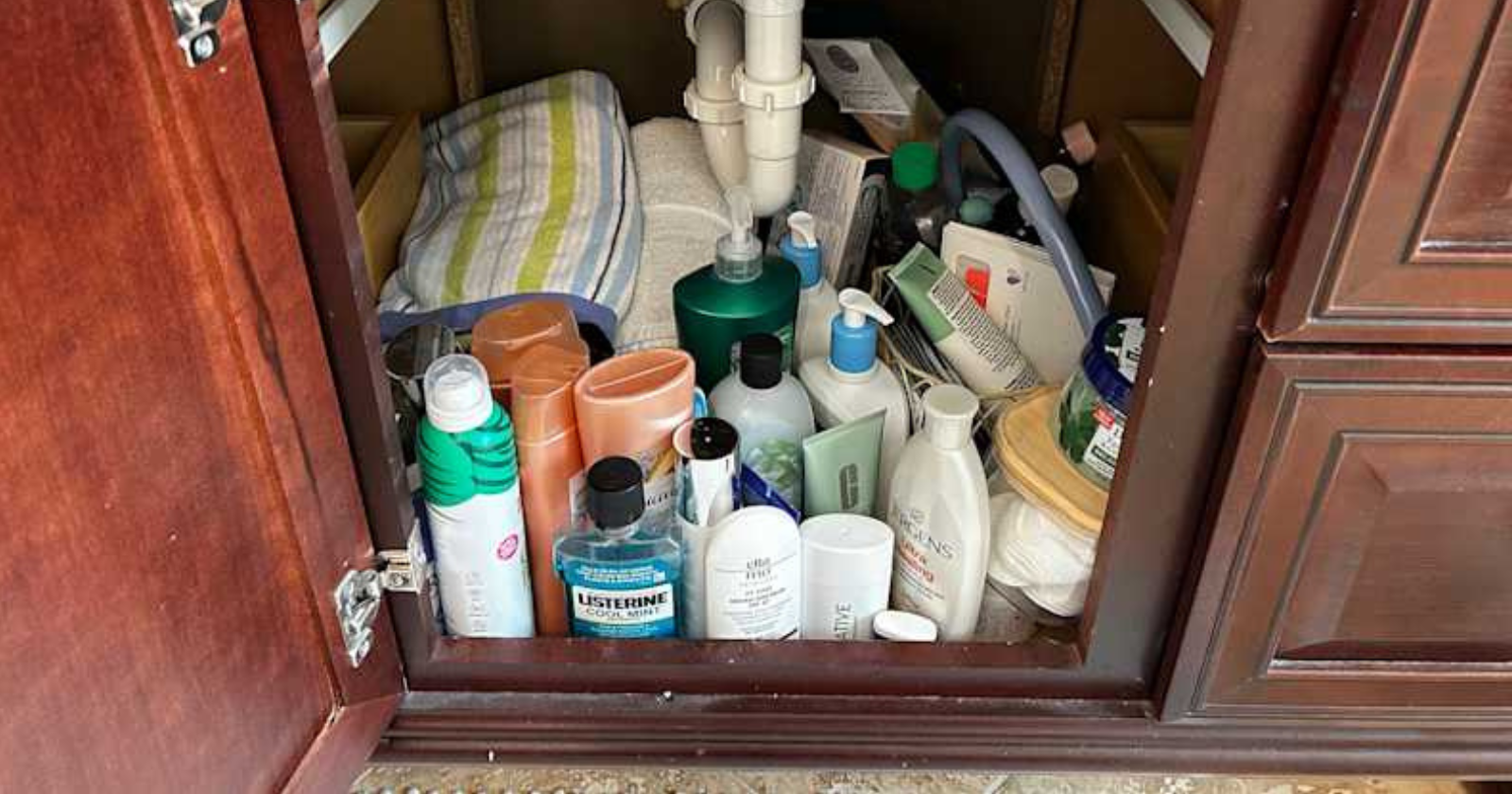
Open the cabinet in a lower-middle-class bathroom and you’ll find a full museum.
Shampoo bottles with one inch left.
A body wash someone didn’t love but refused to waste.
Random hotel mini bottles.
A toothpaste tube squeezed in a way that suggests the household doesn’t believe in order.
These homes don’t toss things because they got bored of them.
They use what they have.
Guests notice because it looks cluttered. But for the people living there, it’s normal.
It’s proof that the family doesn’t waste.
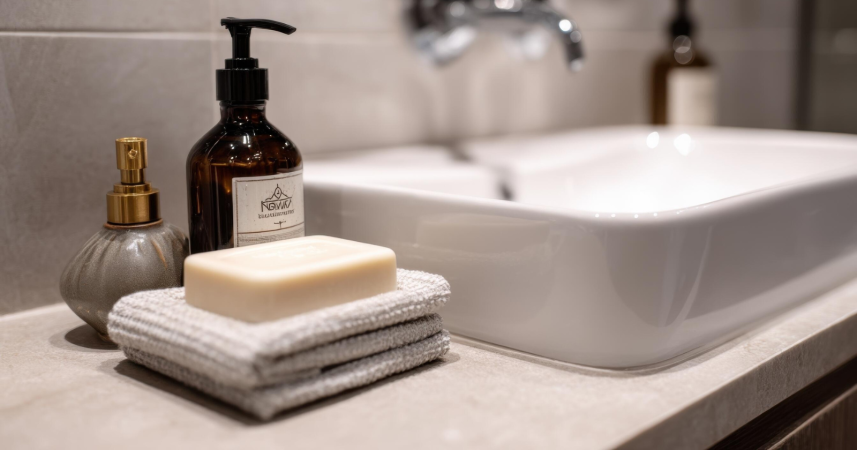
6) Bar soap, proudly existing like it’s still 2006
Bar soap is one of those quiet signals.
Some people see it and think “old-school.”
Lower-middle-class families see it and think “this works and it lasts forever.”
It usually sits in a dish that always has that thin layer of soap slime. If you know, you know.
Guests notice bar soap because it feels like something people from more curated homes don’t always use.
But bar soap has a certain pride to it.
It’s low cost, high function, and zero unnecessary extras.
7) A drawer full of random medicine and mystery ointments
There’s always a drawer or basket somewhere with:
- Painkillers.
- Cough drops.
- Vicks.
An allergy pill from 2019.
A tube of ointment labeled “for rash” with no explanation.
A thermometer that might work.
Lower-middle-class households keep these things because they don’t want to buy something new every time they get a sniffle.
They check what’s already there first.
Guests notice because it can look a bit chaotic.
But it also says: this house is prepared.
This family knows that life happens, and they’d rather be ready than surprised.
8) Finally, “decor” that’s trying its best
This last one is subtle, but it’s everywhere.
A faded quote sign. A cheap plastic plant. A seashell candle that has never been lit. A random framed print from a discount store.
Guests notice because it looks like someone wanted to make the bathroom feel nicer, but only using what was affordable.
And honestly, I love that.
Because it’s not about design trends.
It’s about effort.
It’s a small way of saying, “We want this space to feel warm,” even if it’s not Pinterest-perfect.
What your bathroom says about you
Here’s the truth.
Class isn’t just about money. It’s about habits.
It’s about what you keep, what you reuse, what you stretch, and what you don’t replace until you absolutely need to.
Lower-middle-class bathrooms aren’t worse.
They’re just honest. They’re practical. They’re lived-in. They’re built around the reality of daily life, not the fantasy of looking perfect for guests.
Yes, visitors might notice the watered-down soap or the towels that should have retired years ago.
But most of them won’t judge.
They’ll recognize it.
Because a lot of people grew up the same way.
And if your bathroom has a few of these things in it?
That’s not something to be embarrassed about.
It’s proof you came from a place that knows how to make things work.