From latchkey kids to helicopter parents, discover why millions of boomers share identical after-school memories — and what this synchronized childhood of empty houses and street-light curfews reveals about the last generation raised to parent themselves.

Add VegOut to your Google News feed. 
The smell of fresh-cut grass mixed with the metallic tang of chain-link fence still takes me back to those afternoons when the school bell rang at 3:15 sharp.
There was something about the way the sun hit the concrete steps, still warm from the day, and how our sneakers squeaked against the linoleum floors as we burst through those heavy double doors. We moved like a flock of birds, scattered yet somehow synchronized, each heading toward our own afternoon ritual without a parent in sight.
I've been thinking about this lately, especially when I watch parents today orchestrate every minute of their children's after-school hours. The difference isn't just nostalgic hand-wringing about "the good old days." It's something deeper: an entire generation learned to navigate the world through a shared rhythm of independence that would make today's parents call child protective services.
Yet somehow, we all survived. More than that, we thrived in ways that shaped us into remarkably self-sufficient adults.
1) Walking home alone (or with the neighborhood pack)
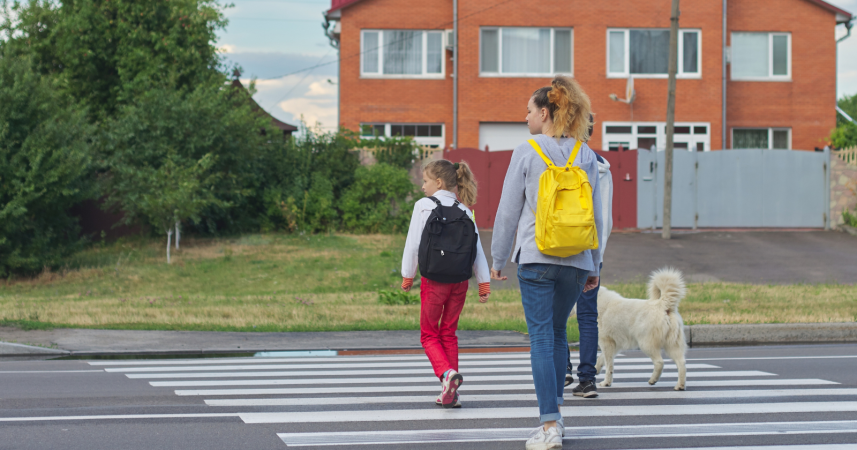
Remember the unspoken rule about walking routes? You took the same path every single day, not because anyone told you to, but because that's just what you did.
Mine was eleven blocks through the suburbs of my Pennsylvania town, past Mrs. Henderson's house with the yapping poodle, around the corner where the sidewalk cracked and made perfect hopscotch squares, and finally up our driveway where the basketball hoop hung slightly crooked.
We walked in every kind of weather, our wool coats scratching our necks in winter, our feet finding every puddle in spring. There were no cell phones to track our location, no apps showing our parents we'd arrived safely. The only check-in system was the screen door slamming behind us, announcing our arrival to whoever might be listening. Usually, that was no one at all.
2) Using the hidden house key
Every family had one, and we all pretended ours was cleverly concealed. Under the doormat, beneath the third rock in the garden, inside the fake thermometer box that fooled absolutely nobody. I taught my own children this ritual years later, though by then I was usually home when they arrived.
Still, there was something important about them knowing they could get in on their own, that the house trusted them as much as I did.
The weight of that key in your pocket meant something. It meant you were old enough, responsible enough, trusted enough. It was a rite of passage that happened without ceremony, usually around age nine or ten, when your mother simply said one morning, "You know where the spare key is, right?"
3) Making your own snack (usually involving Wonder Bread)
The after-school snack was an art form of limitation and creativity. Two pieces of Wonder Bread, whatever was in the fridge, and approximately three minutes before you had to start homework.
Maybe it was peanut butter and jelly, cut diagonally because that somehow made it taste better. Maybe it was butter and sugar, a combination that would horrify today's nutritionists but satisfied something primal in our growing bodies.
We stood at the kitchen counter, crumbs falling on the linoleum, drinking milk straight from the carton when no one was looking. There were no supervised snack times, no pre-portioned organic fruit pouches. We learned to gauge our own hunger, to know when enough was enough, to clean up our own messes because if we didn't, we'd hear about it at dinner.
4) Calling mom at work from the kitchen phone
Do you remember the phone list taped to the wall? Mom's work number, Dad's work number, the neighbor's number, the doctor, the fire department. We had to memorize at least the first two, and we knew exactly when we were allowed to call. Only for emergencies, they said, though "emergency" was loosely defined as anything from actual blood to being out of cookies.
The kitchen phone had a cord that stretched exactly far enough to reach the table but not quite to the living room. We'd wind it around our fingers while talking, leaving spiraled marks on our skin. "I'm home," we'd say when Mom answered, her office sounds muffled in the background. "Good," she'd reply. "Start your homework. I'll be home by six."
5) Starting homework at the dining room table
Before the kitchen became command central for family activities, there was the dining room table, that sacred space used for holidays and homework. We'd spread our books across the dark wood, careful not to scratch the surface our mothers polished with Pledge every Saturday.
The house was quiet except for the tick of the wall clock and the occasional car passing outside. No parent hovering to help with math problems, no tutor arriving at four. We figured it out ourselves, or we called that one smart friend who always understood fractions. Self-reliance wasn't a parenting philosophy; it was simply how things worked.
6) Watching the after-school special while "doing homework"
By 4:00, the TV would mysteriously turn on, always to whatever after-school special was teaching us about the dangers of drugs, peer pressure, or running away from home. We'd position ourselves so we could see the TV from the dining room table, our math books open as alibis.
Those shows were our informal education in life's complications, delivered in tidy thirty-minute packages with clear moral lessons. No parent sat beside us to process the content, to ask how we felt about the boy who shoplifted or the girl who lied to her parents. We absorbed these lessons independently, filing them away in our growing understanding of right and wrong.
7) Playing outside until the streetlights came on
Once homework was "done" (or adequately attempted), we scattered like seeds to the wind. The neighborhood became our kingdom, with boundaries defined not by parental GPS tracking but by how far we could bike before dinner. The universal law was simple: when the streetlights flickered on, you had exactly five minutes to get home.
We played games that required nothing but imagination and whatever we could find. Kick the can, hide and seek, elaborate make-believe scenarios that could span entire weeks. We settled our own disputes, tended our own scraped knees, and learned the delicate social dynamics of childhood without a single adult intervention.
8) Setting the table for dinner without being asked
As the sound of a car in the driveway announced a parent's return, we knew our role. The table needed setting, and this wasn't a chore so much as a choreographed dance we all knew by heart. Plates from the cabinet, silverware from the drawer, napkins folded in triangles because squares were for lazy people, according to my mother.
This was the transition ritual, the moment when our independent afternoon selves merged back into the family unit. We did it without being asked because that's what you did. You contributed. You participated. You showed up for dinner with clean hands and something to say about your day.
Final thoughts
When I think about these routines now, what strikes me isn't the freedom we had but the trust embedded in every moment. Our parents trusted us to navigate the world, to make mistakes, to figure things out. We trusted ourselves because we had to. There was no other option.
This isn't a judgment on today's parenting. The world has changed in ways that make such independence seem impossible, even dangerous. But I can't help wondering what we've lost in the trade-off. Those afternoon hours taught us resilience in ways no structured activity ever could. They gave us the gift of boredom, of problem-solving, of learning to be alone with ourselves.
Perhaps the real lesson isn't that we should return to the 1970s, but that we should remember what it taught us: children are more capable than we think, independence is a skill that must be practiced, and sometimes the best thing a parent can do is trust their child to walk home alone, find the hidden key, and make their own sandwich.