Trash is unglamorous, yes, but it’s honest.
I used to work in luxury F&B, which is a fancy way of saying I spent my 20s watching what people ordered, how they ate, and what they tried to hide.
Here’s the funny part: Most people think their lifestyle is private because their home is private.
However, lifestyle leaks.
Sometimes through your Instagram, how you talk about “wellness,” the garbage bag you drag to the curb on Tuesday night.
If your trash tells a story about your money habits, your food habits, your stress levels, and your priorities, you can use that story to tighten things up.
Also, if you live in an apartment building with a shared dumpster, your neighbors already know way more than you think!
1) The brands you throw out
Brands are like tiny status flags, and you don’t even need to mean it.
A box from a high-end grocery store, a bottle from a recognizable champagne, or a pile of specialty snacks that look like they were designed by a minimalist graphic designer who charges $10,000 per logo.
None of this proves someone is rich, but it does suggest a comfort level with paying extra for small upgrades.
If you grew up in a household where money felt tight, you learn to treat “nice” as a special occasion.
You buy the store brand, you stretch things, and you don’t toss half a bag of salad because it got a little sad.
If you grew up with more cushion, you learn the opposite habit: You pay for convenience, aesthetics, and quality without doing a full mental budget meeting first.
I’ve served people who could tell the difference between two types of salt like it was their personality
Also, I’ve served people who felt guilty ordering dessert.
Same menu, yet different wiring.
If you want to check your own habits, do this: open your pantry and ask, “How many of these purchases were about function, and how many were about identity?”
2) The amount of food you waste
Food waste is one of the loudest signals in the quietest way.
When a trash bag is heavy with spoiled produce, takeout containers with half a meal still in them, and expired “aspirational groceries,” it usually points to one of two things: Either someone has enough money to not worry about waste, or someone is trying to eat like the person they wish they were.
I’ve been that second person.
There was a stretch where I’d buy fresh herbs, fancy yogurts, and obscure condiments like I was about to become the type of guy who makes lunch bowls with “a tahini drizzle.”
Then I’d work late, order something greasy, and those herbs would die a slow death in the fridge.
What your trash reveals here is rhythm.
People with stable schedules tend to waste less because their week is predictable.
People juggling multiple jobs, caretaking, long commutes, or chaotic work hours often waste more because cooking becomes a moving target.
If you’re tossing a lot of food, the fix is “buy for reality.”
Plan two or three default meals you can make even when you’re tired.
Keep frozen staples, and stop shopping like your best self and start shopping like your Tuesday self.
3) The kind of convenience you pay for
Convenience is where class differences get spicy, because convenience isn’t one thing.
There’s “I’m broke so I bought instant noodles,” and there’s also “I’m busy so I ordered $27 salad delivery.”
Your trash shows which kind you live in.
Meal kit boxes, pre-chopped produce, single-serve snack packs, cold-pressed juice bottles, protein pudding cups, compostable takeout containers from trendy spots; those usually signal that time is more scarce than money.
On the other end, bulk rice bags, big tubs of peanut butter, beans, simple ingredients, and lots of home-cooked leftovers suggest someone is optimizing for cost.
Neither is morally better, but they come from different starting points.
I learned this while working around wealthy regulars who treated time like a premium currency as they’d rather pay than think.
If you’re trying to level up your life, ask yourself: Am I buying convenience because my life is full, or because my life is messy?
There’s a difference between “I’m slammed this week” and “I never have a plan.”
One is a season, and the other is a pattern.
4) Your relationship with alcohol and “little luxuries”

Wine bottles, craft beer cans, cocktail mixer packaging, expensive whiskey tubes, fancy non-alcoholic spirits, artisanal tonic water.
All of it tells a story: In luxury hospitality, alcohol is where people show you their class background without saying a word.
Some people drink to celebrate, cope, or because it’s Tuesday and that’s what adults do.
Trash gives away the frequency, and it also gives away the style.
High-end bottles can signal money, sure, but they can also signal taste culture.
Someone learned that wine is “a thing,” and they participate in it.
Meanwhile, a pile of cheap cans can signal budget constraints, but it can also signal a different social norm, like drinking as a casual daily habit rather than an event.
Here’s the self-development angle: Look at what you’re using to take the edge off.
Is it alcohol? Energy drinks? Dessert wrappers? Vape pods? Endless coffee cups?
“Little luxuries” are often about regulation.
A quote I love (and I think about every time I’m stress-snacking) is from James Clear’s work around habits: Every habit is solving a problem for you, even if it’s a messy solution.
Your trash can tell you what problem you keep trying to solve.
5) How much you outsource your health
Your neighbors just need to see the supplement bottles, such as protein tubs, collagen packets, pre-workout scoops, and electrolyte sticks.
These things suggest a very specific class flavor: The ability to spend money on optimization.
Not everyone who buys supplements is wealthy.
However, the whole wellness marketplace is built for people with disposable income and a certain kind of anxiety about falling behind.
I say that as someone who loves health stuff.
I work out, I track things, and I’ve experimented with everything from fancy magnesium to “this mushroom will change your brain chemistry” powders.
Sometimes it helps, yet it’s just an expensive way to feel like I’m in control.
That’s the tell: People who grew up around stability often treat health as a project, while people who grew up around instability often treat health as a luxury.
Your trash shows whether you’re in “maintenance mode” or “catch-up mode.”
If you’re drowning in wellness packaging, try this grounded question: What are the two or three basics I’m skipping while buying the extras?
The basics are boring and effective: Sleep, daily movement, protein, fiber, hydration, sunlight, and stress management.
Supplements can support that, but they can’t replace it.
6) The way you handle kids, pets, and caretaking
Caretaking trash is deeply personal, and I’m not here to turn it into a class stereotype (but it does show resources).
For example, name-brand formula and premium diaper brands can reflect financial flexibility and so can the ability to buy bulk or buy organic snack packs that cost the same as an entire meal.
Even pet food shows it.
High-end pet food, supplements, and boutique treats suggest someone has room in the budget for “pet wellness.”
Cheaper options can signal tighter margins, or simply different priorities.
What your neighbors can tell here isn’t “good parent” or “bad parent.”
It’s what kind of support system you have.
If you’re a caretaker and your trash is overflowing with convenience items, that might mean you’re doing your best with limited time and energy.
If you want to make life easier, the goal is to reduce decision fatigue: Set up default groceries, automate a few repeat purchases, keep simple meals on standby, and give yourself fewer daily choices to wrestle.
Caretaking is hard enough without turning dinner into a nightly puzzle.
7) The cleanliness and “presentation” of your garbage
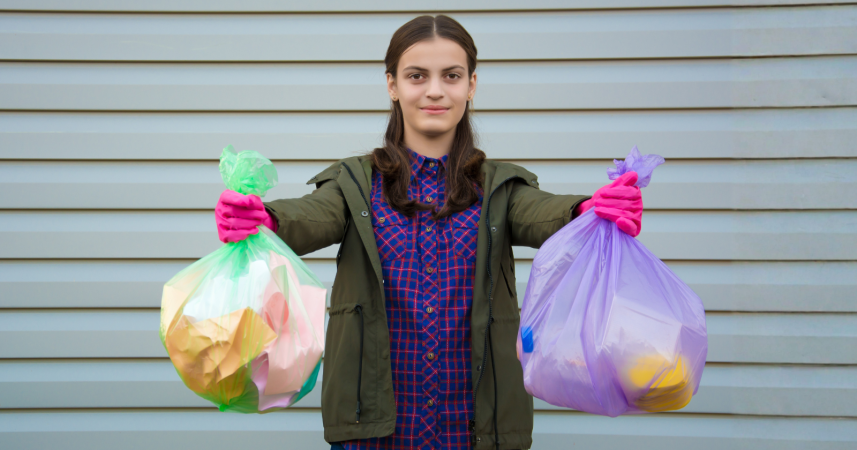
Finally, let’s talk about the part nobody wants to admit: The bag itself.
Double-bagged trash or scented trash bags, everything neatly tied with recycling clean and sorted, including compost separated like a proud little eco-system.
Or the opposite: Ripped bags filled with loose food, mixed recycling, mystery liquids, and random sharp objects poking through like a horror movie.
This can reveal money, because nicer bags and bins cost more.
It can reveal education, because recycling rules and composting habits are learned; it can reveal space, because having room for separate bins is a privilege.
However, it also reveals something bigger: how much mental bandwidth you have.
When life is calm, you keep things tidy; when life is chaos, you do the bare minimum and move on.
In my experience, class background often shapes what “normal” looks like here.
Some people grew up in homes where cleanliness was non-negotiable, because it was tied to dignity.
Others grew up in homes where everyone was too busy surviving to worry about sorting cardboard.
So, if your trash situation is a mess, don’t make it a character flaw.
Make it a systems problem because small upgrades help: A bin liner that actually fits, a simple recycling setup, a compost pail (if you’ll use it), or a weekly reset reminder.
Your environment shapes your headspace.
The bottom line
Trash is unglamorous, but it’s honest.
It shows what you buy, what you waste, what you lean on when you’re tired, and what you prioritize when nobody is looking.
Yes, a lot of it reflects class background in the quiet habits you learned growing up: how you view waste, convenience, health, and presentation.
The real win here is using it as feedback.
Next time you take out the trash, don’t just toss the bag and forget it.
Clock the patterns, then ask the only question that matters: What do I want this to say about me a year from now?
If You Were a Healing Herb, Which Would You Be?
Each herb holds a unique kind of magic — soothing, awakening, grounding, or clarifying.
This 9-question quiz reveals the healing plant that mirrors your energy right now and what it says about your natural rhythm.
✨ Instant results. Deeply insightful.