Flight attendants revealed to me that within ten seconds of boarding, they've already mentally categorized every passenger into helpers, neutrals, or potential problems—and their predictions about your behavior are eerily accurate.

Add VegOut to your Google News feed. 
Ever wonder what flight attendants are thinking when you board the plane? I used to, until I spent an evening with three flight attendants at a hotel bar in Singapore. After a few drinks, they started sharing the insider secrets of their profession, and what they told me completely changed how I approach air travel.
"We can tell exactly how the flight's going to go within the first ten seconds of seeing a passenger," one of them told me, swirling her wine glass. "Before you even sit down, we already know if you're going to be the person who makes our day easier or harder."
Coming from my background in hospitality, where I spent years serving ultra-wealthy families at high-end resorts, this fascinated me. In restaurants, we'd size up tables the moment they walked in. But on a plane? The stakes are higher. You're trapped in a metal tube at 35,000 feet with these people.
So what exactly are flight attendants looking for? After that conversation and several follow-up chats with crew members around the world, here are the seven things they notice immediately that predict your entire flight experience.
1) How you treat the greeting at the door
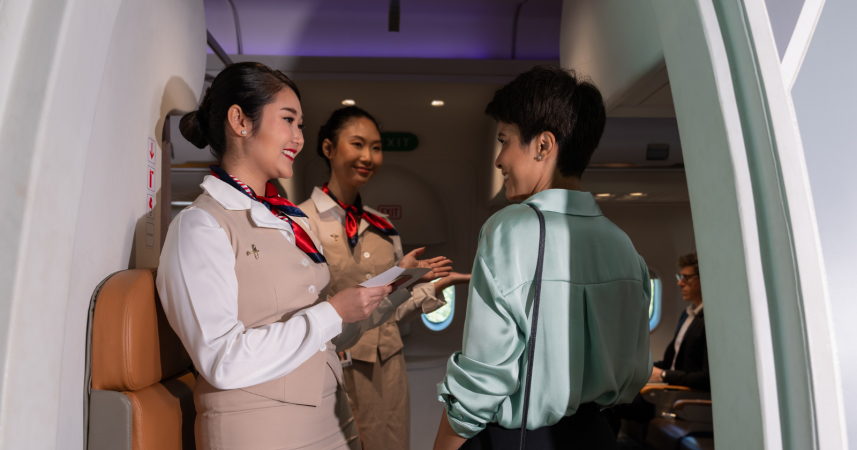
Remember that cheerful "Welcome aboard!" when you step onto the plane? That's not just politeness. It's a test.
Flight attendants are watching whether you make eye contact, smile back, or just grunt and push past. One crew member told me they mentally categorize passengers into three groups right there: helpers, neutrals, and potential problems.
The fascinating part? Psychology backs this up. Research shows that our initial social interactions set the tone for entire relationships, even temporary ones. When you acknowledge that greeting warmly, you're signaling that you see the crew as human beings, not servants. And trust me, having worked in luxury hospitality, the guests who treated staff like people always got the best service.
Think about it. Would you rather help someone who smiled at you or someone who treated you like furniture?
2) Your boarding zone behavior
Here's something I never noticed until it was pointed out to me: how you act while waiting to board reveals everything about how you'll handle delays, turbulence, and unexpected situations.
Are you the person pushing to the front even though you're in Zone 4? Congratulations, you've just been mentally flagged as someone who probably won't follow safety instructions either. Flight attendants have told me they pay extra attention to these passengers during the safety demo because they're often the ones who'll try to stand up during turbulence or argue about keeping their tray table up during landing.
The calm, patient boarders who wait their turn? They're usually the ones who handle flight disruptions with grace. It's like watching someone in traffic. The person aggressively weaving through lanes is probably going to be high-maintenance in other areas too.
3) What you're carrying and how you're carrying it
This one surprised me. Flight attendants can predict your entire flight personality based on your luggage situation.
Walking on with three oversized bags, a coffee, your phone in one hand, and a jacket draped over your arm? You're probably going to need help with everything and might be the person frantically searching for items throughout the flight.
But here's the kicker: it's not about traveling light. It's about being organized. A passenger with one perfectly packed carry-on who knows exactly where their headphones, book, and snacks are shows preparation and consideration. These are usually the passengers who've thought ahead about not disturbing others when they need something mid-flight.
During my days working in fine dining, we could tell which diners would be easy or difficult based on how they handled their belongings when they arrived. Same principle applies at 30,000 feet.
4) Your physical state and energy
Flight attendants are trained observers, and they're assessing whether you're sober, exhausted, anxious, or aggressive before you even speak.
One crew member told me about something called "gate face" versus "plane face." Some people transform the moment they board, going from pleasant at the gate to demanding on the plane. The crew spots these mood shifts immediately.
They're also checking if you seem intoxicated. Not because they're judging your airport bar choices, but because altitude amplifies alcohol's effects. That pleasant buzz at sea level can turn into a real problem in the air.
Your general energy matters too. Are you already sighing dramatically and rolling your eyes during boarding? You're probably going to complain about everything from the temperature to the snack selection.
5) How you interact with other passengers
Watch a flight attendant's face when someone shoves past another passenger or refuses to let someone into their row to reach the window seat. They're taking notes.
I learned this lesson the hard way in my twenties. Working in boutique hotels, I discovered that how guests treated other guests told us everything about how they'd treat staff when things went wrong. Same rule applies on planes.
The passenger who helps someone struggle with their luggage or offers to switch seats so a family can sit together? They're getting mentally marked as potential allies if something goes wrong. These are the people crew members might quietly ask for help if there's a difficult situation.
Meanwhile, the person aggressively claiming overhead bin space or spreading into the aisle while others try to pass? They're on the watch list.
6) Your outfit and appearance choices
This isn't about judging your fashion sense. Flight attendants are looking at practical things that affect safety and comfort.
Wearing flip-flops? You're probably not going to be much help in an emergency evacuation. Dressed in complicated layers with multiple accessories? You might be the person constantly getting up and disturbing everyone to adjust your outfit.
But here's what really matters: inappropriate clothing choices signal someone who might cause problems. The person boarding in offensive clothing or barely dressed often turns out to be the passenger who ignores other social norms too, like personal space or appropriate conversation volume.
One flight attendant told me she can spot the business travelers immediately, not by their suits, but by their practical choices. Slip-off shoes for security, layers for temperature changes, and pockets for essentials. These passengers rarely need anything because they've thought everything through.
7) Your response to the first "no"
Finally, here's the ultimate test. How do you react when told your bag won't fit, you can't have that specific seat, or you need to wait a moment?
Your response to that first minor disappointment predicts everything. The passenger who adapts quickly and stays pleasant? They'll handle whatever the flight throws at them. The one who immediately escalates or demands to speak to someone else? They're going to make every small issue into a crisis.
This reminds me of something I learned serving wealthy clients at resorts: panic costs more than patience. The guests who stayed calm when something went wrong always got better solutions than those who exploded. Flight attendants operate the same way. They'll go above and beyond for pleasant passengers but do the bare minimum for difficult ones.
Final thoughts
Since that night in Singapore, I've completely changed how I board planes. Not to manipulate anyone for better service, but because understanding these dynamics made me realize how much our small actions affect others in shared spaces.
The truth is, flight attendants aren't judging you to be mean. They're assessing situations for everyone's safety and comfort, including yours. When you board with awareness and consideration, you're not just making their job easier. You're setting yourself up for a better flight experience.
Next time you board a plane, remember: those few seconds at the aircraft door aren't just a greeting. They're the beginning of a temporary relationship that could make your journey smooth or stressful. The choice is yours.
What kind of passenger do you want to be?
If You Were a Healing Herb, Which Would You Be?
Each herb holds a unique kind of magic — soothing, awakening, grounding, or clarifying.
This 9-question quiz reveals the healing plant that mirrors your energy right now and what it says about your natural rhythm.
✨ Instant results. Deeply insightful.

Adam Kelton
Adam Kelton is a writer and culinary professional with deep experience in luxury food and beverage. He began his career in fine-dining restaurants and boutique hotels, training under seasoned chefs and learning classical European technique, menu development, and service precision. He later managed small kitchen teams, coordinated wine programs, and designed seasonal tasting menus that balanced creativity with consistency.
After more than a decade in hospitality, Adam transitioned into private-chef work and food consulting. His clients have included executives, wellness retreats, and lifestyle brands looking to develop flavor-forward, plant-focused menus. He has also advised on recipe testing, product launches, and brand storytelling for food and beverage startups.
At VegOut, Adam brings this experience to his writing on personal development, entrepreneurship, relationships, and food culture. He connects lessons from the kitchen with principles of growth, discipline, and self-mastery.
Outside of work, Adam enjoys strength training, exploring food scenes around the world, and reading nonfiction about psychology, leadership, and creativity. He believes that excellence in cooking and in life comes from attention to detail, curiosity, and consistent practice.
More Articles by Adam