In the 80s, Boomers bought these like ordinary department store finds. Now their grandkids pay triple for them at vintage shops. Here are seven.

Add VegOut to your Google News feed. 
Boomers didn’t have “thrifting” as a hobby.
They had department stores.
The real kind, too. Bright lights, escalators, a perfume cloud near the cosmetics counter, and a home section that could convince you your life would be fixed by new towels.
Back then, a lot of items that now get treated like rare treasure were just… normal. They sat on racks with sale stickers. People bought them because they were useful.
Then decades passed, trends cycled, quality shifted, and suddenly the same stuff started showing up in vintage shops with price tags that make you blink twice.
Part of it is nostalgia. Part of it is that the good pieces survived. And part of it is that younger shoppers are tired of disposable everything.
We want things that feel solid, personal, and built for real life.
Here are seven things boomers casually picked up in 80s department stores that their grandkids now pay triple for at vintage shops.
1) The denim jacket that actually lasts
If you’ve tried on a true 80s denim jacket, you know it’s different.
It’s structured. It has weight. It sits on your shoulders like it’s doing a job.
Modern denim jackets can feel thin or overly soft in that “this will fall apart soon” way.
Back then, a denim jacket was a default.
You wore it to the mall, to a casual dinner, to concerts, to anywhere you wanted to look put together without trying too hard.
Now vintage shops treat the good ones like gold, especially older Levi’s, Lee, and Wrangler jackets with that perfect fade.
They’ve got that lived-in look people can’t fake, even with “distressing” and fancy washes.
I learned in luxury hospitality that people pay more when something feels substantial.
A steak tastes better when it hits the table sizzling. A pastry feels worth it when the layers crackle.
A good denim jacket has that same vibe.
It feels like value.
2) The “basic” logo sweatshirt that became a flex
Those big comfy sweatshirts with simple branding across the chest used to be boring.
Champion. Russell Athletic. Hanes.
Sometimes a department store brand with lettering that looks like it came from a college bookstore.
In the 80s, nobody was calling this fashion.
It was just warm.
You threw it on to run errands or survive a chilly day.
Now? People hunt these down like they’re limited edition streetwear.
The right fit matters.
Slightly oversized. Soft but not flimsy. A neckline that’s worn in but not stretched out.
Bonus points if the color looks sun-faded in a good way.
And honestly, I get it.
We’re tired. We’re overstimulated. We’re trying to live better and feel calmer.
A great vintage sweatshirt is comfort you can wear in public.
I’ve paid more than I expected for one before.
Not because it made me look rich, but because it made me feel relaxed.
That’s a very modern kind of luxury.
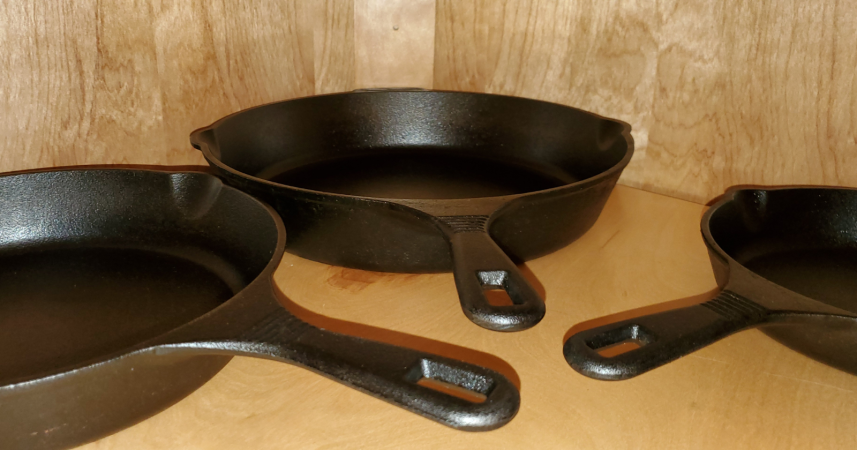
3) The cast-iron cookware that outlived everyone
Boomers bought cast iron the same way they bought socks.
Practical. Reliable. No drama.
A solid cast-iron skillet from decades ago still performs.
Heat retention is incredible.
You can get a restaurant-level sear on tofu or steak depending on what you eat.
Cornbread in a well-seasoned cast-iron pan is basically a cheat code.
Now old cast iron sells for serious money, especially collectible brands or rare sizes, or pieces in great condition.
People love the idea that it’s “better than what they make now,” and in some cases it is.
But I think the bigger reason is this: We crave tools that make us feel competent.
Cooking at home is one of the best personal development habits there is.
It builds discipline, patience, and confidence.
Cast iron makes you slow down, learn the basics, and do things properly.
It also makes your kitchen look like you know what you’re doing.
4) The Pyrex bowls that turned into collectibles
At some point, Pyrex stopped being “grandma’s bowls” and became “vintage holy grail.”
If you’ve been in a vintage shop lately, you’ve seen it.
Bright patterned mixing bowls, fridge containers, casserole dishes with designs that feel both wholesome and slightly trippy.
Boomers bought Pyrex at department stores because it was durable and pretty.
It survived holidays, potlucks, and a thousand batches of something involving butter and love.
Now those patterns get resold with wild markups.
Some people pay extra for specific prints, specific years, and full matching sets.
I get the appeal.
Food tastes better when you care about the details.
Presentation changes the experience.
It’s why leftovers feel sad in a stained plastic container but feel oddly satisfying in a nice glass dish.
We don’t just want to eat. We want a vibe.
Vintage Pyrex is basically the meal-prep version of lighting a candle.
5) The leather loafers that instantly make you look grown
There’s a specific kind of 80s department store shoe making a comeback: Classic leather loafers.
Not the stiff, squeaky kind. The good kind.
Soft leather, clean stitching, a shape that makes an outfit look intentional even if you’re wearing a plain tee and jeans.
Boomers bought loafers because they needed one respectable shoe for work, dinners, events, and life.
One pair could handle everything.
Now younger buyers hunt them down because they’ve rediscovered a style truth: Timeless beats trendy, especially when you want to be taken seriously.
In hospitality, shoes were a silent signal.
You could tell who cared by what was on their feet.
And there’s something about wearing a well-made shoe that changes how you move.
It changes your posture. It changes your mood.
Self-development isn’t always journaling and cold plunges.
Sometimes it’s dressing like you respect your own life.
6) The heavy wool coat that makes winter feel expensive
Department stores in the 80s sold wool coats that were built like tanks.
Thick wool. Solid lining. Buttons that didn’t look like they’d snap off after one season.
A cut that held its shape.
Now vintage shops love these coats because they instantly elevate you.
Throw one over almost anything and you look like you have plans, even if your plan is just groceries and an early night.
Modern outerwear can be frustrating.
Either it’s super sporty, weirdly thin, or priced like it was handcrafted by monks in the Alps.
A good vintage wool coat sits in that sweet spot.
Real quality without the “new” premium, at least when you find a deal.
The prices have climbed because people caught on.
I’m a big believer in buying one great piece instead of five mediocre ones.
Like a solid chef’s knife instead of a whole drawer of dull blades.
Less clutter, more impact, and weirdly calming.
7) The dishware sets that made dinner feel like a ritual
Let’s talk about plates. Not basic white ones. I mean full dishware sets with personality.
Stoneware with earthy glazes. Floral patterns. Gold rims.
That classic 80s look that somehow feels cozy and bold at the same time.
Boomers bought these sets because hosting mattered.
Even casual dinners had a sense of occasion.
You didn’t eat spaghetti off a random mix of plates unless you were in college or going through something.
Now people pay triple for vintage dishware because we’re rediscovering what older generations understood: The way you eat affects how you live.
If every meal is eaten standing up, scrolling, half-present, you start to feel like life is something happening to you.
If you sit down, use a plate you actually like, and treat dinner like a small ritual, your brain gets the message: I’m worth taking care of.
Yes, it’s deep for plates.
But try it for a week and tell me it doesn’t shift something.
Conclusion
This isn’t really about stuff, not entirely. It’s about what the stuff represents.
A jacket that lasts. A pan you can pass down. A bowl that makes your food feel special.
Shoes that change your posture.
Plates that remind you to sit down and be human.
Vintage prices can be ridiculous, but the lesson is useful: Quality holds value, and details shape experience.
The next time you see a “rare” sweatshirt behind glass like it’s a museum artifact, remember: Someone’s dad probably bought it in 1986 while grabbing socks and a belt.
And somehow, that’s comforting.