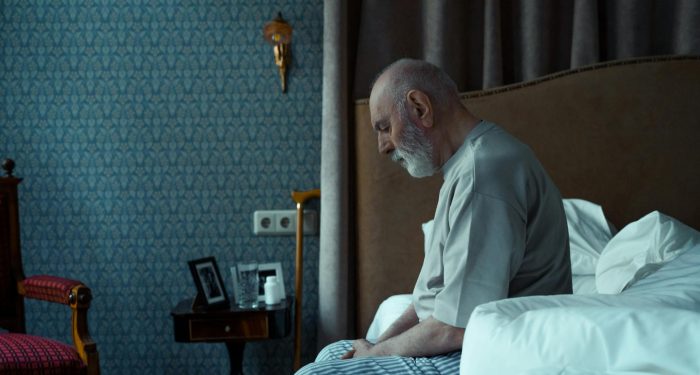
While the first year of retirement floats by on a cloud of novelty and freedom, it's the second year when the honeymoon ends and you discover that your work friends have ghosted you, your body has gone rogue, and spending 168 hours a week with your spouse might actually kill you both.

Add VegOut to your Google News feed. 
Everyone tells you the first year of retirement is the hardest. The sudden loss of routine, the identity crisis, the strange emptiness of weekdays that stretch out like blank pages. I bought into this narrative completely when I retired at 64, bracing myself for that difficult first year like a swimmer preparing to dive into cold water.
But here's what I discovered: the first year carries you along on a wave of novelty and relief. You're finally free from alarm clocks and meetings. You tackle that reading list, reorganize closets, take long lunches with friends who are also newly retired. There's a honeymoon quality to it all.
The second year? That's when the real reckoning begins. After the novelty wears off and the initial projects are complete, deeper challenges emerge that nobody really prepares you for.
These aren't the obvious adjustments everyone mentions, but the subtle, persistent ones that catch you off guard just when you think you've figured retirement out.
1. The friendship fadeout becomes undeniable
During your first retirement year, former colleagues still include you in group texts and occasional happy hours. You maintain the illusion that work friendships transcend the workplace.
By year two, those connections have quietly dissolved like sugar in rain. The group texts slow to a trickle, then stop entirely. You realize with a small shock that you haven't heard from your former desk neighbor in six months.
What makes this particularly painful is that it happens so gradually you don't notice until the silence becomes deafening. You find yourself scrolling through old messages, wondering if you should reach out, then feeling awkward about the time that's passed.
The truth is, without the daily proximity and shared complaints about management, many workplace friendships simply don't have enough substance to survive.
2. Your body starts keeping different time
That first year, you celebrate sleeping in until 8 AM after decades of early alarms. But by the second year, your body develops its own mysterious schedule that has nothing to do with your preferences.
I now wake naturally at 5:30 AM, no matter when I go to bed. My energy peaks at strange hours and crashes at others. Some days I'm ready for bed at 7 PM; other nights I'm wide awake at midnight.
The unsettling part isn't the schedule itself but the loss of control. When you worked, your body adapted to external demands. Now it follows its own ancient rhythm that you can neither predict nor override. You become a passenger in your own circadian journey, which can feel both liberating and deeply disconcerting.
3. The money anxiety shifts from saving to spending
Year one, you're still in accumulation mode mentally. You check your retirement accounts, feel reassured by the balance, maybe even continue adding to savings out of habit. By year two, watching that balance decrease with each withdrawal triggers a primal fear, even when you know you've planned well.
Every purchase becomes a mental calculation. Can I afford this? Not just financially, but psychologically? The shift from earning to purely consuming creates an unexpected relationship with money.
You second-guess restaurant meals, delay replacing worn furniture, feel guilty about small indulgences. The spreadsheet says you're fine, but your nervous system hasn't gotten the memo.
4. Younger people start treating you differently
Have you noticed how checkout clerks suddenly speak louder and slower? How adult children start making decisions "for" you rather than "with" you?
This shift intensifies dramatically in the second year of retirement when you've been out of the professional world long enough to seem genuinely disconnected from current events and technology.
The most jarring moment came when my own child suggested I might not understand a new banking app, despite the fact that I'd been using technology in classrooms for years.
You want to protest, to prove your relevance, but that only makes you seem more out of touch. The world has quietly reassigned you to a different category, and fighting it feels exhausting.
5. The achievement void becomes impossible to ignore
That first year, you're achieving by not achieving. Look at me, reading novels at 2 PM! Making elaborate dinners! Taking afternoon naps! But by year two, the absence of measurable accomplishments starts to gnaw. You've organized every closet, tried new recipes, taken up hobbies that now sit abandoned in the garage.
What replaces the satisfaction of completed projects, good performance reviews, problems solved? You find yourself creating artificial goals just to feel productive. I started timing my morning walks, trying to beat yesterday's pace.
Then I realized I was trying to turn retirement into another job, complete with metrics and performance standards. The challenge isn't finding things to do; it's finding meaning in doing them.
6. Your partner becomes your entire social world
If you're married, year two is when you realize you're spending approximately 168 hours per week with someone you used to see mainly in the evenings and weekends. Every meal, every errand, every decision becomes a joint venture. The separate worlds you once inhabited have collapsed into one shared universe.
During my husband's illness, this intensity was compounded by caregiving duties. But even in healthy relationships, the constant proximity can feel suffocating.
You develop territorial feelings about ridiculous things. The way he loads the dishwasher. How she arranges the newspaper. You miss having stories to tell each other because you experience everything together.
The challenge isn't love or compatibility; it's the sheer volume of togetherness that no amount of date nights can properly balance.
7. The existential questions get louder, not quieter
Year one is too busy for philosophy. You're adjusting, organizing, exploring. Year two is when the big questions arrive uninvited. What's the point now? Who am I without my professional identity? How many years do I realistically have left, and what should I do with them?
These aren't gentle wonderings but urgent demands that wake you at 3 AM. The structure that once held these questions at bay has dissolved. You have time, finally, to consider mortality, legacy, meaning.
Sometimes I sit with my tea in those early morning hours, journal open, trying to answer questions I successfully avoided for decades. The freedom to contemplate can feel more like a burden than a gift.
Final thoughts
Writing this from several years into retirement, I can tell you that year two is indeed harder than year one, but it's also more honest. The challenges that emerge aren't failures of planning or character; they're the natural growing pains of a massive life transition that our culture hasn't quite figured out how to navigate.
The good news? Year three is when you start building something new from the debris of your former life. Not better or worse, just different.
You develop new rhythms, deeper friendships with fellow retirees, genuine comfort with the quieter pace. The existential questions don't disappear, but they become companions rather than tormentors.
If you're in that difficult second year, know that you're not failing at retirement. You're just doing the real work that begins after the honeymoon ends.