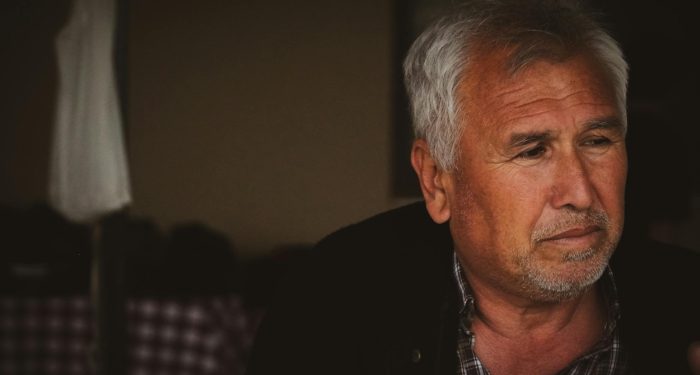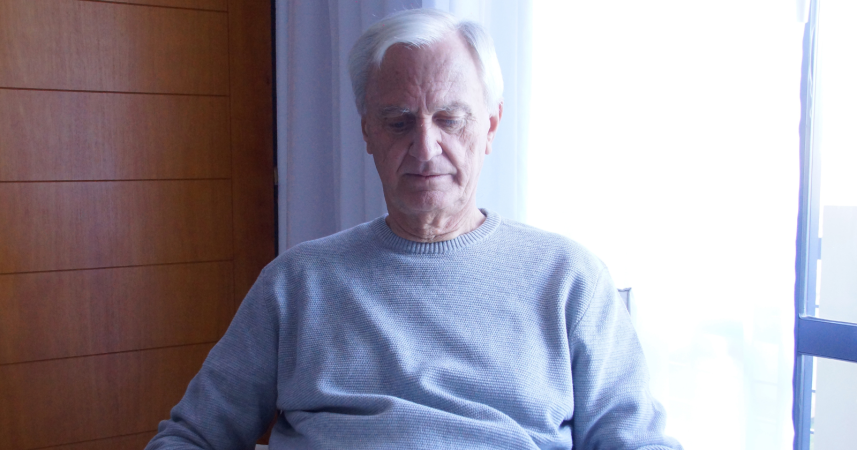
While younger generations rush through life mistaking their elders' measured pace for decline, those over 70 have discovered something revolutionary: they're not slowing down—they're finally moving at the speed of wisdom.
Last week at the grocery store, I watched a woman in her seventies carefully examining each tomato in the produce section. The young clerk waiting to restock grew visibly impatient, tapping his foot and sighing.
What he couldn't see was what I recognized immediately: the profound intentionality in her movements. She wasn't moving slowly because she had to. She was choosing to move through the world differently, with a deliberation that most of us won't understand until we get there ourselves.
We tend to view the slower pace of our elders as a limitation, a gradual winding down. But after spending years observing and learning from people in their seventies and beyond, I've discovered something remarkable.
These seemingly simple behavioral shifts aren't concessions to age. They're powerful, conscious choices that reflect the deepest wisdom about how to truly live.
1. They let conversations breathe
Have you noticed how people over seventy rarely rush to fill silences in conversation? At first glance, you might think they're processing more slowly or searching for words. But watch more closely. They're doing something revolutionary in our rapid-fire world: they're actually listening.
My weekly supper club with five women friends has taught me this lesson repeatedly. We've been meeting for years now, and the rhythm of our conversations has evolved into something almost musical.
Where we once competed to get our stories in, interrupting and overlapping in our eagerness, we now let each voice have its full space. One friend will share something difficult, and instead of immediately jumping in with advice or our own parallel story, we sit with it. We let her words settle like sediment in still water.
This isn't about having less to say. If anything, we have more stories, more accumulated wisdom. But we've learned that real connection happens in the spaces between words, in the moments when we're truly present for each other rather than mentally rehearsing our response.
2. They choose their battles with surgical precision
The other day, I overheard two women at the library discussing their adult children. One mentioned how her daughter had criticized her outdated kitchen, suggesting a full renovation. "I just smiled and changed the subject," she said. Her friend nodded knowingly. "Twenty years ago, I would have defended every cabinet door."
This isn't apathy or resignation. People over seventy have developed an almost supernatural ability to discern what truly matters. They've learned that most battles aren't worth the energy expenditure, not because they lack the energy, but because they've discovered where that energy yields the highest return.
They save their fierce advocacy for the things that genuinely matter: their grandchild being bullied, a friend facing injustice, a cause that aligns with their deepest values. Everything else? They let it flow past like water around a stone.
3. They create rituals that anchor their days
Every Sunday, I bake bread. This ritual began during a particularly difficult winter when I was struggling to find my footing after retirement. The simple act of mixing, kneading, waiting, and baking became a meditation, a weekly rebirth.
Now, even on the busiest Sundays, even when I have store-bought bread in the pantry, I make my loaf.
People over seventy understand something profound about rituals. They're not habits or routines, those unconscious patterns we fall into. Rituals are conscious, sacred acts that create meaning and structure.
My 5:30 AM wake-up isn't because I can't sleep late anymore. That first quiet hour with my tea and journal has become the foundation upon which I build each day. The silence isn't empty; it's full of possibility, reflection, and gentle preparation for whatever comes next.
4. They walk without destinations
Every evening, regardless of weather, I take my walk around the neighborhood. No fitness tracker, no podcasts, no predetermined route or goal. Just me, my thoughts, and the familiar streets that have become my meditation path.
Young neighbors sometimes offer me rides, especially in winter. They don't understand that the walk isn't about getting somewhere.
After seventy, many people discover that movement itself is the destination. Each step is a choice to remain engaged with the world, to notice the subtle changes in gardens, to wave at familiar faces, to feel the seasons in their bones.
These walks aren't exercise programs, though they certainly help with that. They're moving meditations, daily pilgrimages that connect us to our bodies, our neighborhoods, and the larger rhythm of life.
5. They say no without apology
"I don't think I'll make it to the committee meeting next month," my friend mentioned casually last week. No elaborate excuse, no guilty expression, no promise to make it up somehow. Just a simple, clear boundary.
People over seventy have earned the right to protect their time and energy, and they exercise this right with remarkable grace. They understand that every yes to one thing is a no to something else, and they've become masters at choosing their yeses wisely.
This isn't rudeness or social withdrawal. They show up fully for the commitments they do make. But they've stopped attending events out of obligation, stopped saying yes to avoid disappointing others, stopped filling their calendars with things that drain rather than energize them.
6. They tend to small beauties
Notice how people over seventy arrange flowers, set tables, or organize their reading corners? There's an attention to small aesthetics that might seem frivolous but is actually profound. They understand that beauty isn't luxury; it's necessity.
A friend recently spent an entire afternoon arranging three roses in a vase, adjusting and readjusting until the light caught them just right. "At my age," she said, "I've learned that if you're going to look at something every day, it might as well delight you."
This isn't about having expensive things or perfect homes. It's about creating small moments of beauty that feed the soul: a perfectly brewed cup of coffee in a favorite mug, a throw pillow positioned just so, a windowsill arranged with found treasures.
7. They practice selective memory
Here's something fascinating: people over seventy often seem to have impeccable memory for certain things while appearing forgetful about others.
But watch what they remember and what they let go. They recall every birthday, every kindness shown, every moment of joy or connection. The slights, gossip, and petty grievances? Those seem to evaporate like morning mist.
This isn't cognitive decline. It's cognitive refinement. They've learned to be curators of their own memories, choosing to hold onto what nourishes and releasing what poisons. They tell and retell the stories that matter, polishing them like stones until they gleam with meaning.
Final thoughts
These behaviors might look like slowing down to the outside observer, but they're actually about speeding up in the ways that matter.
People over seventy have learned to move at the pace of wisdom rather than the pace of urgency. They've discovered that intentionality is more powerful than velocity, that presence is more valuable than productivity.
As I navigate my own seventies, I'm continually amazed by the deliberate beauty of these choices. We're not slowing down because we have to. We're choosing to move through the world in a way that honors both the time we have left and the wisdom we've accumulated.
Every small behavior is a radical act of intention, a gentle rebellion against a world that mistakes speed for progress.