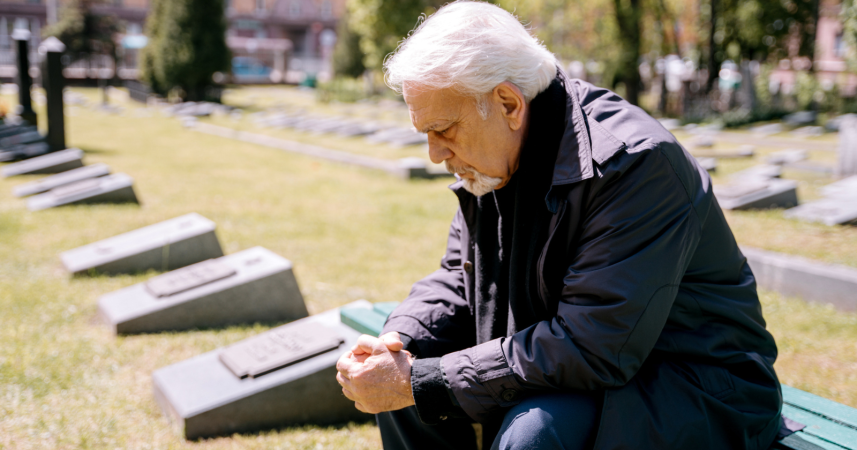
While we dismiss their choices as quirks of aging—not driving at night, declining dinner invitations, letting the garden go wild—our loved ones over 60 are often masking a profound struggle between who they still are inside and what their changing minds and bodies will allow.

Add VegOut to your Google News feed. 
Last week, my neighbor mentioned how her mother "just doesn't want to drive at night anymore." She said it with a slight eye roll, the way we talk about older relatives making choices that inconvenience us.
But something in her tone made my chest tighten. I recognized that dismissive explanation for what it really was: a convenient story we tell ourselves when we're not ready to see what's actually happening.
We do this all the time with people over 60. We watch them pull back from life in small, barely noticeable ways and explain it away as preference, stubbornness, or simply getting older. What we miss are the warning signs of a deeper withdrawal that deserves our attention, not our assumptions.
1. They stop initiating phone calls and texts
When did your parent last call you just to chat? Not to respond to your message, not to ask a question, but simply to connect? This subtle shift often gets lost in our busy lives. We assume they're respecting our schedules or that they've always been this way.
But initiating contact requires a certain confidence that you have something worth saying, that your voice matters in someone's day. When that confidence erodes, the phone becomes heavier than it should be.
2. They decline invitations to evening events
"I'm just not a night person anymore." How easily we accept this explanation. But behind this withdrawal often lies a web of concerns: difficulty driving in the dark, fear of falling on unfamiliar walkways, exhaustion that hits harder and earlier than it used to.
After my second husband died, I found myself saying no to evening book clubs and dinner parties. Everyone thought I'd become antisocial. The truth was darker: the world felt too big and unpredictable after sunset.
3. They stop hosting gatherings they once loved
For fifteen years, I hosted elaborate holiday parties that brought together neighbors, former students, and family. Then I stopped. Friends assumed I'd grown tired of the work, but the real story was more complex. My arthritic hands made chopping vegetables feel like a marathon.
The thought of cleaning before and after left me exhausted before I even started. The financial strain felt heavier on a fixed income. These weren't choices; they were surrenders I never wanted to make.
4. They let friendships fade without explanation
Have you noticed how some older adults seem to have fewer friends than they once did? We chalk it up to natural attrition or personality changes. But maintaining friendships requires energy, initiative, and often money for coffee dates or lunch meetups.
When someone stops reaching out to friends, they're often conserving resources they can no longer spare. After my divorce, I lost touch with couple friends who stopped including me.
At first, I tried to maintain those connections, but eventually, the effort felt like pushing water uphill.
5. They stop trying new restaurants or experiences
Virginia Woolf once wrote, "The mind of man is capable of anything." But what happens when the mind still wants adventure while the body whispers warnings?
New restaurants mean unfamiliar parking situations, unknown bathroom locations, menus that might be hard to read in dim lighting. Each new experience carries a calculation of risk that younger people never consider.
6. They avoid talking about the future
When conversations about next year's vacation or five-year plans are met with vague responses or changes of subject, pay attention. This isn't pessimism; it's often a protective mechanism.
Planning requires hope, and hope becomes complicated when you're unsure what your body or mind will allow. After my knee replacements, I learned how uncertainty about physical capability can make the future feel like a foreign country you're not sure you'll be able to visit.
7. They stop caring for things they once maintained meticulously
The garden that goes to seed, the car that stays dusty, the always-perfect hair that becomes less styled - these aren't just changing priorities.
Each abandoned care routine represents a silent negotiation with diminishing energy. My own garden, once my pride, now has corners I pretend not to see. It's not that I care less; it's that caring costs more than it used to.
8. They develop rigid routines and resist any changes
What looks like stubbornness might actually be scaffolding. Routines become lifelines when the world feels increasingly unpredictable.
That insistence on eating at the same restaurant, shopping on the same day, taking the same route? It's creating manageable zones in a world that feels progressively harder to navigate.
9. They stop sharing personal struggles or asking for help
Remember when your parent used to call about everything from leaky faucets to relationship advice? The silence around problems isn't sudden independence; it's often fear of becoming a burden.
In a culture that values self-sufficiency above almost everything, asking for help feels like admitting defeat. Those six months after my husband's death when I barely left the house? I told no one how much I was struggling. The shame of needing help felt worse than the isolation.
10. They withdraw from community activities they once enjoyed
Church committees, volunteer work, clubs - when these fall away, we assume interest has waned.
But participation requires more than interest. It requires confidence that you can hear the conversation, remember the meeting time, contribute meaningfully, and navigate the social dynamics that become more complex with age.
As I wrote in a previous post about finding purpose after retirement, staying engaged requires constant adaptation that not everyone can manage.
11. They stop investing in their appearance
This isn't vanity fading; it's often about physical capability and emotional bandwidth.
Putting on makeup with arthritic hands, shopping for clothes when nothing fits the way it used to, maintaining a hairstyle when the salon feels overwhelming - each choice to "let things go" represents a small grief for the person they used to be able to present to the world.
Final thoughts
These withdrawals aren't inevitable, and recognizing them isn't about pity or panic. It's about seeing our older loved ones clearly, understanding that what looks like choice might be adaptation to challenges we haven't noticed.
The next time you observe one of these changes, resist the urge to explain it away. Instead, get curious. Ask gentle questions. Offer specific help rather than general platitudes.
Most importantly, remember that staying engaged with life requires not just will, but support, understanding, and sometimes, creative solutions to problems we younger folks don't yet have to solve.
The tragedy isn't in the withdrawal itself; it's in our failure to recognize it for what it really is: a call for connection disguised as a closing door.
If You Were a Healing Herb, Which Would You Be?
Each herb holds a unique kind of magic — soothing, awakening, grounding, or clarifying.
This 9-question quiz reveals the healing plant that mirrors your energy right now and what it says about your natural rhythm.
✨ Instant results. Deeply insightful.

Marlene Martin
Marlene is a retired high school English teacher and longtime writer who draws on decades of lived experience to explore personal development, relationships, resilience, and finding purpose in life’s second act. When she’s not at her laptop, she’s usually in the garden at dawn, baking Sunday bread, taking watercolor classes, playing piano, or volunteering at a local women’s shelter teaching life skills.
More Articles by Marlene