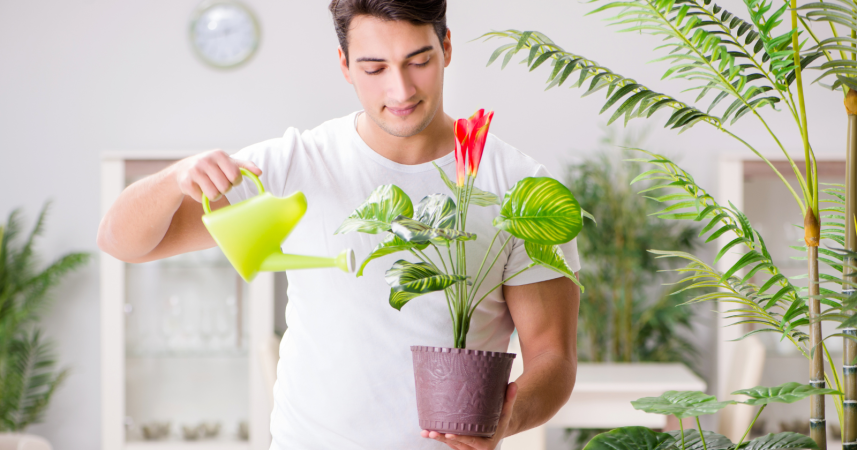
While the rest of us call it "the fern," they're checking on Beatrice and making sure Harold gets enough light

Add VegOut to your Google News feed. 
My neighbor Sarah introduced me to her houseplants last week. Not in the general sense—she literally introduced me. "This is Montgomery," she said, gesturing to a sprawling pothos. "And that's Dolores, she's being dramatic about the move." Dolores, a peace lily, was indeed looking a bit droopy in her new corner spot.
At first, I smiled politely, the way you do when someone shows you their collection of vintage salt shakers. But as Sarah moved through her apartment—greeting Theodore the rubber plant, checking on Mabel the snake plant, adjusting the curtain so Francine the fiddle leaf fig wouldn't get too much afternoon sun—I noticed something deeper happening.
This wasn't whimsy for whimsy's sake. Sarah spoke to her plants the way good teachers speak to shy students: with genuine attention and specific care. Each name came with a story, a personality observed over time, a relationship built through daily tending.
After years of meeting plant-namers in various contexts—friends' homes, community gardens, plant shops where regulars ask after specific specimens by name—I've started noticing patterns. People who name their plants tend to approach life with a particular kind of attentiveness that shows up in unexpected ways.
Here are 8 traits I keep spotting in people who can't help but christen their chlorophyll companions.
1. They notice gradual changes others miss
Plant-namers catch the first hint of yellowing on a leaf tip. They'll spot new growth when it's barely a nub. This granular attention extends beyond their windowsills.
They're the friends who notice you've been quieter lately, who remember that you mentioned a difficult conversation coming up and check in afterward. They catch subtle shifts in team dynamics at work before conflicts bloom. They see their aging parents' incremental changes—the extra beat before standing up, the new squint at menus—while others only notice once it's obvious.
This attention to gradual change comes from the daily practice of really looking. When you water Gertrude every few days, you learn her rhythms. You develop a sense for what thriving looks like versus mere survival.
2. They create emotional connections to their environment
Naming something changes your relationship to it. Research suggests that anthropomorphizing objects and nature increases our sense of connection and care-taking behavior. But plant-namers take this further than most.
Their homes become populated with personalities, not just decor. They remember which cutting came from their grandmother's garden, which plant survived the terrible winter of 2019, which one they bought to celebrate a new job. The space holds stories.
These folks often maintain similar connections elsewhere—they know their barista's name and coffee preferences, they have relationships with neighborhood cats, they develop fondness for particular trees on their walking route. The world becomes less anonymous, more alive with quiet relationships.
3. They embrace slow timelines
In an era of same-day delivery and instant gratification, plant-namers invest in growth measured in seasons, not minutes. They'll wait months for a propagation to root, years for a tree to fruit.
This patience surfaces in other areas. They're comfortable with projects that unfold slowly—learning instruments, building skills, developing relationships that deepen over years rather than weeks. They understand that the most meaningful things often can't be rushed.
When my friend Jamie talks about her plants, she uses phrases like "Herbert's not ready yet" or "Gladys is taking her time this season." There's no frustration, just acknowledgment that growth happens on its own schedule.
4. They find joy in routine care
Watering plants is repetitive. Checking soil moisture, adjusting positions for light, removing dead leaves—these tasks repeat endlessly. Yet plant-namers find something meditative, even joyful, in these small acts of care.
Such people frequently enjoy other "mundane" rituals: making coffee with intention, walking the same route and observing seasonal changes, preparing simple meals with care. They've discovered that repetition doesn't have to mean monotony—it can mean deepening relationship.
Morning rounds," one plant-namer told me, describing her daily check-in with her plants. The phrase stuck with me. Like a doctor making rounds, she approaches the routine with professional care but personal warmth.
5. They respect individual needs
Every plant has different requirements—light, water, humidity, space. Plant-namers learn these preferences and honor them, even when inconvenient. Clarence might need distilled water while Penelope thrives on tap. Agnes requires misting; Robert emphatically does not.
This attention to individual needs over one-size-fits-all solutions appears elsewhere in their lives. These individuals excel at managing diverse teams, parenting children with different temperaments, or maintaining friendships across personality types. They've learned that care isn't uniform—it's responsive.
They adjust their approach based on what's actually needed, not what's easiest or what worked last time.
6. They celebrate small victories
A new leaf unfurling, successful propagation, revival after near-death—plant-namers treat these moments as genuine achievements worth noting. They'll text photos of baby spider plants to friends, announce when the Christmas cactus finally blooms.
This capacity for small-scale celebration enriches their daily experience. Such people appreciate minor triumphs: parallel parking perfectly, finding the exact right gif, catching the bus just in time. Life becomes punctuated with tiny wins rather than waiting for major milestones.
Studies on gratitude practices show that noticing small positives significantly impacts well-being. Plant-namers build this into their daily routine through their green companions.
7. They accept loss with grace
Plants die. Even experienced plant parents lose them to pests, disease, or mysterious failure. But people who name their plants rarely give up after losses. They mourn briefly—"RIP Cornelius"—then try again.
This resilience around small griefs prepares them for larger ones. They understand that caring for something doesn't guarantee its survival, that loss is part of the territory when you choose to love mortal things. They develop what we might call proportional grief—sadness that honors the relationship without overwhelming the griever.
"I've killed at least seven Peters," a friend once told me, referring to her repeated attempts with maidenhair ferns. "But Peter VIII is hanging in there."
8. They understand reciprocal relationships
Plant-namers know the relationship isn't one-sided. Yes, they provide water and light, but plants offer something back: cleaner air, living beauty, the satisfaction of nurturing growth, a reason to maintain routine during difficult times.
They tend to approach other relationships with similar awareness of reciprocity. They notice what they receive from daily interactions, not just what they give. They understand that care creates invisible networks of mutual support.
"Talking to Phyllis helps me sort my thoughts," one plant-namer explained about her daily debriefs with a particularly good-listening philodendron. It sounds silly until you realize we all need witnesses to our lives, even silent green ones.
Final thoughts: The deeper root system
Of course, not everyone who names plants displays all these traits. Some people just think it's fun to call their cactus Kevin. Others inherit plants with names and continue the tradition out of respect. Many cultures have long traditions of recognizing plants as beings deserving of names and relationships.
But there's genuine worth in the correlation between this simple act and these nurturing approaches to life. In a world that often feels fractured and fast, the person who slows down enough to develop a relationship with a houseplant—to notice its growth patterns, honor its needs, celebrate its new leaves, and yes, give it a name—is practicing a form of attention that enriches everything it touches.
In the end, maybe that's what all the Gertrudes and Theodores represent: proof that we don't have to ration our ability to notice and tend. In a world that often feels scarce on both, that's a kind of abundance worth naming.
If You Were a Healing Herb, Which Would You Be?
Each herb holds a unique kind of magic — soothing, awakening, grounding, or clarifying.
This 9-question quiz reveals the healing plant that mirrors your energy right now and what it says about your natural rhythm.
✨ Instant results. Deeply insightful.

Maya Flores
Maya Flores is a culinary writer and chef shaped by her family’s multigenerational taquería heritage. She crafts stories that capture the sensory experiences of cooking, exploring food through the lens of tradition and community. When she’s not cooking or writing, Maya loves pottery, hosting dinner gatherings, and exploring local food markets.
More Articles by Maya