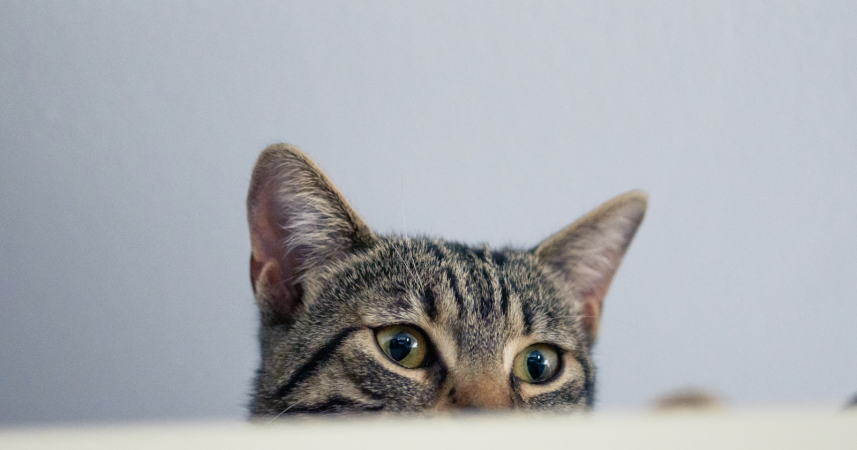
The psychology behind needing everyone to know you don't like cats.

Add VegOut to your Google News feed. 
The declaration arrives unprompted at the dinner party. Someone mentions their cat did something mildly amusing, and that's when it happens. "I'm not a cat person," she announces, with the kind of emphasis usually reserved for stating allergies or religious beliefs. She doesn't just mention it—she performs it, complete with a small shudder and a face that suggests cats personally wronged her ancestors.
Nobody asked. The cat owner wasn't trying to convert her. No felines were present to witness this rejection. Yet she needed us to know, needed it on the record: she is Not A Cat Person. It's a identity marker she wears like a badge, brings up in conversations that weren't about pets, includes in her dating profile as if it's a personality trait rather than a preference.
Here's what's fascinating: people who simply prefer dogs don't do this. They just... have dogs. People who don't want pets don't make announcements about it. But the "not a cat person" crowd? They've turned their distaste into a defining characteristic, and that revelation says far more about them than it does about cats. Because cats, in their aloof and mysterious glory, have a unique ability to trigger very specific anxieties in certain people—anxieties about control, affection, and the uncomfortable truth that not everything in the world will reorganize itself around human needs.
1. They need love to be performed on their schedule
"Dogs are just more affectionate," they explain, which translates to: dogs provide affection on demand. These people need love to be available like a faucet—turn the handle, receive the resource. Cats, with their complex affection algorithms that no human has fully decoded, break this model entirely.
A cat might ignore you for hours then demand lap time during your important Zoom call. They'll be aloof when you want cuddles, then velcro themselves to you when you're trying to cook. This unpredictability drives the control-seekers wild. They can't handle love that arrives on someone else's timeline. They need emotional responses they can trigger reliably, like pressing a button and receiving a treat. The idea that affection might be a gift rather than a transaction genuinely distresses them.
2. They can't tolerate being chosen rather than choosing
Watch how they explain their preference: "You can train a dog." "Dogs listen." "Dogs know who's boss." Translation: I need to be in charge of this relationship. Cats, famously, do not recognize human authority. They might acknowledge your existence, even grow fond of you, but it's their choice, not your achievement.
This reversal of power dynamics exposes people who can't handle not being the selector. They need to be the ones doing the choosing, the adopting, the deciding. When a cat decides whether or not to grace you with its presence, it flips the script. Suddenly you're auditioning for the cat's approval rather than the other way around. For people who need to control every relationship dynamic, this is intolerable. They prefer creatures whose affection they can guarantee through training and treats.
3. They require constant validation of their importance
"At least dogs are happy to see you," they say, revealing the core wound. They need enthusiastic confirmation that their presence matters. Dogs provide this in abundance—the jumping, the tail wagging, the full-body joy of your existence. Cats might lift their head. Maybe. If they feel like it.
This lukewarm reception devastates people who measure their worth through others' reactions. A cat's indifference feels like rejection, even though it's just... being a cat. They can't separate a cat's general demeanor from personal judgment. Every ignored greeting becomes evidence that they're not special enough, not worthy of even a cat's attention. They'd rather avoid cats entirely than face this daily reminder that their presence doesn't automatically warrant celebration.
4. They mistake independence for rudeness
"Cats are so aloof," they complain, as if independence is a character flaw. They interpret self-sufficiency as rejection, autonomy as insult. A cat entertaining itself, napping alone, existing without constant human input—this reads as rudeness to people who expect all relationships to center on them.
They're the same people who get offended when friends don't text back immediately, who interpret "I need space" as "I hate you." They can't conceive of affection that includes independence. In their world, love means constant availability, endless attention, perpetual focus on the relationship. Cats, living their parallel lives that occasionally intersect with humans, represent a relationship model they find deeply uncomfortable: one where both parties maintain separate identities.
5. They need clear hierarchies in all relationships
The phrase "dogs have owners, cats have staff" sends them into existential crisis. They need to know exactly where they rank, and that ranking better be "top." Cats' refusal to acknowledge human superiority disrupts their entire worldview. You can't be the "pack leader" to a cat. You're just the tall thing that operates the can opener.
These people organize all relationships hierarchically. Someone's always in charge, someone's always subordinate. They can't handle the lateral relationship cats offer—we're roommates, not master and servant. They need the clarity of command and obedience, the security of knowing they're the boss. A cat treating them as an equal feels like disrespect because they can't imagine relationships without power dynamics.
6. They can't handle affection they didn't earn
When a cat does show affection, it's random and inexplicable. You didn't "train" it to love you. You can't point to specific actions that guaranteed this outcome. The cat just... decided. This randomness of feline affection disturbs people who need clear cause and effect in all interactions.
They want to earn love through specific actions: I fed you, therefore you love me. I trained you, therefore you obey. Cats don't operate on this transaction model. Their affection arrives like weather—unpredictable, unearned, uncontrolled. People who need to trace every outcome to their own actions can't handle this. They prefer relationships where they can point to exactly what they did to deserve the response they're getting.
7. They project rejection onto neutral behavior
A cat sitting across the room becomes "he hates me." A cat walking past without stopping becomes "she's ignoring me." They read malice into normal feline behavior, unable to accept that not every action is about them. The cat isn't rejecting them—it's just being a cat. But they can't see animals as having their own motivations unrelated to humans.
This projection reveals people who interpret all behavior through a lens of personal acceptance or rejection. They can't conceive of neutrality. Every interaction must be coded as positive or negative validation. A cat's general indifference to human emotional needs feels like targeted cruelty. They'd rather avoid cats entirely than exist in a space where behavior isn't constantly affirming or denying their worth.
8. They need animals to be grateful
Lurking beneath many "not a cat person" declarations is expectation of gratitude. I feed you, shelter you, care for you—you should be thankful. Dogs perform gratitude beautifully. Cats... might knock your water glass off the table while maintaining eye contact. This absence of performed appreciation enrages people who keep mental tallies of what they're owed.
They approach all relationships as transactions requiring appropriate responses. They give to get, care to receive appreciation, love to be loved back in specific ways. Cats' failure to display readable gratitude breaks their relationship algebra. They can't compute a relationship where they give care without receiving proportional thanks. The idea of caring for something that won't acknowledge their generosity threatens their entire relationship framework.
9. They fear being seen without performing
Here's the deepest issue: cats see through performance. You can't charm a cat with your personality, impress it with achievements, or win it over with strategies. Cats respond to some ineffable quality humans can't consciously control. This terrifies people who've built their identities on performance.
They know how to be likeable, how to win people over, how to manage their image. But cats don't care about any of that. A cat might adore someone who's done nothing to "earn" it while ignoring someone trying desperately to win them over. This arbitrary judgment based on... what? Vibes? Pheromones? Some invisible cat criteria? It's intolerable to people who need to control how they're perceived. They can't handle being judged by standards they can't understand or manipulate.
Final words
The "not a cat person" declaration isn't really about cats. It's about control, about needing relationships we can manage, predict, and dominate. It's about requiring love that follows rules, affection we can summon on command, validation we can guarantee through specific actions. Cats, in their magnificent indifference, refuse to participate in these human control dramas.
When someone announces they're "not a cat person," they're telling you they need relationships with clear hierarchies, guaranteed outcomes, and predictable emotional transactions. They're revealing discomfort with independence, fear of neutral judgment, and deep need for constant validation. They're admitting they can't handle love that arrives on its own schedule, affection that can't be trained into existence, or relationships that don't center human needs.
Cats, meanwhile, continue to exist in their own mysterious dimension, unbothered by human declarations of preference. They'll keep being exactly themselves—independent, inscrutable, affectionate on their own terms. And that's precisely what makes them perfect mirrors for human control issues. The people who can't handle cats aren't really rejecting cats. They're rejecting the mirror cats hold up, the one that shows how much control they need and how uncomfortable they are when they can't have it.
The cats, of course, don't care either way.
If You Were a Healing Herb, Which Would You Be?
Each herb holds a unique kind of magic — soothing, awakening, grounding, or clarifying.
This 9-question quiz reveals the healing plant that mirrors your energy right now and what it says about your natural rhythm.
✨ Instant results. Deeply insightful.

Maya Flores
Maya Flores is a culinary writer and chef shaped by her family’s multigenerational taquería heritage. She crafts stories that capture the sensory experiences of cooking, exploring food through the lens of tradition and community. When she’s not cooking or writing, Maya loves pottery, hosting dinner gatherings, and exploring local food markets.
More Articles by Maya