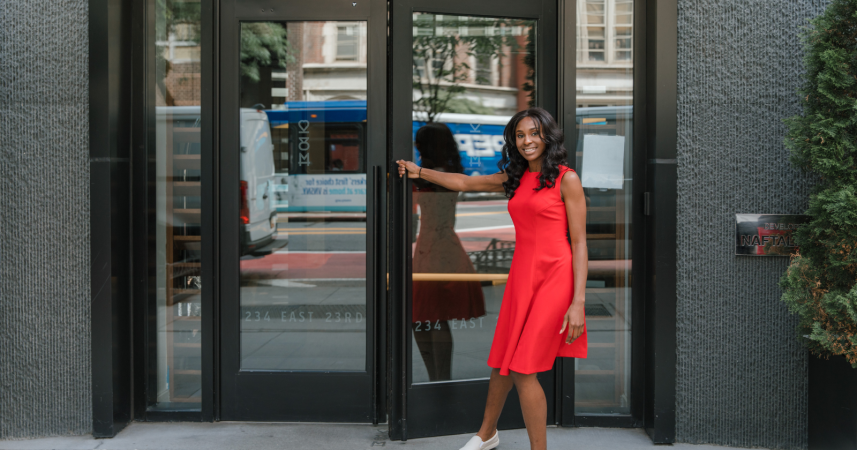
The overthinking, over-caring souls who turn simple doorways into social obstacle courses.
The calculation begins at approximately fifteen feet. A person approaches a door just as another person—you can see them through the glass—approaches from the other side. What follows is a brief but intense mental physics problem: distance divided by walking speed, multiplied by social obligation, factoring in age differentials and arm strain tolerance. The conclusion, reached in milliseconds, is invariably wrong. They'll either hold the door from an absurd distance, forcing the other person into an apologetic sprint, or release it at exactly the moment that seems rude.
These are the door-holding dancers, the over-thinkers of everyday courtesy who manage to transform the simple act of passing through a doorway into a complex social negotiation. They exist in every office building, apartment complex, and coffee shop—perpetually caught between their desire to be helpful and their complete inability to judge when help is actually needed.
But here's what I've noticed after years of being one of them, and watching others navigate the same predicament: the awkward door-holding dance isn't really about doors at all. It's a perfect crystallization of deeper personality traits that shape how certain people move through the world. These aren't learned behaviors or social strategies—they're fundamental characteristics that manifest in a thousand different ways, the door-holding dance being merely the most visible.
1. They feel everyone's feelings, including ones that don't exist
The chronic door-holder possesses an emotional radar so finely tuned it picks up signals that don't exist. They don't just notice other people's needs—they imagine potential needs, hypothetical discomforts, theoretical inconveniences that might possibly occur. This hyperempathy extends far beyond doorways. They're the ones who lie awake worrying whether their neighbor heard them walking too loudly at 9 PM, who send follow-up texts to make sure their "okay!" didn't sound passive-aggressive.
This isn't the balanced empathy of emotional intelligence. It's empathy turned up so high it becomes static, making it impossible to distinguish between actual social cues and imagined ones. They feel others' emotions so intensely—or think they do—that they're constantly responding to feelings that may not exist. The door-holding calculation becomes so complex because they're not just considering physical distance; they're attempting to divine the emotional state, daily stress level, and personal door-opening preferences of a complete stranger.
2. They take being considerate as seriously as air traffic controllers take landing planes
Conscientiousness is generally a positive trait—associated with success, reliability, and social functioning. But the door-holders have pushed past conscientiousness into something more consuming. They don't just want to do the right thing; they need to do the right thing in exactly the right way at exactly the right moment, and the impossibility of achieving this perfection doesn't stop them from trying.
This trait manifests everywhere in their lives. They're the ones who rewrite casual emails four times, who arrive at parties exactly on time (then wait in their cars because being first feels presumptuous), who lose sleep over whether they tipped precisely the correct amount. The door-holding moment becomes a microcosm of their entire conscientious existence: an opportunity to be helpful that transforms into a source of endless analysis and self-doubt.
3.They believe every interaction could be the perfect one
Despite countless awkward exchanges, despite the repeated evidence that their door-holding creates more discomfort than ease, they persist. This reveals a trait more profound than social awkwardness: an unshakeable optimism about the possibility of perfect human connection. Each door is a new opportunity to get it right, to create that seamless moment of mutual understanding and appreciation.
This optimism extends throughout their social lives. They're the ones who keep trying to organize group dinners despite scheduling nightmares, who remember everyone's birthdays despite rarely receiving reciprocal remembrance, who believe that this time, surely, the interaction will unfold as beautifully as they imagine. It's not naivety—they know it usually goes wrong. It's a deeper, almost philosophical commitment to the idea that human connection is worth the awkwardness.
4. They physically cannot walk past an opportunity to help
The door-holding isn't about the door—it's about an internal compulsion to help that borders on the pathological. These people cannot not help. If they see an opportunity to make someone's life marginally easier, they're physically unable to walk past it. This compulsion operates independently of logic, necessity, or even the desires of the people they're trying to help.
Watch them in other contexts: they're offering their seats to people who prefer standing, carrying groceries for neighbors who live three feet away, volunteering for tasks no one asked them to do. The helping isn't strategic or calculated—it's compulsive, arising from some deep internal pressure that makes not helping feel like a moral failure. The door becomes just another opportunity for this compulsion to manifest, creating awkwardness in service of an urge they can't control.
5. They need to know their kindness landed correctly
Beneath the door-holding dance lies a deep need for validation that shapes their entire social existence. They're not just being polite—they're seeking confirmation that they're good people, that they belong, that their presence in the world is justified. Each successful door-hold represents a tiny hit of validation; each awkward exchange threatens their sense of social worth.
This anxious attachment to validation means they can't simply perform social niceties and move on. They need to know the gesture was received correctly, appreciated appropriately, reciprocated proportionally. They collect these micro-validations throughout their day, building a fragile sense of self-worth from accumulated courtesies. The door-holding becomes so fraught because it's not just about the door—it's about their entire sense of being acceptable to others.
6.They're searching for the perfect "excuse me"
These aren't the perfectionist who need their desk arranged just so or their presentations flawless. They're afflicted with something more subtle: micro-interactional perfectionism. They believe there's a perfect way to execute every tiny social exchange, and they're determined to find it. This perfectionism focuses not on grand achievements but on the smallest moments of human connection.
The door-holding dance epitomizes this trait. In their minds, there exists a perfect door-hold: timed precisely, distanced appropriately, acknowledged gracefully. They've never achieved it, but they keep trying, each attempt informed by the failures of previous attempts. This perfectionism extends to every greeting, every elevator interaction, every "excuse me" in a crowded space. They're forever chasing the perfect execution of imperfect moments.
7. They're always watching for signs they've done something wrong
The awkward door-holders live in a state of constant emotional surveillance. They're not just aware of social dynamics—they're hyper-aware, tracking micro-expressions, body language shifts, and tonal variations with exhausting intensity. This hypervigilance turns every interaction into a complex reading exercise where they're simultaneously participating and analyzing.
This trait makes the door-holding moment almost unbearably complex. They're tracking approach speed, facial expression, body language, apparent mood, and social context—all while trying to perform the simple act of holding open a door. The hypervigilance that serves them well in genuinely complex social situations becomes a liability in simple ones, creating problems where none need exist. They see social danger everywhere because they're looking for it everywhere.
8. They need every interaction to mean something
Perhaps most tellingly, the chronic door-holders cannot accept that some interactions are simply transactional. They're constitutionally unable to let a moment be merely functional. Every exchange must carry meaning, create connection, communicate something beyond its surface purpose. This discomfort with simplicity transforms every mundane interaction into a potential site of deeper human connection.
The door represents the ultimate transactional moment: one person needs to pass through, another facilitates passage. But they can't leave it there. They need the door-holding to mean something, to create a moment of recognition between two humans briefly sharing space. This trait—this inability to let simple things be simple—infuses their entire life with unnecessary complexity but also with surprising depth. They find meaning everywhere because they insist on putting it there.
Final thoughts
What makes these traits endearing rather than simply exhausting is their source: a fundamental belief in the importance of small kindnesses. The door-holding dancers of the world are guilty only of caring too much about too little, of investing everyday moments with significance they probably don't deserve. They've turned the simple act of entering buildings into complex choreography because they cannot bear for any human interaction to be careless.
In our age of declining social connection and digital isolation, there's something almost heroic about their insistence on making every moment matter. Yes, they make doorways awkward. Yes, they overthink exchanges that others breeze through unconsciously. But they also remind us that consideration—even excessive, awkward, overthought consideration—is a form of optimism about human nature.
The traits that make them awkward door-holders also make them the friends who remember your coffee order, the colleagues who notice when you're struggling, the strangers who create tiny moments of unexpected warmth in otherwise cold days. They're exhausting, certainly, but they're exhausting because they're trying so hard to create a world where everyone feels seen, helped, acknowledged.
Perhaps we need these door-holding dancers, these courtesy warriors who cannot let a single interaction pass without attempting to infuse it with kindness. In their very awkwardness lies proof that they haven't given up on the possibility of human grace, even in the smallest moments. They hold doors badly because they hold hope fiercely—hope that this time, maybe this time, they'll create that perfect moment of mutual recognition between two humans just trying to get where they're going, together.
What’s Your Plant-Powered Archetype?
Ever wonder what your everyday habits say about your deeper purpose—and how they ripple out to impact the planet?
This 90-second quiz reveals the plant-powered role you’re here to play, and the tiny shift that makes it even more powerful.
12 fun questions. Instant results. Surprisingly accurate.