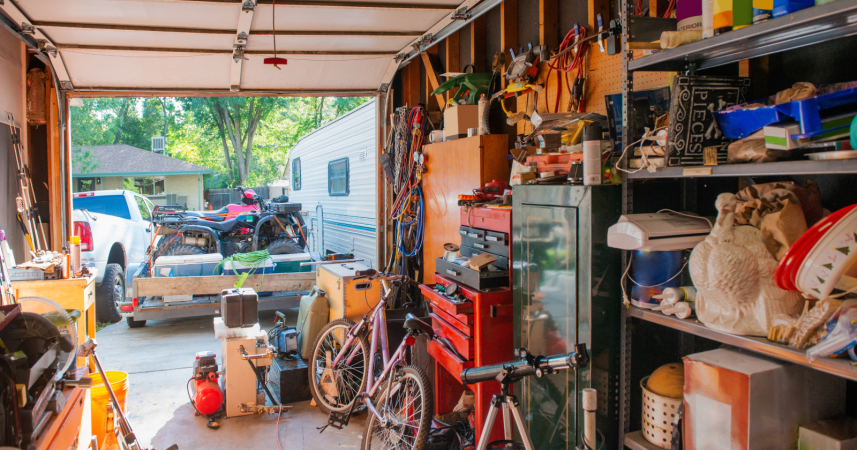
That drawer of dead remotes says less about convenience and more about outrunning yesterday’s thin years.
My mother keeps every plastic grocery bag. Not in a drawer—in bags full of bags, stuffed into corners of the basement like some kind of polymer archive. When I asked her why, she gave the phrase that's become a mantra in boomer households everywhere: "Just in case."
Just in case of what, exactly, remains unclear. But the impulse isn't really about the bags. Boomers were raised by parents shaped by the Great Depression, inheriting a scarcity mindset—the bone-deep belief that resources might vanish without warning. That anxiety, passed down like a family recipe, manifests in basements and garages across America.
These seven items are telltale signs that "just in case" has less to do with practicality than with fear that's never quite gone away.
1. Bread bags, twist ties, and rubber bands sorted by size
There's a drawer in almost every boomer home dedicated to small binding materials. Bread bag clips organized by color. Rubber bands wound into balls. Twist ties categorized by length like some archival system for office supplies nobody needs.
The logic seems sound—why throw away something useful? But when you have 200 rubber bands and haven't needed one in months, the collection stops being practical and becomes something else. It's insurance against a disaster that already happened, to someone else, decades ago.
The Great Depression taught people to save everything because buying replacements wasn't an option. That survival strategy made perfect sense then. Now it's a reflex without a purpose, preserved in kitchen junk drawers nationwide.
2. Instruction manuals for appliances they no longer own
Walk into the average boomer filing cabinet and you'll find manuals for a VCR purchased in 1987, a microwave that died during the Clinton administration, and warranties for appliances in landfills for years.
They keep them "just in case" they need to reference something. But reference what? The toaster oven is gone. So is the coffee maker. The documents remain, carefully filed, as if the appliances might return like prodigal sons needing their registration paperwork.
This isn't about being organized. It's about the fear that throwing away documentation means being caught unprepared. When your parents' parents had to make broken things work because new ones weren't available, keeping the manual made sense. Now it's just theater—performing preparedness for an emergency that exists only in memory.
3. Hotel toiletries that will outlive us all
Tiny shampoo bottles. Miniature soaps still wrapped. Those shower caps nobody has used, not even once. Boomer bathrooms often contain enough complimentary toiletries to stock a small hotel.
The collection grows despite nobody actually using them. Regular-sized products sit on the shower shelf while travel-sized bottles accumulate in drawers, waiting for their moment. That moment never comes. But they can't be thrown away because they're perfectly good, and wasting perfectly good things feels morally wrong.
This is Depression logic preserved in miniature: free things are valuable because free meant survival. The context has changed. The instinct hasn't.
4. Plastic containers without lids (and lids without containers)
Open any boomer kitchen cabinet and you'll find it: the Tupperware chaos. Containers missing lids. Lids that fit nothing currently in the house. Mismatched pieces from sets purchased during the Reagan administration.
They know the lid is gone. They've known for years. But throwing away the container feels wasteful, and maybe—just maybe—the lid will turn up. It won't. It's been gone since 2003. But the container remains, taking up space in the cabinet of hope.
People who lived through actual scarcity learned not to discard anything with potential future use. A container without a lid still has theoretical value. Except in practice, it has none. It's just occupying space reserved for fear.
5. National Geographic magazines from the Carter era
The yellow spines line basement shelves like some sociological study. Boomers keep them because they're "historical documents," never mind that the entire archive exists online, searchable and free. The physical magazines aren't about information access anymore. They're about permanence.
Throwing them away feels like discarding knowledge, even though the knowledge remains accessible. But digital things can disappear—servers fail, companies fold, technology changes. The fear isn't irrational. Boomers watched eight-tracks become obsolete, saw VHS tapes replaced, lived through enough format wars to know nothing digital feels truly safe.
So they keep the paper versions. Just in case the internet vanishes and humanity needs to know what the Amazon looked like in 1978.
6. Duplicate kitchen gadgets bought on sale
Three can openers. Four cheese graters. Six wooden spoons despite only ever using one. Boomer kitchens accumulate redundant tools not because they need backups, but because "it was such a good deal."
The sale price creates the illusion of practicality. If it's 70% off, buying it makes financial sense, right? Except they already own one. And buying things you don't need isn't saving money—it's spending it on future clutter.
This behavior traces back to scarcity thinking: when something valuable becomes available cheaply, you grab it while you can. In Depression-era America, that strategy kept families fed. In modern suburban kitchens, it creates drawers full of duplicate whisks.
7. Boxes of photographs they'll "organize someday"
The boxes multiply in closets and attics. Thousands of images: school photos of unidentified classmates, vacation slides requiring equipment nobody owns, negatives of moments nobody remembers. They mean to sort through them. Digitize them. Create albums.
The task feels insurmountable, and throwing them away feels like erasing history. So the boxes remain, visual records of lives lived, waiting for someone to care enough to look. But who? Their kids take photos on phones, backed up to clouds, organized by algorithms. Physical photographs feel archaic.
Yet boomers can't discard them because photographs are memories, and memories are proof that life happened. Losing them would mean losing something irretrievable. That fear—of loss, of forgetting, of things disappearing—sits at the heart of why these boxes never get opened but also never get thrown away.
Final thoughts
The items themselves don't matter much. Rubber bands and hotel soaps aren't hurting anyone. But they tell a story about inherited fear—about what happens when the people who taught you to be careful grew up during a time when careful meant survival.
The Depression ended. The war ended. Scarcity, for most Americans, ended. But the psychological imprint didn't. It got passed down like Grandma's china, except instead of dishes, it's a belief system: that things might run out, that you need to be prepared, that throwing away anything with potential future use is dangerous wastefulness.
I've been thinking about this differently since reading Rudá Iandê's Laughing in the Face of Chaos. He writes: "We mistake the map for the territory, the name for the essence, and the story for the truth." The story our parents inherited isn't the same as current reality.
Understanding this doesn't mean enabling basements full of junk. But maybe it means being gentler when you're helping them declutter. They're not being difficult. They're trying to feel safe in a way their parents taught them. And sometimes safety looks like a drawer full of bread bag clips, organized by size, just in case.
What’s Your Plant-Powered Archetype?
Ever wonder what your everyday habits say about your deeper purpose—and how they ripple out to impact the planet?
This 90-second quiz reveals the plant-powered role you’re here to play, and the tiny shift that makes it even more powerful.
12 fun questions. Instant results. Surprisingly accurate.