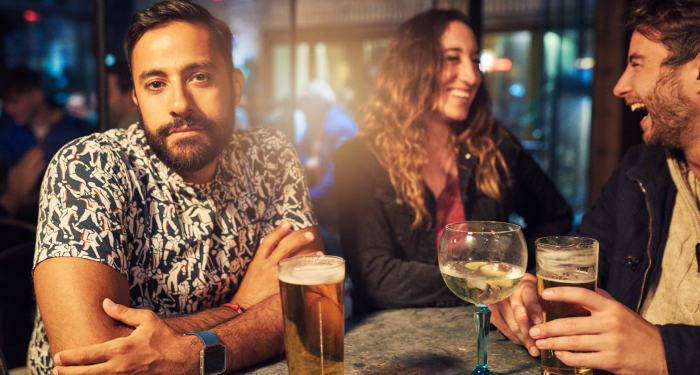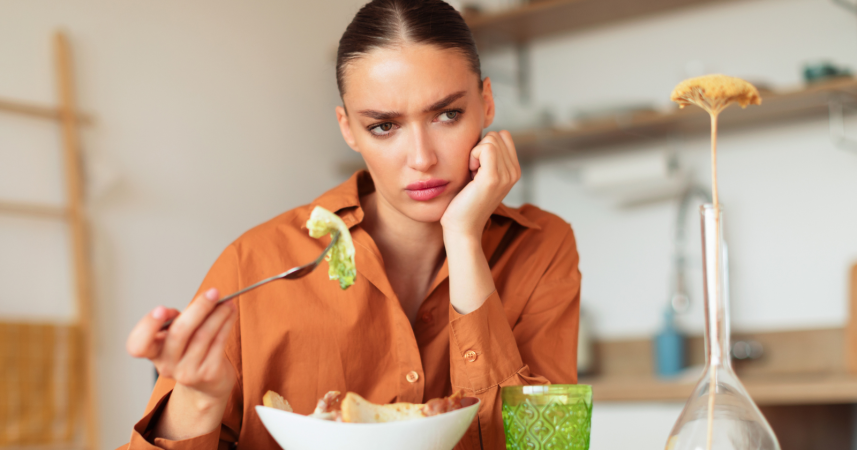
A study revealed that slapping a "vegan" label on food makes people 66% less likely to order it. Turns out the word we use to save the planet might actually be sabotaging us. Here's my journey down the rabbit hole of why we hate that word—and what it's costing us.

Add VegOut to your Google News feed. 
I was standing in line at my neighborhood coffee shop when I watched a small rebellion unfold. The barista, maybe twenty-two with elaborate sleeve tattoos, had just enthusiastically announced their new "vegan blueberry muffin." The woman in front of me—yoga mat under her arm, reusable cup in hand—visibly recoiled. "Do you have, like, a regular one?" she asked. The barista's face fell. The muffin, I learned when I eventually tried it, was transcendent: butter-soft crumb, berries that burst like tiny flavor bombs. But she'd never know. That word—vegan—had erected an invisible wall.
I've been thinking about that moment ever since, especially after stumbling across new research from MIT suggesting that my coffee shop scene wasn't an isolated incident. When researchers labeled food as "vegan," people were significantly less likely to choose it—in some cases, up to 66% less. The same food. The same taste. Just different words.
The hummus wrap that changed everything
The MIT study was elegantly simple. Researchers invited people to lunch events and asked them to pre-order their meals. Some saw menu options labeled "(vegan)," others saw the identical items with no label. The vegan hummus wrap versus Greek salad with feta. The vegetable ravioli versus cheese ravioli. That parenthetical—(vegan)—sent orders plummeting.
Alex Berke, the MIT doctoral student who led the research, wasn't surprised. She'd been vegetarian since age ten, vegan for the past three years. "Anyone who has been eating vegan or vegetarian for a while would not be surprised," she noted in published interviews. "They see the bias against these foods."
What fascinated me wasn't just the bias itself, but how a single word could override every other signal. These weren't activists force-feeding people tempeh. These were MIT graduate students choosing between two free lunch options. Yet that word—vegan—activated something primal.
When cookies become political
Here's where it gets weird. Another study, this one examining what researchers wonderfully termed "randomly-vegan" products, found similar effects. These are foods that just happen to be vegan—many wine varieties, most bread, even some cookies. Foods that weren't trying to be vegan; they just were.
When researchers slapped vegan labels on these products, people suddenly perceived them as less tasty, less indulgent, somehow lesser. The same cookie that brings joy during midnight Netflix binges becomes suspect once labeled. It's like finding out your favorite band has been straight edge all along—nothing's changed except your perception, but somehow everything feels different.
The psychology term for this is "reactance," which sounds like something from a Marvel movie but actually describes that toddler-like impulse we feel when someone tells us what to do. Psychologists have been studying it since the 1960s. When we feel our choices are constrained, we push back. Sometimes violently. Remember when rumors spread about the government banning hamburgers? People started eating them like doomsday preppers hoarding toilet paper.
The bacon revelation
I should pause here to confess something: I spent most of my twenties as one of those people who made bacon their entire personality. I owned bacon-scented candles. I posted those "bacon makes everything better" memes that now make me cringe like looking at old Facebook photos. I was, to use the technical term, insufferable.
My transformation wasn't sudden or dramatic. No documentaries about factory farming, no health scares. Just a gradual realization that meat production accounts for a staggering portion of greenhouse gas emissions. That every burger required resources I couldn't justify. That my food choices were voting for a future I didn't want.
But here's the thing—I hardly ever call myself vegan. Not because I eat animal products (I don't), but because of what that word does to dinner party invitations, restaurant choices, and casual conversations. It's exhausting to have your dietary choices become your entire identity, to watch people's faces shift from interest to defense the moment you name it.
The plant-based pivot
The food industry has noticed. Walk through any grocery store and you'll see the linguistic gymnastics: "plant-based protein," "veggie burgers," "meatless Monday options." Anything but the V-word. The Good Food Institute found that "plant-based protein" actually increases purchasing intent. Same product, different framing, entirely different outcome.
It reminds me of how my favorite local restaurant handles their menu. No labels, no categories, just beautiful descriptions of dishes that happen to align with various dietary preferences. The mushroom ragu doesn't announce its veganism; it simply exists, umami-rich and satisfying. People order it because it sounds delicious, not despite what it lacks.
What we talk about when we talk about food
Research psychologist Susan Clayton notes that vegan food can trigger a "deprivation response" even in people who've never tried it. We imagine sad salads and flavorless substitutes, not the reality of modern plant-based cuisine that routinely wins over skeptics.
Part of this is historical baggage. Early veganism was often more about restriction than abundance. My mom still tells stories about the "health food" restaurant in her college town that served variations of brown rice and disappointment. But we're living in a golden age of plant-based innovation. The impossible has become not just possible but genuinely craveable. Yet the word carries the weight of every sad desk salad.
There's also the identity factor. Researchers found that eating meat can be central to people's self-concept, especially when family or culture is "meat-focused." It's not just food; it's who you are, where you come from, what your grandfather taught you at the grill. Rejecting meat feels like rejecting heritage.
Interestingly, this isn't universal. In many global food cultures—from Ethiopian to South Indian cuisine—plant-based dishes aren't alternative; they're foundational. The "vegan" label is a Western construct that can obscure these rich traditions.
The path through the language maze
So what do we do with this knowledge? The MIT researchers suggest something intriguing: reduce reliance on labels. Let food be food. Let choices be choices. Let that blueberry muffin stand on its own merit.
When menu items lost their vegan labels, people ordered them based on what sounded good. Vegetarians and vegans could still identify suitable options from descriptions. Nearly everyone benefited. The planet certainly did.
This isn't about hiding information—ingredients lists and allergen warnings remain crucial for those with health conditions. Servers can answer questions. It's about removing unnecessary barriers between people and choices that might surprise them.
The climate math is stark: food production accounts for a quarter of global emissions, with meat production dominating that footprint. We need significant shifts in how we eat. But maybe the path forward isn't through labels that divide. Maybe it's through deliciousness that happens to align with our values.
The Friday night experiment
Last Friday, I hosted dinner for friends who span the dietary spectrum. I made wild mushroom ragu, rich with tomatoes and red wine, deep with umami from soy and nutritional yeast. I didn't announce what it was or wasn't. I just cooked.
Watching my most carnivorous friend go back for thirds, I thought about that coffee shop moment. About all the meals missed, the flavors unexplored, the possibilities dismissed because of a single word. Language matters. The stories we tell about our food shape the food we're willing to try.
Maybe the word undermining our climate efforts isn't "meat" after all. Maybe it's the walls we build with language, the identities we defend instead of the futures we could share. Maybe transformation begins not with restriction but with recognition—that the best meal might be the one we don't need to label at all.
The muffin was transcendent, by the way. She really should have tried it.
If You Were a Healing Herb, Which Would You Be?
Each herb holds a unique kind of magic — soothing, awakening, grounding, or clarifying.
This 9-question quiz reveals the healing plant that mirrors your energy right now and what it says about your natural rhythm.
✨ Instant results. Deeply insightful.

Jordan Cooper
Jordan Cooper is a pop-culture writer and vegan-snack reviewer with roots in music blogging. Known for approachable, insightful prose, Jordan connects modern trends—from K-pop choreography to kombucha fermentation—with thoughtful food commentary. In his downtime, he enjoys photography, experimenting with fermentation recipes, and discovering new indie music playlists.
More Articles by Jordan