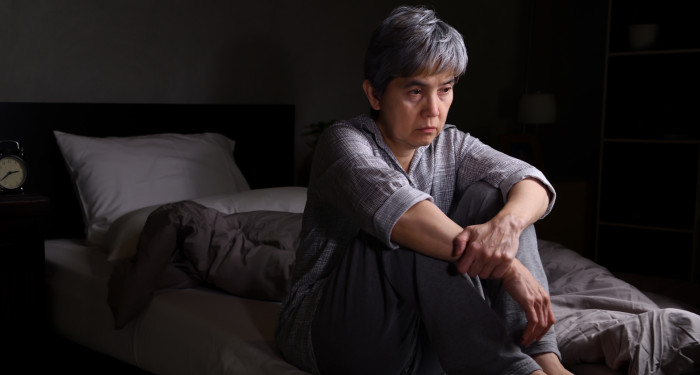
Surviving and healing turned out to be two very different things. It took me almost seventy years to learn the difference.

Add VegOut to your Google News feed. 
I sat there for eleven minutes. I know because I watched the clock on my dashboard tick past our appointment time while my hands gripped the steering wheel like I was bracing for a crash.
I'd buried a husband. Raised two children alone on a teacher's salary. Gone back to school while working two jobs. Survived a breast cancer scare, two knee replacements, and a grief so heavy I didn't leave my house for six months after my second husband passed.
But walking into that office? That was the thing that almost broke me.
The generation that toughed it out
I grew up the youngest of four sisters in a small Pennsylvania town where people didn't talk about their feelings. They talked about the weather, the church bake sale, and whether the Hendersons' lawn needed mowing. My father, a mailman who knew everyone by name, handled sadness the way he handled a blizzard: he put his head down and kept walking.
My mother, a seamstress with hands that never stopped moving, would say "we don't dwell" whenever something difficult happened. A miscarriage, a family falling out, my grandmother's slow decline. We don't dwell. Three syllables that became the unofficial motto of an entire generation.
Boomers grew up when mental health was deeply stigmatized. People with severe conditions were placed in institutions. Families hid it. The message was clear: struggling meant you were broken, and broken people didn't talk about it. They coped.
The stories we told ourselves instead
For decades, I believed that coping was the same as healing. I thought if I could get through something, stand back up, and keep showing up for my students and my children, then I was fine. Strong, even.
After my first husband left me with two toddlers at 28, I didn't grieve. I enrolled in school, picked up extra shifts, and told myself the exhaustion was proof I was doing enough. When my daughter struggled with postpartum depression years later, I recognized something in her eyes that I'd spent my whole life refusing to name in my own.
The truth is, our generation didn't just avoid therapy. We built entire identities around not needing it. Asking for help felt like admitting that all the surviving we'd done somehow didn't count.
What finally cracked the door open
After my husband's seven-year battle with Parkinson's, after holding his hand during those final days and learning things about time and fragility that no one should have to learn alone, I fell apart quietly. Six months of barely leaving the house. My daughter's Sunday phone calls went to voicemail. My garden, which I'd tended for thirty years, went wild.
A friend from my widow's support group said something that stuck with me. She said, "You know, they have people whose whole job is helping you carry this."
I almost laughed. I'd spent 32 years teaching high school English, watching teenagers navigate problems their parents wouldn't acknowledge. I'd seen what happens when people refuse to ask for help. And still, at 69, I sat in that parking lot bargaining with myself.
The number that should alarm us
Here's what I wish I'd known sooner: according to one health survey, only about 4% of baby boomers see a therapist or psychiatrist in a typical year. Compare that to 20% of millennials. Meanwhile, roughly one in five adults over 55 experience some form of mental health challenge.
We're the generation most likely to need support and least likely to seek it. And the reasons aren't complicated. They're the same ones that kept me idling in that parking lot: shame, stubbornness, and sixty-plus years of believing that strength means silence.
What happened when I finally walked in
The therapist's office didn't look the way I expected. No leather couch, no Freudian portraits. Just a woman about my daughter's age, a box of tissues, and a window overlooking a garden that, honestly, could have used some attention.
She asked me what brought me there. And for the first time in seventy years, I didn't say "I'm fine." I said, "I think I've been carrying things I was never supposed to carry alone."
The relief wasn't immediate. It took weeks before I stopped editing myself mid-sentence, stopped worrying that I sounded weak or self-pitying. But slowly, I began to understand that the grief I'd been hauling around since my twenties hadn't gone anywhere. It had just found quieter places to live: my insomnia, my people-pleasing, the way I flinched when someone asked how I was really doing.
It turns out we're not too old for this
One of the things that surprised me most was learning that research suggests older adults actually respond well to therapy, in some cases even better than younger people. We're less likely to drop out of treatment. We show up. We do the work. Which makes sense, if you think about it. We've spent our whole lives showing up. We just never thought to show up for ourselves.
I think about my grandmother, who survived the Depression and still found joy in small things. She had resilience written into her bones. But I wonder sometimes what she might have said if someone had offered her a safe place to set the weight down, even for an hour.
What I'd say to anyone still sitting in the parking lot
If you're reading this and you're someone who grew up hearing "we don't dwell" or "just keep going" or "other people have it worse," I want you to know something.
Going to therapy at 69 didn't undo my strength. It didn't erase all those years of surviving and showing up and holding it together. What it did was help me understand that surviving and healing are two different things. You can be incredibly strong and still need help making sense of what that strength cost you.
My daughter cried when I told her. Not because she was worried, but because she'd been gently suggesting it for years and had given up hope. My son just said, "Good for you, Mom." And my granddaughter, who is 22 and talks about her therapist the way I talk about my garden, hugged me and whispered, "Welcome to the club."
Final thoughts
I still go every other week. I still sometimes sit in the car for a minute before I walk in, not because I'm scared, but because I need a moment to appreciate that I'm doing this. That at 70, I'm still learning. Still growing. Still brave enough to change my mind about what strength looks like.
If there's one thing 32 years of teaching taught me, it's that the students who struggled most weren't the ones who asked for help. They were the ones who were too proud to.
I spent seven decades being proud. I'm glad I finally got tired of it.