The quiet crisis that happens when love sounds like letting go and no one warns you how much it costs.

Add VegOut to your Google News feed. 
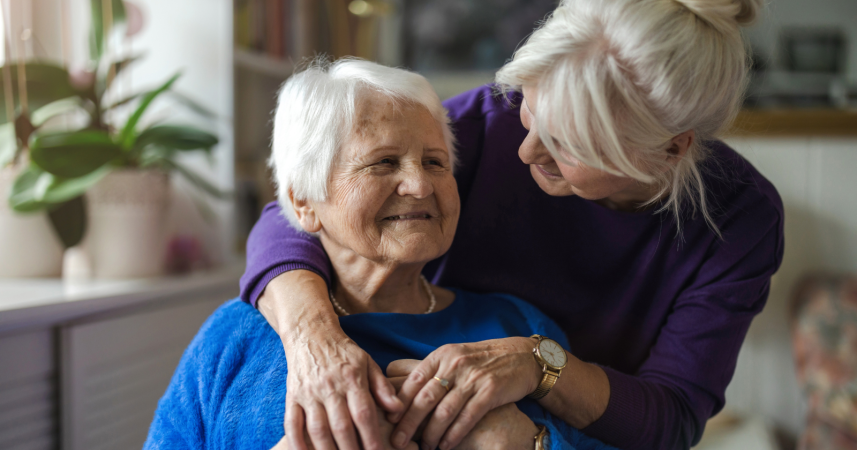
My daughter called last Sunday evening, same as always. Somewhere between her weekend update and a story about my youngest grandchild's science project, she said it. "Mom, you don't have to keep doing all this." She meant the cooking, the cleaning, the calling. The holding together of everything for everyone, the way I've done since I was twenty-eight years old and suddenly alone with two toddlers.
But what I heard was something else entirely.
What I heard was: the person you've been for fifty years is no longer needed. And nobody has told you who you're supposed to be instead.
If that sentence landed somewhere in your chest just now, keep reading. Because this particular kind of loss doesn't come with sympathy cards or casseroles. It comes quietly, disguised as a compliment, wrapped in your children's love.
1. What she said versus what you heard
Let's start with the gap, because the gap is where all the hurt lives.
Your daughter says, "I'll handle Christmas dinner this year." She means: you've done enough, rest. You hear: you can't be trusted with it anymore. Your son says, "We hired someone to clean the house." He means: we want to make your life easier. You hear: you're not keeping up.
The words are kind. The translation your brain runs them through is brutal.
Psychologist Erik Erikson spent decades studying how people make meaning of their lives as they age. He described the central tension of later life as "integrity versus despair", the struggle to look back at everything you've built and still find it meaningful, even when the world seems to be telling you to stop building. That gap between what's said and what's heard? It lives right in the middle of that struggle. Because when someone tells you to stop doing the things that made you who you are, your brain doesn't hear a suggestion. It hears a verdict.
2. The cooking was never just cooking
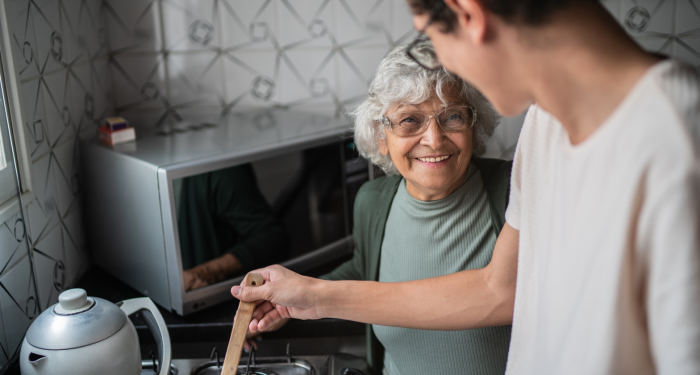
Here's what your children probably don't understand yet. When you stood in that kitchen at six in the morning making lunches nobody asked for, you weren't performing a chore. You were saying something you didn't have other words for.
The cooking was how you said I love you. The cleaning was how you kept chaos at bay when nothing else in life felt controllable. The calling, the checking in, the showing up with soup when someone sneezed, that was the language you built over decades of being the person everyone leaned on.
So when someone says "you don't have to do all that anymore," they're asking you to put down the only vocabulary you've ever been fluent in. And they're not offering a new one.
Women who built their identity primarily around caregiving tend to experience the most significant disruption when that role shifts or ends. Not because they lacked other dimensions, but because the world rewarded that one dimension so heavily that everything else went quiet.
3. Nobody sends flowers for this kind of grief
When my husband passed, people brought food. They called. They sat with me in the silence. There was a shape to that loss, a word for it, a socially recognized container.
But this? The slow dissolving of the person you've been? There's no ceremony for that. No one gathers around and says, "We're sorry for the loss of the version of you that felt essential." You can't exactly announce at your weekly supper club that you're grieving someone who's technically still alive, and that someone is you.
Psychologists who study these transitions call it "role engulfment", a loss of self that happens when you've been so absorbed in caring for others that you don't recognize the person left behind once the caring slows down. The grief is real. The disorientation is real. And the fact that nobody acknowledges it can make you feel like you're being dramatic about something that shouldn't matter.
It matters.
4. Your daughter was right, and it still hurts
I want to be careful here, because my daughter wasn't wrong. She sees what I sometimes refuse to. The body gets tired in ways it didn't used to. The energy that once stretched from dawn to bedtime now runs out somewhere around mid-afternoon.
Her suggestion came from love. Real love, the kind that pays attention.
But there's a particular sting that comes from the people who know you best gently nudging you toward less. What they're offering is rest. What it feels like is erasure. And both of those things can be true in the same breath.
Holding that, the love and the loss of it, without tipping into resentment or guilt, might be one of the hardest emotional tasks of getting older. Nobody teaches you how to do it. You just wake up one morning and it's the exam.
5. The question nobody prepares you for
So if you're not the one cooking and cleaning and calling and holding everything together, who are you?
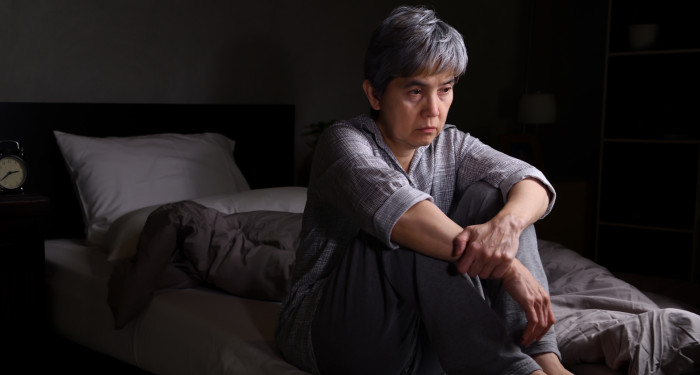
That's the question. The one that sits in your kitchen at five-thirty in the morning while the tea gets cold. The one that follows you to bed and is still there when you wake up.
Every magazine article about reinvention makes it sound so breezy. Learn Italian! Take up pottery! Join a hiking group! As if identity were a hobby you could pick up at a community center. I started learning Italian at sixty-six, and some days conjugating verbs is the most alive I feel all week. But a hobby and an identity are not the same thing.
The real question goes deeper: who are you when nobody needs anything from you? And the terrifying, liberating truth is that for the first time in your life, the answer gets to be entirely yours. Not shaped by what your children need, or what your students needed, or what the bills demanded. Just yours.
Research on purpose in later life suggests that older adults who maintain a sense of meaning tend to be healthier, more resilient, and more satisfied with their lives. But that meaning doesn't have to look like productivity. It can look like presence. Like attention. Like finally reading for an hour in the afternoon without guilt.
6. What nobody tells you: you were always more than the doing
Here's what I'm slowly, imperfectly learning.
The person I was for fifty years, the teacher, the single mother, the wife, the one who held it all together, she didn't vanish when the doing slowed down. She's in the scholarship fund I helped start for students who remind me of the kid I used to be. In the letters I write to my grandchildren that they'll open when they turn twenty-five. In the way my neighbor still knocks on my door on Thursday mornings because coffee with me is the anchor of her week.
The doing was never the whole of me. It was just the loudest part.
What nobody tells you at seventy is that the quieter parts, the ones that got drowned out by decades of necessity, have been waiting. The curiosity. The humor. The hard-won gentleness that only comes from a life that knocked you around enough to soften your edges.
You were never just the woman who cooked and cleaned and called. You were the woman who made all of it mean something.
7. Who you're supposed to be instead
The title of this piece ends with "nobody has told me who I'm supposed to be instead." And I want to be honest: I still don't entirely know.
Some days I feel like I'm standing in an open field with no map. Other days I feel something I can only describe as a strange new kind of freedom, the kind that comes after you've carried heavy things for a very long time and someone finally says you can put them down.
The shift is slow. It looks like choosing what to do with a Tuesday instead of having Tuesday decided for you. It looks like saying no to things that drain you and yes to the things that make you feel like a person with edges and opinions and a life that still has weather in it.
Erik Erikson believed that the gift of navigating this stage well is wisdom. Not the kind that comes from knowing answers, but the kind that comes from making peace with the questions.
I'm making peace. Slowly. With tea. In the quiet of a house that used to be louder.
Final thoughts
If you're in this place right now, standing in the gap between who you were and who you haven't become yet, I want you to know something. You are not disappearing. The world didn't stop needing what you carry. It just needs it in forms you haven't discovered yet.
And yes, it's okay to grieve the old forms. It's okay to feel lost. It's okay to stand in your kitchen before dawn and not know what comes next.
Your daughter said you don't have to keep doing all this. She was right. But what she maybe doesn't know yet is that the doing was how you survived, and letting go of it is its own kind of brave.
Nobody told you who to be instead. Maybe that's because this time, you get to decide.
What’s Your Plant-Powered Archetype?
Ever wonder what your everyday habits say about your deeper purpose—and how they ripple out to impact the planet?
This 90-second quiz reveals the plant-powered role you’re here to play, and the tiny shift that makes it even more powerful.
12 fun questions. Instant results. Surprisingly accurate.