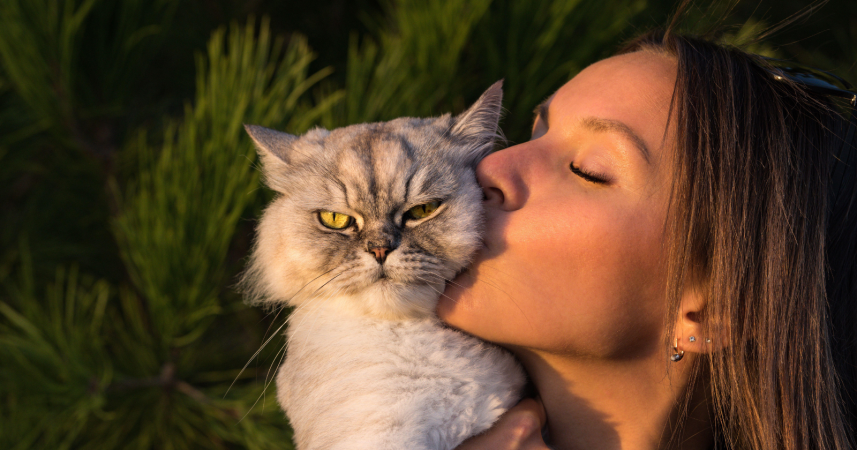
When your pet preference becomes your entire personality.
She mentions it within the first five minutes of meeting her, right after her name but before her job. "I'm such a cat person," she says, with the particular inflection that suggests this explains everything you need to know about her. It's in her dating profile, her Instagram bio, her email signature (yes, really). She owns three cat-themed mugs, wears socks with cat faces, and has definitely said the phrase "I prefer cats to people" at least once this week.
This isn't about people who happen to own cats or even those who genuinely prefer feline company. This is about the specific subset who've transformed "cat person" from a pet preference into a core identity marker, wielding it like a personality test result that explains their entire being. They think they're telegraphing independence, intelligence, and mysterious depth. They believe "cat person" is shorthand for an entire constellation of attractive qualities.
What they're actually broadcasting is far more interesting—and far less flattering—than they realize. Because when you make your pet preference into your primary personality trait, you're not telling the world you're interesting. You're telling the world you think liking cats is interesting. And that distinction reveals more about you than any actual cat ever could.
1. You think introversion needs a mascot
"I'm a cat person" has become code for "I'm an introvert," as if introspection requires a feline ambassador. They drop it into conversations about why they left the party early, why they prefer books to bars, why they need alone time after social events. The cat becomes a fuzzy metaphor for their entire inner life.
What they're really broadcasting: they're uncomfortable with straightforward self-description. Instead of simply saying "I need quiet time to recharge," they've created an elaborate symbolic system where cat preference explains all their social choices. They think it makes them sound mysterious and deep. Actually, it makes them sound like they believe personality types come in exactly two animal-themed options. They're using cats as a personality crutch, hoping feline association will communicate complexity they can't articulate themselves.
2. You've confused aloofness with intelligence
They share memes about how cat people are smarter, more creative, more sophisticated than dog people. They genuinely believe preferring an animal that ignores them indicates superior intellect. In their minds, appreciating cats' independence signals their own intellectual independence, their ability to appreciate subtlety, their comfort with complexity.
Here's what they're actually announcing: they think intelligence is performed through aesthetic choices rather than demonstrated through thoughts or actions. They believe selecting the "harder" pet—the one that doesn't offer constant validation—makes them seem discerning. They're broadcasting intellectual insecurity so profound they need their pet preference to prop up their smart-person identity. Real intelligence doesn't need to announce itself through animal preference. It just exists, regardless of whether you prefer creatures that ignore you or ones that don't.
3. You're romanticizing emotional unavailability
"I love how cats are independent," they say, which sounds healthy until you realize they've made it their entire relationship philosophy. They post quotes about how cats teach us love doesn't need constant validation. They've turned feline indifference into a relationship goal, aspiring to the emotional availability of house pets.
They think they're broadcasting emotional maturity and independence. Actually, they're advertising their commitment to relationships with minimal vulnerability. They're using cats as a model for human connection, which is like using fish to understand mountain climbing. The "cat person" identity becomes cover for inability or unwillingness to engage in the messy, needy, decidedly un-catlike nature of human intimacy. They're not independent; they're just scared of dependence and have found a socially acceptable way to frame it.
4. You need a quirky differentiator
In a world of infinite personality quiz results and identity markers, "cat person" feels like safe uniqueness. It's quirky but not too quirky, different but not difficult. They think it sets them apart from the basic dog-loving masses, makes them seem interesting without requiring actual interesting qualities.
What they're revealing: desperate need to be different coupled with fear of being too different. "Cat person" is the pumpkin spice latte of personality traits—seemingly unique but actually ubiquitous among people who think they're eschewing the mainstream. They're broadcasting that they want to stand out but only within carefully prescribed parameters. True uniqueness doesn't announce itself through pet preference. It just exists, weird and wonderful, regardless of whether you have cats, dogs, or a collection of unusually shaped rocks.
5. You think misanthropy is a personality
"I'm more of a cat person... I just don't really like people that much." They deliver this like it's charming, like preferring animals to humans is a delightful quirk rather than something concerning. They've built an entire identity around the idea that cats are better than people, which sounds cute until you think about it for more than three seconds.
They believe they're broadcasting selective taste and high standards. Actually, they're announcing social difficulties they've repackaged as preferences. Genuine introverts don't need to perform misanthropy; they just need quiet time. People who genuinely prefer animals don't make it a personality trait; they just spend time with animals. The "cat person who hates people" identity is usually covering social anxiety, past hurt, or simple inability to navigate human complexity. It's easier to say you prefer cats than to admit humans are hard and you're struggling.
6. You're performing low-maintenance high-maintenance
"I'm like a cat—low maintenance, independent, don't need much attention." They think this makes them sound easy-going and self-sufficient. They believe they're advertising that they won't be needy, won't require effort, won't demand emotional labor from others.
Plot twist: people who announce their low-maintenance nature are invariably high-maintenance about their low-maintenance identity. They require constant acknowledgment of how little they require. They need you to notice and appreciate how independent they are. They're broadcasting a fundamental misunderstanding of how human relationships work—the belief that needing nothing from others is a virtue rather than a wall. Real low-maintenance people don't announce it. They just exist, making reasonable requests and maintaining reasonable boundaries, like functioning adults.
7. You've mistaken a preference for a personality
Here's the ultimate thing they're broadcasting: they think liking cats is interesting enough to build an identity around. They've taken a simple preference—furry creatures that purr—and inflated it into a whole personality. They genuinely believe "cat person" communicates depth, complexity, and fascinating inner life.
What it actually communicates: they haven't developed enough actual personality to lead with anything else. When your primary identity marker is your pet preference, you're announcing that you've confused consumption choices with character development. You're broadcasting that you think personality can be assembled from preferences rather than developed through experiences, thoughts, and actions. Real personality isn't about what animals you prefer. It's about who you are in the world, how you treat others, what you create and contribute.
Final words
The saddest part about the "cat person as personality" phenomenon isn't the performance itself—we all perform identity to some degree. It's what the performance replaces. Instead of developing actual interests, they've made liking cats their thing. Instead of examining their relationship patterns, they've decided they're "just like cats." Instead of building a personality through experiences and growth, they've adopted a ready-made identity that requires nothing but preference declaration.
When someone leads with "I'm such a cat person," they think they're communicating independence, intelligence, and interesting quirks. What they're actually broadcasting is that they've confused pet preference with personality development. They're telling you they think liking an animal that largely ignores them is the most interesting thing about them. They're revealing that they've chosen the safest possible "quirk"—one shared by millions, threatening to no one, requiring no actual uniqueness.
The real cat people—the ones who just happen to prefer cats—don't make it their entire personality. They have cats, enjoy cats, and then go on to have actual interests, real relationships, and genuine personalities built on more than animal preference. They understand that cats are pets, not personality replacements.
But the "cat person" identity performers will keep broadcasting, keep believing their pet preference communicates depth it doesn't possess. They'll keep sharing cat memes as personality substitutes, keep explaining their behavior through feline metaphors, keep thinking "cat person" is an identity rather than just a fact. And their cats, in perfect feline fashion, will continue to ignore the whole performance, indifferent to their owners' desperate attempts to borrow personality from pet preference.
Which, honestly, is the most cat-like response of all.