Your seating choice is basically a personality test you didn't know you were taking.
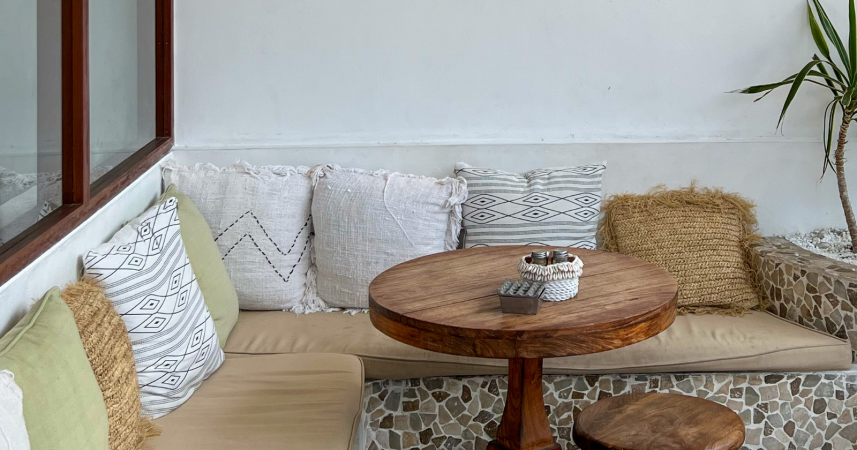
They arrive at the restaurant first—always first—and make a beeline for that specific booth in the back corner. Not the one by the window with better light, not the cozy two-top in the center. The corner. Where two walls meet, where the angles provide maximum coverage, where they can see everything while tucked safely into architectural embrace.
These corner seat people exist everywhere: the ones who immediately claim the conference room chair wedged between wall and whiteboard, who pick movie theater seats at the far edges, who position themselves in coffee shops like they're planning reconnaissance missions. They'll arrive fifteen minutes early to a meeting just to secure their spot, and if someone's already there? Internal panic. They're not being difficult or antisocial. They're just wired to experience space differently than those who plop down anywhere without a second thought.
The corner seat preference isn't random—it's a constellation of personality traits expressing themselves through spatial choice. These people have turned furniture arrangement into a form of self-care, and their consistent corner-seeking reveals more about their internal landscape than any personality quiz could capture.
1. They're environmental scanners extraordinaire
Corner seat people possess radar systems where others have peripheral vision. They notice everything: the couple having a tense conversation three tables over, the server who's having a bad day, the subtle shift in room energy when someone important walks in. This isn't nosiness—it's involuntary environmental processing.
From their corner command post, they can monitor all vectors of social activity without obvious head-turning. They've positioned themselves for maximum information intake with minimum exposure. They're the ones who always know which way the bathroom is and who just walked in, not because they're trying to know, but because their brains automatically catalog environmental data.
This hyperawareness is exhausting in open spaces. The corner seat provides boundaries for their scanning, walls that say "nothing can happen behind you." It's not paranoia—it's pattern recognition that never turns off.
2. They need escape routes like others need coffee
Watch a corner seat person enter any room and you'll see their eyes immediately map exits. Not because they're planning dramatic departures, but because knowing they can leave makes staying bearable. The corner position typically offers the clearest path to doors—no awkward squeezing past tables or through conversation clusters.
This escape route awareness extends beyond physical spaces. They're the ones who park strategically at parties (easy departure), who always have "early morning" excuses pre-loaded, who keep one foot metaphorically pointed toward exits in most situations. The corner seat is just the physical manifestation of their need for optional departure. They've mastered the Irish goodbye and consider it a public service.
They've learned that having an exit strategy makes them more present, not less. When you know you can leave, you're free to actually stay.
3. They're secret control enthusiasts
Not control freaks—control enthusiasts. There's a difference. These people don't need to dominate conversations or manage others. They need to manage their own experience, and the corner seat is command central for personal space management.
From the corner, they control their social exposure like a dimmer switch. They can lean in for connection or press back for distance. They can make eye contact or break it naturally by looking to their protected side. The walls become partners in their social choreography, providing structure for their interactions.
This isn't about controlling others—it's about maintaining agency in environments that often feel chaotic. The corner seat says "I choose my level of engagement" in a world that often demands full participation.
4. They experience space physically
For corner seat people, being in the middle of a room feels like wearing a shirt made of static electricity. They experience exposure as an almost physical sensation—their backs tingle when unprotected, their shoulders tense without wall support. Space has weight and texture for them.
The corner provides physical relief that's hard to explain to people who don't feel space this way. Those two walls aren't just walls—they're armor, reducing the directions from which stimulation can arrive. It's the spatial equivalent of noise-canceling headphones, but for their entire sensory system.
This physical sensitivity to space often extends to other areas. They're the ones who cut tags out of clothes, who notice fluorescent light flicker, who can feel someone standing behind them from six feet away.
5. They're efficiency maximizers in disguise
Corner seat people have unconsciously gamified social situations. The corner position offers maximum strategic advantage: best sightlines, minimal exposure, optimal escape routes, controlled engagement. They've found the power position without seeming power-hungry.
This efficiency extends beyond seating. They're often the ones who've figured out the best parking spots, the optimal grocery shopping times, the perfect coffee shop table for productivity. They collect life hacks like Pokemon cards, always seeking the slight edge that makes experiences smoother.
But unlike typical efficiency zealots, they're quiet about it. They've learned that explaining why the corner seat is objectively superior makes people think they're weird, so they just arrive early and claim their spot. The pandemic only validated what they've always known: maximum distance from others is just good sense. Their WFH setup? Desk in the corner, obviously.
6. They're social introverts in hiding
Many corner seat people are actually quite social—they just need to be social on their own terms. The corner position allows them to engage fully when they want while maintaining a home base for retreat. They're not antisocial; they're strategic social.
These are the people who can work a room brilliantly but need recovery time afterward. Who have deep conversations but prefer them one-on-one. Who enjoy parties but spend half the time in the kitchen having real talks with whoever's hiding there too. They're the ones sharing those "Introvert Recharge" memes unironically.
The corner seat is their social battery charging station. It provides just enough buffer to extend their interpersonal stamina, letting them be more present when they choose to engage.
7. They're naturally alert (and exhausted by it)
This isn't about trauma or anxiety disorders (though those can certainly intensify the trait). Many corner seat people are simply wired for higher environmental awareness. They can't not notice things. Their brains process environmental information as automatically as breathing.
In prehistoric times, these would be the tribe members who spotted danger first. In modern times, they're exhausted by open offices and overwhelmed by busy restaurants. The corner seat turns down their awareness volume from eleven to maybe seven—still alert, but manageable. They're the ones who knew exactly where the exits were before it became a TikTok safety trend.
They've learned that fighting their vigilance is futile. Instead, they accommodate it through strategic positioning, creating environments where their hyperawareness becomes asset rather than liability.
8. They understand boundaries viscerally
Corner seat people have mastered boundary management. They understand intuitively that physical boundaries create psychological ones, that spatial arrangements influence social dynamics. The corner seat is just their most visible boundary-setting behavior—the physical manifestation of knowing where they end and others begin.
These are often the same people who have excellent emotional boundaries, who can say no without guilt, who understand where they end and others begin. They've learned that clear boundaries make better relationships, and they practice this principle spatially before applying it interpersonally.
The corner seat is boundary-setting made literal: "This is my space, that is yours, and this wall helps us both remember it."
Final words
Here's what's beautiful about corner seat people: they've figured out how to hack their own operating systems. Instead of forcing themselves to be comfortable in the middle of rooms, they've accepted their need for walls and worked with it. They've turned what others might see as limitation into strategic advantage.
The truth is, we all have our versions of corner seats—the little accommodations we make for our particular wiring. Some people need background music to think. Others require absolute silence. Some thrive in chaos while others need pristine order. Corner seat people have just made their accommodation visible through spatial choice.
So the next time you see someone make that beeline for the corner spot, recognize it for what it is: not antisocial behavior or paranoid positioning, but self-knowledge in action. They've figured out what they need to be their best selves in social space. And if you're also a corner seat person and they got there first? Well, there's always the other corner. May the best scanner win.
And honestly? The view from the corner is pretty good.
If You Were a Healing Herb, Which Would You Be?
Each herb holds a unique kind of magic — soothing, awakening, grounding, or clarifying.
This 9-question quiz reveals the healing plant that mirrors your energy right now and what it says about your natural rhythm.
✨ Instant results. Deeply insightful.