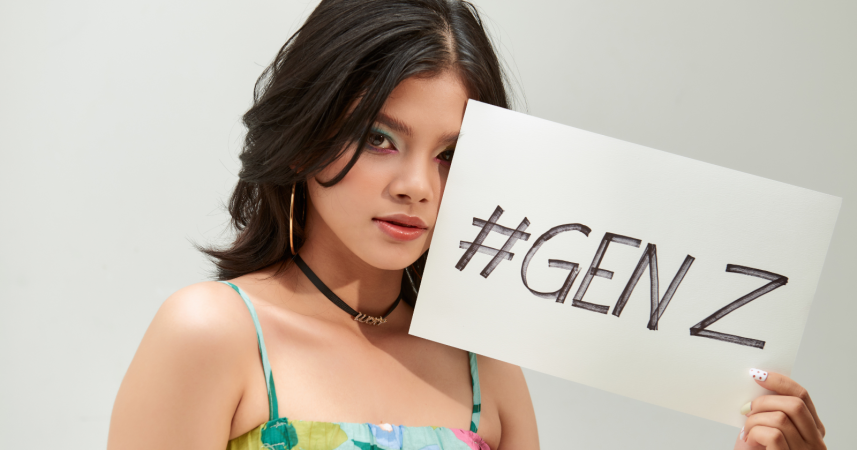
Turns out the “Gen Z stare” isn’t just a meme—it’s a trigger.
Last week at my nephew's birthday party, I watched him deploy what I now know is the "Gen Z stare" on his grandmother when she asked why he wasn't on Facebook. The complete absence of expression on his face was so powerful it made the room feel smaller. She laughed nervously, then got defensive, then just... stopped talking.
That's when I decided to conduct an informal experiment. For one week, I'd respond to Boomer commentary with nothing but the deadpan stare that's become Gen Z's signature move. The results ranged from hilarious to genuinely uncomfortable—and taught me something unexpected about how different generations handle silence.
The grocery store showdown
My first test came at Whole Foods. A man in his sixties struck up conversation about how "nobody wants to work anymore" while we waited in line. Instead of my usual polite nod, I gave him the stare: completely neutral face, unblinking eye contact, total silence.
He lasted maybe four seconds before launching into a story about his first job at fifteen dollars a week. When I maintained the stare, he actually started defending his point to the emotional void I'd become. By the end, he was practically arguing with himself while I held my twelve-dollar kombucha and said absolutely nothing.
When family dinner goes silent
Thanksgiving practice run at my parents' house provided the perfect testing ground. My uncle started his quarterly rant about participation trophies ruining America. I deployed the stare across the mashed potatoes—neutral expression, steady eye contact, complete silence.
The table went quiet. My cousin tried to save things with nervous laughter. My aunt asked if I was feeling okay. My uncle's face cycled through at least five different emotions before he finally muttered something about kids these days and pivoted to football. My mom texted me "what the hell" from across the table. The generational divide had never felt more tangible.
The coffee shop gets heated
This encounter actually sparked anger. A woman at my local café loudly complained to her friend about how "young people are always on their phones instead of talking." The irony wasn't lost on me—she'd been scrolling Facebook for ten minutes straight.
When she caught my eye, expecting agreement, I gave her the stare. She repeated herself, louder. I maintained position. Then she actually got angry, asking if I was "too good to have a conversation." The moment stretched uncomfortably, two generations locked in a battle of expectations versus silence. She was one of the three who genuinely lost it.
The workplace backfire
My boss, technically a young Boomer, loves explaining how remote work is "destroying company culture." During Monday's meeting, when he launched into his usual spiel, I tried the stare. This backfired spectacularly.
Turns out maintaining dead-eyed silence at your superior while they're speaking is what HR calls "creating a hostile work environment." I had to play it off as being deep in thought about his excellent points. The stare, I learned, works better when employment isn't on the line.
Finding peace at the doctor's office
At my annual checkup, the nurse practitioner started lamenting how "nobody reads real books anymore." As someone with three library apps on my phone, I found this particularly rich. Time for the stare.
She tried three different conversation angles—smartphones ruining attention spans, the beauty of physical books, her grandkids never writing thank you notes. Each met with the same expressionless response. Eventually, she just took my blood pressure in blessed silence. Sometimes the absence of reaction is its own form of communication.
The unexpected connection
Here's where things shifted. At the dog park, an older man started complaining about how "everything's so politically correct now you can't say anything." I prepared the stare, but something in his voice made me hesitate.
When I finally deployed it, he didn't get angry or defensive. He just looked tired and said, "You know what? You're right. I'm just talking to fill the air." We ended up having an actual conversation after that—no stare needed. Sometimes the silence creates space for something real.
Final thoughts
After a week of staring down Boomers, I've realized the Gen Z stare isn't really about generational warfare. It's about refusing to perform the emotional labor of responding to every opinion thrown your way. There's power in not feeling obligated to validate someone's worldview just because they're older.
The three people who got genuinely angry were the ones who expected automatic agreement. They weren't looking for conversation—they wanted an audience. The stare strips that away, leaving them alone with their own words hanging in the air. It's uncomfortable because it breaks the social contract we've all agreed to: I talk, you respond, we both pretend this matters.
But here's what surprised me most: the meaningful interactions came after the stare, when some people actually reconsidered what they were saying. Maybe that's the real generational lesson here—not who can handle silence better, but who's willing to sit with their own thoughts long enough to question them.
Though I'm officially retiring the stare. Turns out maintaining that level of deliberate blankness is exhausting. Plus, my face started to hurt. And honestly? Sometimes filling the air with words isn't the worst thing. At least it's something we can do together, even when we're worlds apart.
Just launched: Laughing in the Face of Chaos by Rudá Iandê
Exhausted from trying to hold it all together?
You show up. You smile. You say the right things. But under the surface, something’s tightening. Maybe you don’t want to “stay positive” anymore. Maybe you’re done pretending everything’s fine.
This book is your permission slip to stop performing. To understand chaos at its root and all of your emotional layers.
In Laughing in the Face of Chaos, Brazilian shaman Rudá Iandê brings over 30 years of deep, one-on-one work helping people untangle from the roles they’ve been stuck in—so they can return to something real. He exposes the quiet pressure to be good, be successful, be spiritual—and shows how freedom often lives on the other side of that pressure.
This isn’t a book about becoming your best self. It’s about becoming your real self.