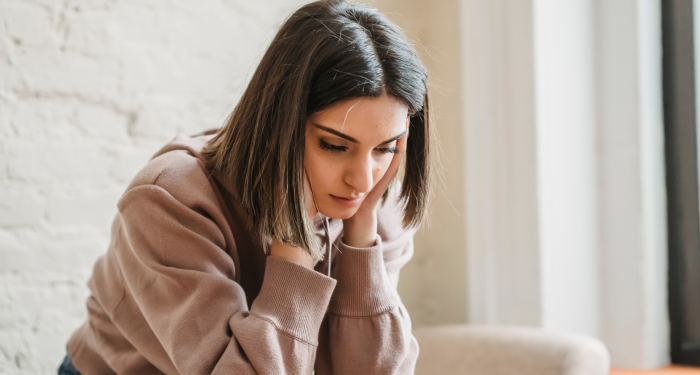
The 8-hour rule, the perfect bedroom, the sleep trackers—these 'solutions' were actually making my nights worse. Here's what happened when I stopped trying so hard.

Add VegOut to your Google News feed. 
The night I finally gave up on sleep, I was sitting in my bathroom at 3:47 a.m., staring at a bottle of sleeping pills like it was a white flag of surrender.
For three years, I'd been the person everyone had advice for. Have you tried melatonin? What about chamomile tea? My cousin swears by this weighted blanket. I'd smile and nod, too exhausted to explain that I had tried it all—the supplements, the meditation apps, the military breathing technique that promised to knock you out in two minutes flat.
Nothing worked. And the harder I tried, the more defeated I felt.
That night in the bathroom, something shifted. I took the medication—and started questioning everything I thought I knew about sleep. These seven beliefs had been making my nights miserable. Letting them go changed everything.
1. Letting go of the 8-hour rule finally calmed my bedtime anxiety
Every night used to begin with math. If I went to bed at 11, I could get eight hours. But what if I didn't fall asleep until midnight? Or 1 a.m.? The calculations would spiral until I was wide awake, heart racing.
Eight hours was gospel. The minimum for health. Anything less meant I was damaging myself.
Then I stumbled across research that made me question everything. A study of over a million people found that the lowest mortality rates weren't at eight hours—they were at seven. Some people thrived on even less.
All those mornings I'd woken naturally after seven hours, feeling rested, only to force myself back to bed—I'd been fighting my body's wisdom.
The shift was immediate. When I stopped chasing eight, bedtime math disappeared. My 78-year-old neighbor sleeps six hours a night and has more energy than I do. When I mentioned she should try for eight, she laughed. "I've slept six hours since I turned 60. Why would I lie in bed awake for two more?"
Why indeed.
2. Stop trying to create the perfect sleep environment—it might be making things worse
My bedroom had become a fortress against wakefulness. Blackout curtains. White noise machine. Temperature set to exactly 67 degrees because some study said that was optimal.
I'd turned my bedroom into a sensory deprivation chamber, and I still couldn't sleep.
One night, in frustration, I cracked the window. Winter air rushed in—too cold, too noisy. Everything the experts said not to do. But something in me relaxed. The room felt alive again.
That small rebellion led to bigger ones. I started reading on my phone in bed. Falling asleep to podcasts. And slowly, impossibly, I started sleeping better.
The truth? Most of us know intuitively what helps us sleep. My sister needs the TV on. My best friend needs her dog in the bed. I need fresh air. We just stop trusting ourselves because some article said we need complete darkness and arctic temperatures.
3. Understanding that sleep struggles aren't always psychological changed everything
"Are you stressed about something?"
Every doctor asked this. As if bad sleep was always a symptom of something deeper.
I'd catalog my life looking for the source. Work was fine. Relationships were stable. No major trauma lurking. The mental archaeology was exhausting—and fruitless.
Then I learned something that shifted my entire perspective: for many people, sleep problems come first, not mental health issues. The exhaustion creates the mood problems, not the other way around.
I hadn't been sad before the sleep troubles started. I'd been someone who noticed beauty everywhere—morning light through leaves, my neighbor's cat sitting like a tiny Buddha in the window. The darkness only descended after months of exhaustion.
Sometimes bodies forget how to do things. We develop allergies to foods we once loved. And sometimes, our sleep systems go haywire. It's not a character flaw. It's just biology being inconvenient.
4. Working with my night owl nature (instead of against it) revolutionized my evenings
My whole life, I'd been told I had my schedule backwards. Productive people rise with the sun. A late start means you're lazy, undisciplined, doomed to poor health.
So I went to war with my own nature. Set alarms for 5:30 a.m. Declined evening invitations. Sat in bed at 10 p.m., wide awake, furious at my stubborn body clock.
But here's what those warnings didn't mention: the health problems might come from forcing night owls to live on a morning person's schedule, not from being nocturnal itself.
My grandmother made her best food after 10 p.m. My mother still grades papers at midnight. We're a family of night bloomers, and fighting that inheritance was like trying to change my eye color through willpower.
I stopped apologizing for my body's preferences. Scheduled important work for evenings. Found a rhythm that worked with my biology, not against it. My body has known its preferred schedule since I was a teenager. Honoring that has brought more peace than any 5 a.m. alarm ever could.
5. Learning that 3 a.m. waking is natural transformed my nights from panic to peace
For years, 3 a.m. was my enemy. I'd jolt awake, calculating hours until morning, dread settling in my chest.
Nothing stopped these middle-of-the-night betrayals. The shame was crushing—normal people slept through the night. What was wrong with me?
Then I discovered something that rewrote everything: before electricity, people didn't sleep in one long stretch. They slept in two segments with a quiet period between, used for prayer, conversation, even visiting neighbors. This wasn't a disorder. It was how humans slept for thousands of years.
An older friend told me she'd made peace with her 3 a.m. wakings decades ago. "I keep poetry by my bed. Those quiet hours have become sacred."
Now when I wake, I don't catastrophize. Sometimes I read. Sometimes I just lie quietly. More often than not, I drift back to sleep without the desperate scramble. My body isn't broken—it's remembering an older rhythm.
6. Deleting my sleep apps gave me back my rest
The tracking started innocently. A fitness watch for Christmas. An app promising to analyze my sleep cycles. Finally, data that would help me fix this.
Every morning became a performance review. Sleep efficiency: 73%. REM sleep: insufficient. The numbers turned my rest into a failing grade.
I'd lie in bed, aware the tracker was judging me. The anxiety about getting good numbers kept me awake, creating the very problem I was trying to solve.
There's actually a name for this: orthosomnia, the obsessive pursuit of perfect sleep data. My friend Sarah had the same experience. "The morning I threw my fitness tracker in a drawer was the morning I started sleeping again."
Deleting the apps felt like removing a weight from my chest. No more grades. Just one simple question: How do I feel? The irony? I sleep better without the constant measurement.
7. Accepting imperfect sleep gave me back my life
By year four, I was desperate. I'd tried therapy, meditation retreats, acupuncture. Nothing had "fixed" me.
Then someone said something that changed everything: "What if the problem isn't your sleep? What if it's your relationship with your sleep?"
The pain of not sleeping was real, but the story I told myself—that I was broken, failing at life—that was optional suffering.
I started small. Following through with plans even after bad nights. Viewing wakeful nights as just... nights. The shift was profound. My sleep didn't magically improve, but my life did. I stopped organizing everything around whether I'd slept well. I stopped treating rest like a test I was failing.
You can have a meaningful, joyful life as an imperfect sleeper. You just have to stop believing that perfect sleep is the price of admission.
Living peacefully with imperfect sleep
Letting go of these seven beliefs didn't cure my sleep struggles. But releasing these myths transformed my relationship with rest.
I no longer do panicked math in bed. My room is just a room. I honor my night owl nature. When I wake at night, I don't spiral. I've thrown away the trackers. Most importantly, I've stopped waiting for perfect sleep to start living.
Last week, a friend mentioned her sleep struggles, exhaustion written across her face. Before anyone could jump in with advice, I caught her eye.
"It's really hard," I said simply. "And there's nothing wrong with you."
Her relief reminded me why sharing these truths matters. Sometimes the most powerful shift isn't learning how to sleep better—it's learning how to live well while you figure it out.