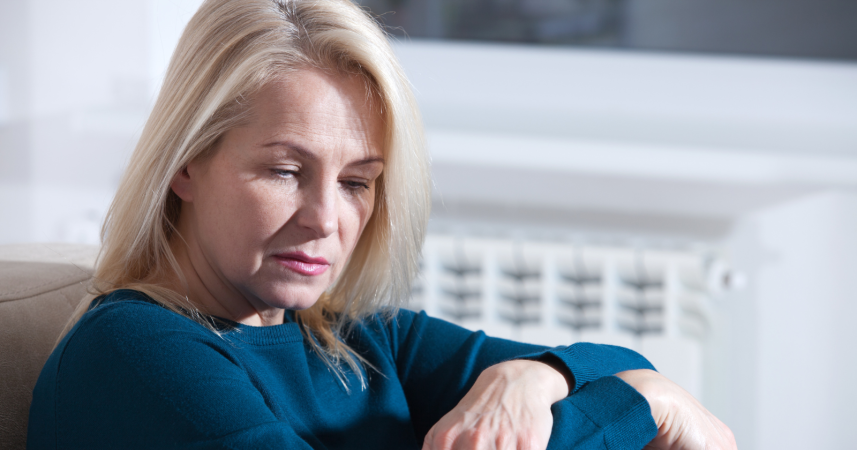
Despite decades of family dinners, marriages, and raising children, the four souls who truly saw past your carefully constructed facade will surprise you — and three of them appeared in the most unexpected moments of an ordinary life.

Add VegOut to your Google News feed. 
Four years ago, at my 68th birthday dinner, surrounded by my children, siblings, and extended family, I felt more alone than I'd ever been in my life. Not because they didn't love me — they did, fiercely. But sitting at that table, listening to them tell stories about who they thought I was, I realized none of them truly knew me.
That night changed how I think about understanding and connection. It made me count backwards through seven decades and realize something both heartbreaking and liberating: in my entire lifetime, only four people have truly understood who I am. And three of them weren't family.
1. The college roommate who saw through my masks
When I met my roommate freshman year, we were both eighteen and terrified, though we hid it differently. She chain-smoked on our dorm room fire escape while I reorganized our shared closet for the third time that week. Somehow, in that first month, she saw straight through my compulsive tidiness to the chaos underneath.
"You're not actually this organized, are you?" she asked one night, watching me alphabetize our record collection. "You just think if everything looks perfect on the outside, maybe you'll feel perfect on the inside."
She was right. For the next four years, and the forty-eight years since, she's been the one person who could call me on my careful constructions. When I married too young to a man who made me feel small, she didn't lecture me. When that marriage crumbled eight years later, leaving me with two toddlers and a teaching degree I'd barely used, she simply said, "Now you get to find out who you really are."
She understood my need to appear strong even when I was breaking, because she did the same thing with humor instead of order. We recognized ourselves in each other's coping mechanisms.
2. The struggling student who recognized a fellow survivor
Twenty years into my teaching career, a sophomore named Marcus sat in the back row of my English class, brilliant and drowning. His essays, when they arrived, were extraordinary. But they were always late, often crumpled, sometimes coffee-stained from overnight shifts at the warehouse where he worked to support younger siblings.
The day I had to fail him, he stayed after class. "You know what this is like," he said. It wasn't a question.
He'd seen me grading papers during lunch because evenings were for my own kids' homework help. He'd noticed me wearing the same three outfits in rotation, saving money for my daughter's college fund. He recognized the exhaustion of someone trying to hold multiple lives together with willpower and caffeine.
"I do," I told him. "And I also know you'll make it through."
He retook my class the next semester and passed. Today he's a social worker who still emails me every Christmas. We understood each other's particular brand of tired determination — the kind that comes from having people depending on you before you've figured out how to depend on yourself.
3. The widow who understood grief's geography
After my second husband died following five years of Parkinson's, I thought I was prepared for widowhood. I wasn't. The grief support group I reluctantly joined six months later was full of well-meaning people who wanted to share stages and timelines, as if loss followed a syllabus.
Then I met Eleanor. She sat across from me at our first meeting and said, "The hardest part isn't that they're gone. It's that you're still here, and you don't know who you are anymore."
She understood the specific disorientation of waking up after decades of being half of something. She knew about the guilt that comes with relief when suffering ends. She recognized the strange shame of discovering you could be whole alone, that maybe you even preferred some aspects of it.
We became Thursday morning coffee friends. Not to process our grief, but to witness each other becoming new versions of ourselves at 68 and 71. She understood that widowhood wasn't just about loss — it was about the terrifying freedom of getting to choose who to be when no one needed you to be anything.
4. The granddaughter who saw past the role
Last year, my eldest granddaughter called me after midnight, crying over her first real heartbreak. Instead of offering grandmother wisdom about plenty of fish in the sea, I told her the truth.
"I was exactly your age when I met your grandfather," I said. "I married him because I thought being chosen by someone meant I was worthy of choosing. It took me eight years and two babies to realize that wasn't the same as love."
The silence on the other end stretched long enough that I wondered if I'd crossed a line. Then she said, "Mom did the same thing, didn't she? And you couldn't stop her because she needed to learn it herself, just like you did."
In that moment, my granddaughter saw me not as the grandmother who baked cookies and helped with college essays, but as a woman who'd made mistakes, who'd passed those patterns to her children despite her best efforts, who'd had to forgive herself for the ways she'd failed while trying to survive.
Now she calls me not for advice but for recognition. She understands something about me that my own children can't — what it feels like to be young and mistaking need for love, to be building a self from scratch with no blueprint except what not to do.
Final thoughts
At 72, I've stopped expecting understanding from the people who share my blood or my breakfast table. Love and understanding aren't the same thing, though we often confuse them. My family loves me within the boundaries of the roles I play for them — mother, sister, grandmother. But the four people who've truly understood me saw me outside those roles, in the spaces where I was just myself, messy and contradictory and real.
Perhaps four is enough. Perhaps it's generous. In a lifetime of teaching thousands of students, raising two children, being married twice, and collecting decades of friendships, only four people have looked at me and truly recognized who I was beneath what I was trying to be.
That's not a tragedy. It's a miracle that it happens at all.
If You Were a Healing Herb, Which Would You Be?
Each herb holds a unique kind of magic — soothing, awakening, grounding, or clarifying.
This 9-question quiz reveals the healing plant that mirrors your energy right now and what it says about your natural rhythm.
✨ Instant results. Deeply insightful.
Marlene Martin
Marlene is a retired high school English teacher and longtime writer who draws on decades of lived experience to explore personal development, relationships, resilience, and finding purpose in life’s second act. When she’s not at her laptop, she’s usually in the garden at dawn, baking Sunday bread, taking watercolor classes, playing piano, or volunteering at a local women’s shelter teaching life skills.
More Articles by Marlene