What started as a budget experiment turned into a revelation about how store design and cultural food traditions quietly shape what ends up on our plates.
It started because I was broke and curious. My local 99 Ranch Market had prices that made Whole Foods look like a jewelry store, and I wanted to see if I could eat well for a month shopping exclusively there.
What I didn't expect was this: by week two, I realized I'd barely touched any animal products. Not because I was trying. Because the store itself had nudged me in that direction.
This wasn't willpower or meal planning. It was something more interesting. The layout, the product selection, the sheer abundance of vegetables and plant proteins had quietly restructured my eating habits.
By the end of the month, I'd gone roughly 90% plant-based without ever making a conscious decision to do so. And it got me thinking about how much our food environments shape our choices in ways we rarely notice.
The produce section changes everything
Walk into most American grocery stores and you'll pass through a modest produce section before hitting the real estate they care about: processed foods, meat counters, dairy cases. Asian grocery stores flip this script entirely. At my 99 Ranch, the produce section is massive. It's the main event, not the opening act.
We're talking bok choy in four different varieties. Fresh water spinach. Bitter melon. Lotus root. Daikon radishes the size of your forearm. The selection is so vast and affordable that vegetables stop feeling like a side dish obligation.
They become the foundation of every meal because they're right there, looking gorgeous, costing almost nothing.
Research on food environment and dietary behavior confirms what I experienced: when healthy options are more visible and accessible, people choose them more often. It's not about motivation. It's about what's easy to grab.
Tofu gets the respect it deserves
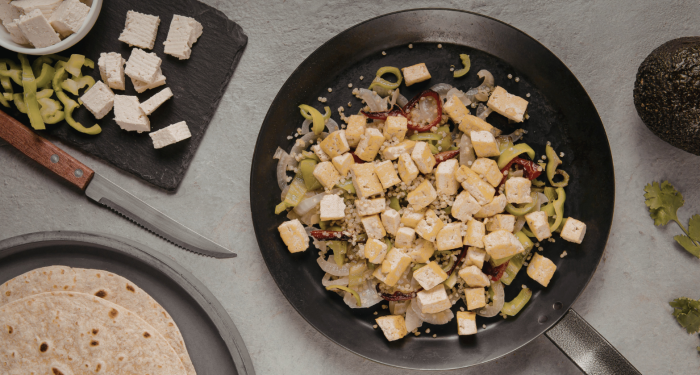
In mainstream grocery stores, tofu sits lonely on a refrigerated shelf, maybe two or three options if you're lucky. At an Asian grocery store, tofu has its own kingdom. Silken tofu, firm tofu, extra firm tofu, smoked tofu, five-spice tofu, tofu puffs, tofu skin, fresh tofu made that morning.
This variety matters more than you'd think. When you have options, tofu stops being that weird vegan thing you're supposed to eat. It becomes an ingredient with actual range.
I found myself grabbing smoked tofu for stir-fries, silken tofu for soups, and tofu puffs to throw into curries. The decision fatigue disappeared because the store had already done the work of showing me what was possible.
Same goes for tempeh, seitan, and mock meats. The selection is deeper, cheaper, and more interesting than anything I'd found elsewhere.
The meat section is surprisingly small
Here's something that caught me off guard. The meat section at my Asian grocery store exists, but it's compact. It's not the sprawling centerpiece you find at conventional supermarkets. There's no elaborate butcher counter with seventeen cuts of beef demanding your attention.
This subtle architectural choice matters. When meat isn't visually dominant, it stops feeling like the default center of every meal. I'd wander through the store filling my basket with vegetables, mushrooms, tofu, and noodles.
By the time I passed the small meat section, my cart was already full. Buying chicken felt like an afterthought rather than a starting point.
Behavioral scientists call this choice architecture. The way options are presented influences what we pick. My Asian grocery store had accidentally created an environment where plants were the path of least resistance.
Umami abundance makes plants satisfying
One reason people struggle with plant-based eating is the satisfaction gap. Meat delivers umami, that deep savory flavor that makes food feel complete. Without it, meals can taste like something's missing.
Asian grocery stores solve this problem by stocking an arsenal of umami bombs. Fermented black beans. Miso paste in six different varieties. Mushroom soy sauce. Dried shiitake mushrooms. Gochujang. Doubanjiang. These ingredients pack so much flavor depth that you don't miss meat because your taste buds are already having a party.
I started keeping a rotation of these sauces and pastes in my kitchen. A spoonful of miso in vegetable soup. Some fermented black beans in a tofu stir-fry. Suddenly my plant-based meals tasted richer and more satisfying than the chicken dinners I used to make.
Cultural food wisdom encoded in the aisles
There's something deeper happening here beyond store layout and product selection. Many Asian culinary traditions evolved around plants as the centerpiece, with meat as a flavoring agent rather than the main attraction. The grocery store reflects this cultural wisdom in physical form.
Traditional Chinese, Japanese, Korean, Vietnamese, and Thai cuisines all feature plant-forward eating patterns that Western nutrition science is now catching up to. When you shop at a store designed around these traditions, you're tapping into centuries of accumulated knowledge about how to eat well from the earth.
I wasn't inventing a new way of eating. I was stumbling into an old one. The store was my teacher, and the lessons were built into every aisle.
Final thoughts
After my month ended, I kept shopping at 99 Ranch. Not because I'd committed to being plant-based, but because the food was better and cheaper and my meals had become more interesting. The 90% plant-based thing just kept happening on its own.
This experiment taught me that environment beats willpower every time. If you're curious about eating more plants but find yourself constantly reaching for meat out of habit, try changing where you shop before changing what you buy. Let the store do some of the work for you.
Your local Asian grocery store isn't trying to convert you to anything. It's just organized around a different set of assumptions about what a meal looks like. And sometimes, that's all the nudge you need.
What’s Your Plant-Powered Archetype?
Ever wonder what your everyday habits say about your deeper purpose—and how they ripple out to impact the planet?
This 90-second quiz reveals the plant-powered role you’re here to play, and the tiny shift that makes it even more powerful.
12 fun questions. Instant results. Surprisingly accurate.