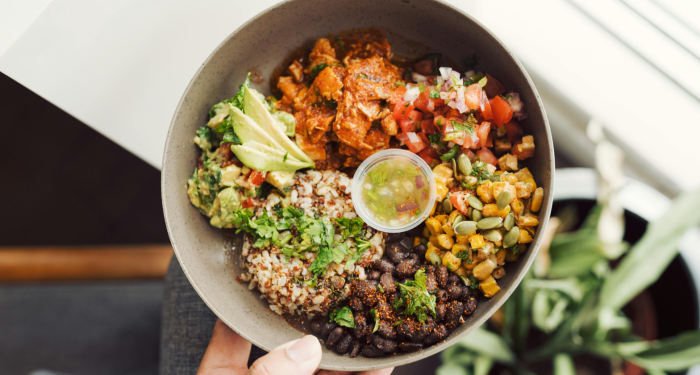
You never announced it, never made a resolution, but somehow your cart is full of oat milk and your freezer is stacked with veggie burgers.
There's a particular kind of person who wakes up one morning, looks around their kitchen, and realizes something wild. They've basically stopped eating animal products.
Not because of some dramatic Netflix documentary moment or a New Year's resolution. It just... happened. Gradually. Like how you suddenly realize you haven't worn jeans in three months.
Behavioral scientists call this "behavioral drift," and it's fascinating. We like to think we make conscious choices about our lives, but research shows that habits form through repetition and environment more than willpower.
Your brain quietly rewires itself based on what you do repeatedly. So if you've been slowly swapping, substituting, and experimenting without any grand plan, you might already be further along the plant-based path than you think.
Here are seven signs that your subconscious has been making decisions without consulting you first.
1. Your default milk order changed without a formal announcement
Remember when you first tried oat milk because the coffee shop was out of regular? Now you genuinely prefer it. You didn't sit down and weigh the environmental impact of dairy versus alternatives. You just kept ordering oat milk because it tasted good in your latte.
This is textbook habit formation. You tried something once out of necessity, found it acceptable, and repeated it until it became automatic. Now when someone hands you coffee with cow's milk, it tastes slightly off. Not bad exactly, just not what you expect anymore.
The same thing probably happened with your cereal, your smoothies, maybe even your baking. Plant milk snuck into your routine through the side door while you weren't paying attention.
2. You've developed strong opinions about veggie burger brands
There was a time when all veggie burgers seemed the same to you. Weird, slightly mushy, something vegetarians ate at barbecues.
Now you have a ranking system. You know which brand has the best char, which one falls apart on the grill, and which one you'd never waste your money on again.
Having preferences this specific means you've eaten a lot of veggie burgers. Like, a lot. Enough to develop a palate for them. Enough to get annoyed when a restaurant serves the wrong kind.
This level of opinion doesn't develop from occasional experimentation. It comes from regular consumption. Your taste buds have been collecting data, and somewhere along the way, plant-based patties became a normal part of your rotation.
3. You automatically scan menus for the vegetarian section first
You're not even thinking about it anymore. Your eyes just drift to that part of the menu like a reflex. The chicken section might as well be written in a foreign language for all the attention you give it.
This is your brain being efficient. It's learned that the information you need is usually in a specific spot, so it skips the irrelevant stuff. Menu scanning behavior reveals a lot about our actual eating patterns, not the ones we think we have.
Pay attention next time you're at a new restaurant. If you're reading the plant-based options first and treating everything else as backup, your subconscious has already made some decisions about what you actually want to eat.
4. Cooking meat feels like more effort than it's worth
It's not that you're morally opposed to it. It's that cooking chicken requires checking temperatures, worrying about cross-contamination, and cleaning everything thoroughly afterward. Meanwhile, you can chop vegetables directly on the counter and rinse the knife under the tap.
Convenience is a powerful behavioral driver. Studies on friction costs show that even small inconveniences can dramatically change our choices. If plant-based cooking feels easier, you'll naturally do it more often.
You might not have consciously decided that handling raw meat is annoying. But your brain registered the extra steps and quietly started steering you toward simpler options. Before you knew it, your weeknight dinners became mostly plants by default.
5. You've started noticing how heavy you feel after eating certain foods
This one creeps up on you. After months of eating lighter, more plant-forward meals, you have a burger at a cookout. Real beef, real cheese, the works. And afterward, you feel like you need a nap and possibly a new stomach.
Your digestive system adapts to what you feed it regularly. When you've been eating mostly plants, your gut microbiome shifts accordingly. Suddenly reintroducing heavy animal products can feel like a shock to the system.
You're not imagining it. That sluggish, overly full sensation is real feedback from your body. And once you've noticed the contrast, it's hard to un-notice it. Your future food choices start factoring in how you'll feel two hours later, not just how it tastes going down.
6. Your grocery cart looks different and you're not sure when that happened
You used to buy chicken breasts every week. Now there's tofu in your cart, and you don't remember making that switch. There's nutritional yeast in your pantry. You own three different types of beans. When did you become this person?
Grocery shopping is largely habitual. We tend to buy the same things week after week because decision fatigue is real. So when your cart contents shift, it means your baseline habits have shifted too.
Take a mental inventory of your last few grocery trips. If plant-based proteins have slowly replaced animal ones, if your produce section haul has grown while your meat section visits have shrunk, the evidence is right there in your refrigerator.
7. You've stopped explaining or defending your food choices
Early on, when you'd order something meatless, you might have felt the need to explain. "Oh, I'm just trying to eat lighter" or "I had a big lunch." Now you just order what you want without commentary. It doesn't feel like a statement anymore. It's just dinner.
This psychological shift is significant. When a behavior requires justification, it still feels like a deviation from your identity. When it doesn't, it's become part of who you are. You've internalized the change.
The absence of self-consciousness around your food choices suggests they've moved from "thing I'm trying" to "thing I do." That's a fundamental identity shift, and it happened while you were busy living your life.
Final thoughts
Here's the thing about gradual change: it's actually more sustainable than dramatic overhauls. When you force yourself into a new identity overnight, you're fighting against years of established habits. But when change happens organically, through repeated small choices, it sticks.
If you recognized yourself in several of these signs, congratulations. You've been building a plant-based lifestyle without the pressure of labels or commitments. Your brain did the heavy lifting while you were just trying to figure out what sounded good for dinner.
You don't have to call yourself anything. You don't have to make announcements or update your social media bios. But it might be worth acknowledging what's already true: your relationship with food has evolved.
And that evolution happened because something about eating more plants just worked for you. That's the most honest reason there is.
If You Were a Healing Herb, Which Would You Be?
Each herb holds a unique kind of magic — soothing, awakening, grounding, or clarifying.
This 9-question quiz reveals the healing plant that mirrors your energy right now and what it says about your natural rhythm.
✨ Instant results. Deeply insightful.