What we traded for convenience might have cost us more than we realize.
There's something quietly remarkable about watching my grandmother change a tire.
She's in her seventies, and while I'm fumbling with my phone trying to find a YouTube tutorial, she's already loosened the lug nuts and positioned the jack. No drama, no anxiety—just competence.
It got me thinking about the gap between generations. Not in a "back in my day" way, but in terms of actual capabilities that seem to have gotten lost somewhere between rotary phones and smartphones.
The baby boomer generation (people born between 1946 and 1964) grew up in a fundamentally different world. And while we can debate which generation has it easier or harder, there's no denying they picked up certain skills by age 12 that many of us still haven't mastered in our thirties and forties.
1. Reading an analog clock
This might sound trivial until you realize what's actually happening in the brain when someone reads an analog clock.
Digital clocks give you information. Analog clocks make you work for it.
Learning to read an analog clock develops spatial reasoning, pattern recognition, and the ability to understand time as a continuous flow rather than discrete numbers. It's not just about telling time—it's about visualizing fractions, understanding angles, and processing relationships between moving parts.
I've mentioned this before, but skills that seem "outdated" often train cognitive functions we desperately need for other tasks. When boomers learned to read analog clocks, they were building neural pathways for mathematical thinking, spatial awareness, and abstract reasoning.
Meanwhile, an Oklahoma City survey found that only one in five kids aged 6-12 can read an analog clock today. That's not just about telling time—it's about the kind of thinking we're losing.
2. Face-to-face communication
Here's something uncomfortable: we're getting worse at talking to each other.
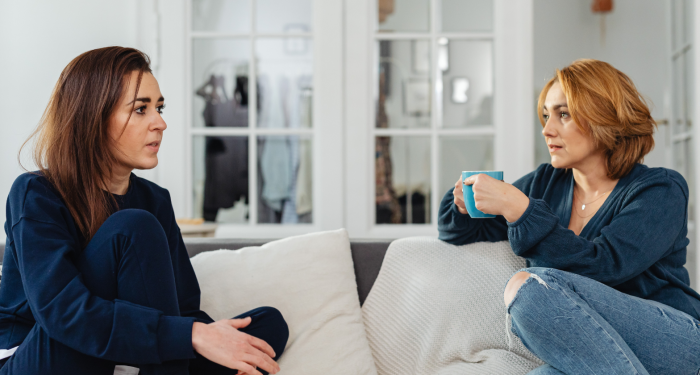
Before texting, before email, before any of it, boomers had to figure out how to communicate in person. They learned to read body language, interpret tone, navigate awkward silences, and handle conflict without hiding behind a screen.
Research during the COVID-19 pandemic found that face-to-face communication was the most important predictor of mental health during lockdowns, more significant than digital communication, physical activity, or outdoor time.
The reason? In-person interaction requires a level of presence and processing that digital communication simply doesn't demand. You have to pay attention to facial expressions, respond to subtle emotional cues, and adjust your approach in real time.
I notice this at coffee shops in Venice Beach all the time. People sitting across from each other, both on their phones. We've traded the difficulty of genuine connection for the comfort of curated communication.
3. Basic home repair
My partner's dad can fix almost anything. A leaky faucet, a broken drawer, a loose doorknob. He approaches problems with this calm certainty that a solution exists and he'll find it.
Boomers grew up in an era where calling a professional for every small issue wasn't really an option. They learned to troubleshoot, to use their hands, to experiment until something worked.
This isn't just about saving money on repairs. It's about developing what psychologists call self-efficacy—the belief that you can handle problems yourself. Every time you fix something that's broken, you're building confidence that extends far beyond home maintenance.
Today's approach? Google it, order a replacement on Amazon, or call someone. We've outsourced our competence.
4. Cooking from scratch
My grandmother doesn't follow recipes. She just knows.
How much salt, when the chicken is done, whether the sauce needs more time. It's pattern recognition built from hundreds of meals cooked without the option of ordering delivery.
Boomers learned to cook because they had to. They developed intuition about ingredients, timing, and ratios. They learned to improvise and trust their senses over instructions.
There's something deeply satisfying about cooking without constantly checking your phone. It forces you to be present, to engage all your senses, to build a relationship with food that goes beyond "15 minutes or less."
5. Navigation without GPS
Before smartphones, people actually had to know where they were going.
Boomers learned to read maps, remember landmarks, and develop a sense of direction. They had to pay attention to their surroundings, create mental maps, and solve the problem of getting from point A to point B without turn-by-turn instructions.
This builds spatial intelligence in a way that following GPS directions simply doesn't. When you're actively navigating, you're engaging with your environment, processing information, and making decisions. When you're following GPS, you're just... following.
I catch myself doing this in LA. Driving the same routes over and over, never actually learning the city because I'm always relying on my phone. It's efficient, sure. But something's lost.
6. Handling boredom
This might be the most important one.
Boomers grew up with long stretches of nothing to do. No infinite scroll, no constant stimulation, no panic about being "productive" every second. They just... sat with it.
And in those boring moments, they learned to entertain themselves. To think. To daydream. To create.
Research shows that boredom in childhood helps develop creativity, resourcefulness, and the ability to find joy in simple activities—skills that many adults today struggle to cultivate.
We've optimized boredom out of our lives, and we're paying the price in anxiety, restlessness, and an inability to be present. Boomers had no choice but to develop an internal world. We've traded that for external distraction.
7. Money management without apps
Boomers learned to budget with envelopes, checkbooks, and actual cash. They could feel money leaving their hands, see the balance decrease, understand the relationship between spending and saving.
Today? Money is abstract. A number on a screen that magically replenishes or mysteriously disappears.
Financial apps are helpful, but they also create distance between you and your money. When everything happens automatically, you lose the tactile experience of financial decisions. You don't feel the weight of spending $100 the way you do when you're physically handing over five twenties.
My grandmother still balances her checkbook monthly. It seems old-fashioned until you realize she always knows exactly where she stands financially. No surprises, no panic, just clear-eyed awareness.
8. Conflict resolution without authority figures
Who's on first base? Who gets the last turn? Who started it?
Boomer kids had to figure these things out themselves. No parents running interference, no teachers mediating every dispute. Just a group of children learning to negotiate, compromise, and sometimes agree to disagree.
This builds crucial life skills: the ability to advocate for yourself, to see multiple perspectives, to find middle ground. These aren't just playground skills—they're relationship skills, work skills, life skills.
Today's approach is often either helicopter parenting (adults solving every problem) or digital conflict (arguing online where stakes are low and empathy is nonexistent). Neither teaches the art of genuine resolution.
Final thoughts
Here's what I keep coming back to: these skills aren't about nostalgia or claiming one generation is better than another.
They're about recognizing that when we gain convenience, we often lose capability. And that trade-off has consequences.
The good news? None of these skills are actually gone. They're just dormant. You can learn to read an analog clock, navigate without GPS, cook without recipes, handle boredom without reaching for your phone.
It's not about rejecting technology or pretending we can go back. It's about understanding what we've given up and deciding whether we want to reclaim some of it.
Because competence isn't just about what you can do—it's about who you become in the process of learning to do it.
If You Were a Healing Herb, Which Would You Be?
Each herb holds a unique kind of magic — soothing, awakening, grounding, or clarifying.
This 9-question quiz reveals the healing plant that mirrors your energy right now and what it says about your natural rhythm.
✨ Instant results. Deeply insightful.