She realized she'd been apologizing for sitting in her own living room for thirty years, just like every woman she knows over 55 — and the most unsettling part is that nobody, including herself, ever noticed this bizarre ritual until now.

Add VegOut to your Google News feed. 
Last week, I found myself doing it again. My friend Carol had stopped by unexpectedly, and there I was, sitting on my own sofa with a cup of tea and a book. The moment I heard her car in the driveway, I jumped up like I'd been caught committing a crime.
"Sorry, just taking a quick break," I said as she walked in, already moving toward the kitchen. "Let me get you something to drink."
Carol, bless her, didn't even register my apology. She never does. None of them do. Because this strange dance we do—this reflexive apology for the simple act of sitting in our own homes—has become so normalized that it's invisible.
The invisible apology epidemic
I started noticing this phenomenon about a year ago. Every woman I know over 55 does it. We apologize for sitting when someone arrives. We explain our rest like we need permission. We jump up from chairs we bought, in homes we've maintained for decades, as if being caught sitting is something shameful.
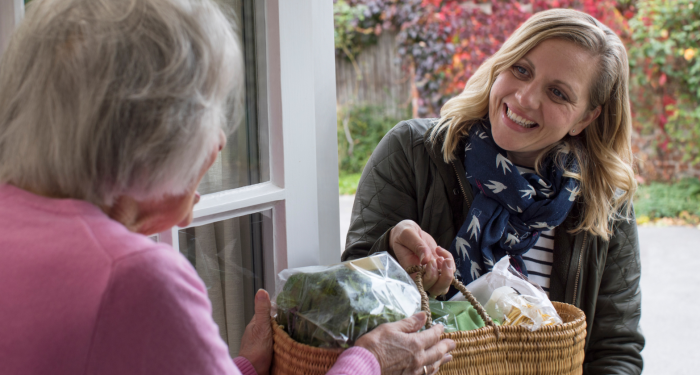
My neighbor Patricia, 68, does it when I drop off her mail. "Oh, you caught me being lazy," she'll say, rising from her porch swing where she was watching the birds. Patricia, who raised four children, nursed her husband through cancer, and still volunteers at the food bank three days a week. Lazy.
My sister does it too. Last month I visited her after her knee surgery—doctor's orders to stay off her feet—and she apologized for being in bed at 2 PM. "I should be up by now," she said, trying to swing her legs over the side. I had to physically stop her.
When did this happen? When did the simple act of sitting in our own homes become something that required explanation or apology?
The training started early
I think about my grandmother's house, where the women never sat during gatherings. They orbited the kitchen, the dining room, the living room, in constant motion. Refilling, cleaning, serving, checking. The men sat. The men talked. The women moved.
My mother was the same. In all my childhood memories, she's standing. At the stove, at the sink, at the ironing board. Even when she watched television with us in the evening, she stood folding laundry. The message was clear: women in motion are women of value.
I absorbed this lesson completely. During my years raising children, I perfected the art of perpetual movement. I could eat standing at the counter while packing lunches. I could grade papers while stirring soup. I turned multi-tasking into an Olympic sport, and rest into something that happened to other people.
Now I watch my daughter doing the same thing. She arrives at my house like a whirlwind, immediately starting to clean things that don't need cleaning, organize things that are already organized. When I tell her to sit, she does—for about thirty seconds before popping back up. "Just let me load the dishwasher," she says, though I loaded it an hour ago.
Why sitting feels like stealing
Here's what I've come to understand: we've internalized the belief that our worth is directly proportional to our productivity. Sitting is the absence of doing, and the absence of doing is the absence of value. It's an equation so deeply embedded that we don't even realize we're solving for it every time we leap from our chairs.
Think about the language we use. "Just sitting." "Just reading." "Just resting." That word "just" minimizes the act, apologizes for it, suggests it's not enough. We never say we're "just" cooking or "just" cleaning or "just" helping. Those activities stand on their own merit. But sitting? Sitting needs qualification.
I've started paying attention to how men in my life occupy chairs. They don't announce it. They don't explain it. They don't apologize for it. They simply sit. My brother can spend an entire Sunday afternoon in his recliner watching sports, and never once does he justify his position to anyone who walks by.
But put a woman over 55 in that same chair, and watch what happens. The moment someone enters the room, she's explaining. "My back's been acting up." "I was just about to get up anyway." "Let me make you something to eat."
The cost of constant motion
You know what thirty years of this did to me? Varicose veins that required surgery. Chronic back pain from never sitting properly when I had the chance. Knee problems that my doctor says were exacerbated by decades of unnecessary standing. My body keeps the score of all those hours I spent proving my worth through motion.
Last year, I calculated it. In an average day during my working years, I probably sat for less than three hours total. That includes driving, eating, and any brief moments of rest. The rest was motion—much of it unnecessary, most of it performative, all of it exhausting.
And yet, even knowing this, even with medical evidence of what this constant motion has cost me, I still apologize for sitting. It happened yesterday when the plumber came to fix the sink. "Sorry, just catching my breath," I said, starting to rise from my kitchen chair. The man was there to work on my pipes. He didn't care if I was sitting, standing, or doing cartwheels. But I apologized anyway.
Breaking the chain
The most heartbreaking part? We're passing this on. I see it in my granddaughter, who at twelve already apologizes for reading "too long." I see it in my daughter, who can't visit without cleaning something. I see it in every young woman who's learned that stillness equals laziness, that rest requires justification.
What would happen if we just stopped? If we sat in our chairs without apology, rested without explanation, occupied our own spaces without seeking permission?
I tried it last week. My book club came to my house, and I stayed seated when they arrived. Didn't jump up. Didn't apologize. Didn't explain. Just welcomed them from my chair.
The discomfort was palpable—mine, not theirs. They didn't care that I was sitting. But I felt like I was breaking some fundamental rule, violating an ancient contract. My body screamed at me to stand, to move, to prove my hostess worth through action.
But I stayed seated. And you know what? The world didn't end. The conversation flowed. The evening was lovely. And maybe, just maybe, I gave the other women permission to sit too.
Final thoughts
I'm not saying this will be easy to change. Decades of conditioning don't disappear overnight. But I'm going to try. I'm going to sit in my own home without apology. I'm going to rest without explanation. I'm going to exist in stillness without the need to justify it.
Because here's what I know at my age: we've earned the right to sit not through our years of service or our aching joints or our medical conditions. We've earned it simply by being human beings who deserve rest. And maybe if we can finally learn this lesson, we can save our daughters and granddaughters from spending their own lives apologizing for the radical act of sitting down.