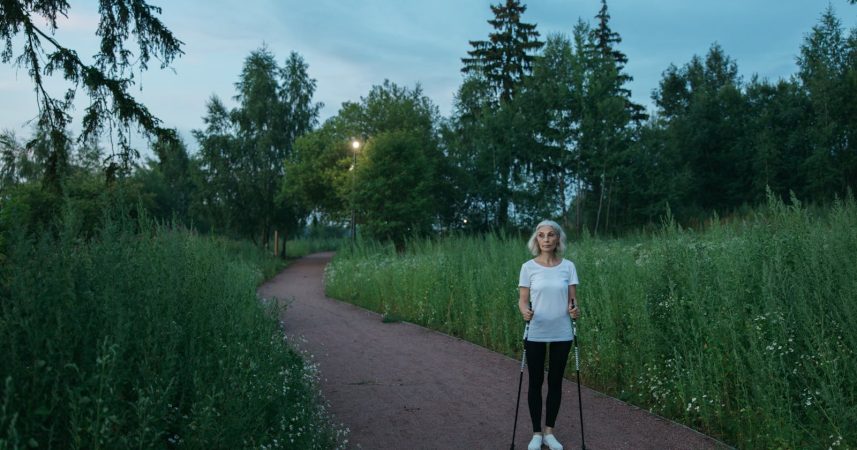
While her peers settle into comfortable retirement routines of crosswords and book clubs, neurologists reveal that the sharpest 80-year-olds share one unexpected daily practice that most people abandon the moment they leave the workforce—and it has nothing to do with brain games or gentle exercise.

Add VegOut to your Google News feed. 
Last week, I watched my 83-year-old neighbor struggle with her garage door opener—the same one she'd operated flawlessly for fifteen years. Her daughter stood beside her, gently guiding her through the steps. "Mom's mind just isn't what it used to be," she whispered to me later. But here's what puzzled me: just three houses down, another neighbor, 85 years old, had recently taught himself to code Python and built a website for his vintage car club.
What separates these two minds? According to neurologists, it's not genetics, diet, or even social connections—though all these matter. It's something most of us abandon the moment we clean out our office desk for the last time: the daily practice of learning something genuinely, frustratingly difficult.
The habit we abandon at exactly the wrong time
When I retired from teaching six years ago, everyone had the same advice: "Relax! You've earned it! Take up something fun!" So I did. I gardened. I read mysteries. I joined a book club. I took gentle yoga. I was staying active, staying social, staying engaged. What I wasn't doing was struggling.
The Mayo Clinic confirms what I learned the hard way: "Regular physical activity also can help improve balance, flexibility, strength, energy and mood. Research suggests that exercise may lower the risk of developing Alzheimer's disease." But here's what they don't emphasize enough—the same principle applies to mental exercise, and not the comfortable kind.
Three years into retirement, I noticed something troubling. Words came slower. I'd walk into rooms and forget why. Names of former students—kids I'd taught for entire years—would simply vanish. I wasn't old. I was only 69. But I was coasting, and my brain knew it.
Why your brain becomes ruthlessly efficient
Think about your last year of work. You probably operated at peak efficiency, handling complex tasks with the kind of ease that comes from decades of experience. Your brain had built superhighways for those specific skills. Then retirement arrives, and suddenly, you're not using those pathways anymore.
What happens to a highway nobody drives on? It crumbles. Your brain, always looking to conserve energy, starts pruning connections you're not actively using. This isn't aging—it's adaptation. Your brain is simply responding to the message you're sending: we don't need this anymore.
I discovered this during a particularly humbling moment at my grandson's birthday party. He asked me to help with his algebra homework—something I'd done countless times with my own children. I stared at the equation like it was written in ancient Sumerian. The pathways were gone, pruned away by three years of comfortable retirement.
The difference between busy and challenged
After that algebra incident, I threw myself into "brain training." Crosswords every morning. Sudoku with lunch. Word games on my phone. I downloaded apps that promised to make my brain "younger." I was busy. My days were full. But something was missing.
You know that feeling when you're learning something truly new? Your brain actually feels different—heavy, almost swollen with effort. You lie in bed at night and can almost sense the new connections forming. I hadn't felt that since retirement. I was using my brain, but I wasn't building it.
Healthline cites research that changed how I think about this: "Regular exercise can do wonders for our brain. In fact, a 2009 study found that people who worked out on regular basis were far less likely to develop cognitive decline and dementia compared to those who led a sedentary life." But here's the parallel they don't draw explicitly—mental exercise needs to be equally strenuous, equally uncomfortable.
The day I decided to learn something impossible
At 70, I made a decision my friends thought was ridiculous. I would learn to play the cello. Not "dabble with" the cello. Not "try out" the cello. Learn it, properly, with weekly lessons and daily practice.
Why the cello? Precisely because I had no musical background. I couldn't read music. I had no natural rhythm. My fingers were stiff from years of grading papers. It was, in every way, the wrong instrument at the wrong time. Which made it perfect.
The first lesson was a disaster. My teacher, a patient woman in her thirties, kept repositioning my bow hand. "Relax," she'd say. But how do you relax when your brain is screaming at your fingers to do something they've never done? I produced sounds that made my cat leave the room. I went home and cried.
What struggling does to an aging brain
Six months into my cello journey, I had my annual cognitive assessment. My doctor, who'd been gently concerned the previous year, looked puzzled. "Your scores have actually improved," she said. "What have you changed?"
When I told her about the cello, she pulled up recent research on her computer. Older adults learning completely new skills—not improving existing ones, but starting from zero—showed brain activity patterns similar to much younger people. The struggle itself was regenerative.
But here's what the research also showed: it had to be genuinely difficult. A professional musician learning a new instrument wouldn't get the same benefit. A writer learning a new writing style wouldn't either. It had to be what researchers call "domain-distant learning"—something completely outside your expertise.
The social cost nobody talks about
Can I be honest about something? Learning cello at 70 has been socially isolating. My book club friends don't understand why I skip meetings for practice. My sister thinks I'm having some kind of crisis. Even my daughter, supportive as she tries to be, asked if maybe I was "taking on too much."
There's an unspoken rule about retirement: you're supposed to gracefully accept your limitations. You're supposed to find "age-appropriate" activities. Nobody says this out loud, but the message is clear: stop reaching, stop growing, stop believing you can become something new.
I've lost some friends over this. Not dramatically—we just drifted apart. They're doing gentle things, comfortable things, and I'm spending two hours a day making sounds that would disturb the peace. We have less in common now.
Why most people quit (and what happens when they do)
Last month, I attended my 50th high school reunion. The divide was stark. Some classmates were vibrant, starting businesses, learning languages, their eyes bright with ongoing discovery. Others seemed faded, repeating the same stories, struggling with technology that should be simple, their worlds shrinking rather than expanding.
The vibrant ones all had their version of my cello. One woman had started learning Mandarin at 68. A former athlete had taken up painting—badly, he assured me, but enthusiastically. Another classmate was getting her pilot's license. None were naturals at their chosen challenges. That was the point.
Research backs up what I observed at that reunion. A study funded by the Alzheimer's Association and the National Institute on Aging found that older adults who engaged in physical activity, followed a healthy diet, and participated in brain-training tasks experienced slower age-related cognitive decline, performing on cognitive tests as if they were one to two years younger than their counterparts in the control group.
The unexpected gift of being terrible at something
Here's something nobody tells you about learning something difficult late in life: it's oddly liberating. I'm terrible at cello. After two years, I can play simple pieces, but a talented 10-year-old would play them better. And somehow, that's freed me from a lifetime of needing to be good at things.
When you're genuinely bad at something but doing it anyway, you rediscover the joy of learning for its own sake. Not for grades, not for promotions, not to impress anyone. Just for the pure experience of watching your brain build something new, one painful connection at a time.
Last week, I played a Bach minuet for my grandson—the same one who'd asked for algebra help. It was slow, occasionally screechy, but recognizable. "Grandma," he said, "you're actually getting better." The surprise in his voice made me laugh. Yes, at 72, I'm actually getting better at something. Imagine that.
Final thoughts
Yesterday, my 85-year-old neighbor—the one learning Python—showed me his latest project. As he explained the code, his eyes lit up with the same expression I remember seeing in my students when they finally grasped a difficult concept. He's not building the next Facebook. His code is probably inefficient. But his mind is sharp, engaged, building new pathways every day.
The habit that separates mentally sharp 80-year-olds from the rest isn't meditation or crosswords or even exercise, though all these help. It's the daily practice of doing something so difficult that you want to quit. And then not quitting.
Tomorrow morning, I'll wake up and practice cello for two hours. My fingers will stumble. My intonation will waver. My back will ache from the posture. And with every struggled note, I'll be choosing who I'll be at 80—someone whose brain is still building, still reaching, still refusing to accept that the best days of learning are behind me.
The comfortable path is always there, waiting. Most people take it. But comfort, I've learned, is just another word for slow decline. The struggle? That's where the living happens.
If You Were a Healing Herb, Which Would You Be?
Each herb holds a unique kind of magic — soothing, awakening, grounding, or clarifying.
This 9-question quiz reveals the healing plant that mirrors your energy right now and what it says about your natural rhythm.
✨ Instant results. Deeply insightful.
Marlene Martin
Marlene is a retired high school English teacher and longtime writer who draws on decades of lived experience to explore personal development, relationships, resilience, and finding purpose in life’s second act. When she’s not at her laptop, she’s usually in the garden at dawn, baking Sunday bread, taking watercolor classes, playing piano, or volunteering at a local women’s shelter teaching life skills.
More Articles by Marlene