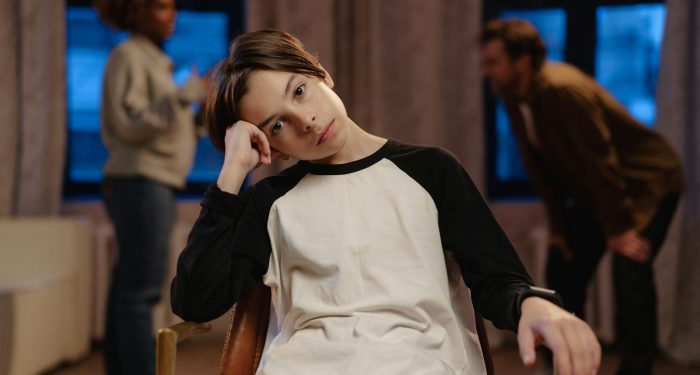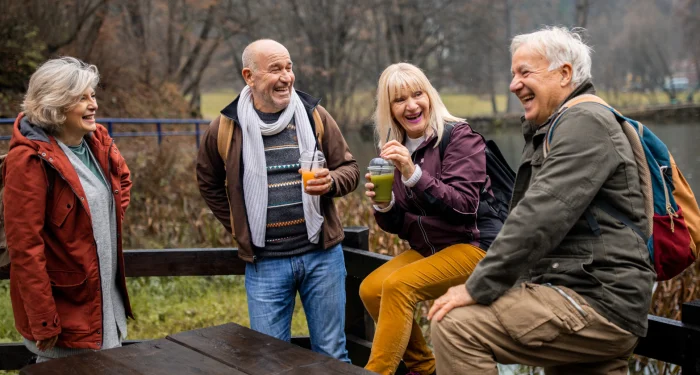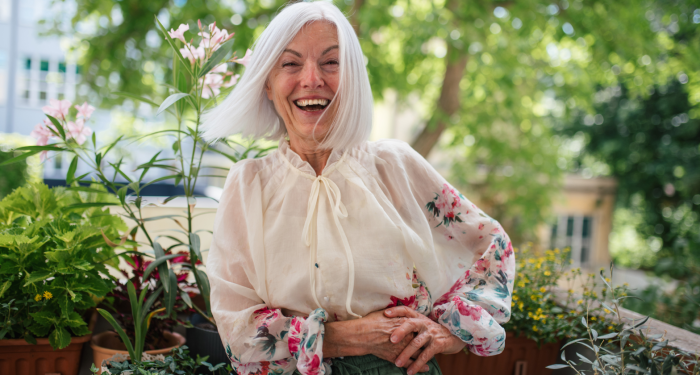
The overwhelming response came from grandmothers, CEOs, teachers, and artists who'd spent decades shrinking themselves with two simple words that cost them promotions, relationships, and pieces of their very identity.
Last month, I was having coffee with a friend from my book club when she mentioned something that stopped me mid-sip. "I've been keeping track," she said, pulling out her phone. "In the past week, I've apologized 127 times. For things like... existing, basically."
She showed me her list: "Sorry for asking a question." "Sorry for walking through a doorway at the same time as someone else." "Sorry for having an opinion about the book we all read."
That conversation sent me on a mission. Over the next few weeks, I asked every woman over 65 I encountered—at the library where I volunteer, in my hiking group, at the farmer's market—the same question: What do you wish you'd stopped doing decades earlier?
The response was overwhelming. Out of 200 women, 160 gave the exact same answer: apologizing for everything.
Not apologizing for genuine mistakes or real harm. But the constant, reflexive, diminishing apologies we'd been trained to offer since childhood. The ones that make us smaller. Less visible. Less valuable.
The apology epidemic that shaped a generation
"Sorry, can I just ask a quick question?"
"Sorry to bother you, but..."
"Sorry, this might be stupid, but..."
"Sorry for taking up your time..."
Sound familiar? These phrases rolled off the tongues of nearly every woman I spoke with. Teachers, nurses, executives, artists, mothers, grandmothers—all accomplished women who'd spent decades softening their presence with unnecessary apologies.
Sarah, 68, a retired bank executive, laughed bitterly when she told me her story. "I apologized my way through board meetings where I was the only one who'd actually done the analysis. I'd say, 'Sorry, but perhaps we should look at these numbers...' Why was I apologizing? I was right! Meanwhile, my male colleagues would stride in unprepared and speak with total authority about nothing."
The pattern was heartbreaking. These women had apologized for their competence, their presence, their very existence. They'd made themselves smaller to make others more comfortable.
One woman, a retired school principal, told me she'd apologized to parents for calling them about their children's behavior problems. Another apologized to her doctor for describing her symptoms "too thoroughly." A third apologized to the plumber she was paying to fix her sink—for needing her sink fixed.
The real cost of saying sorry
What struck me most wasn't just the frequency of these apologies, but what they cost us over time. Every unnecessary apology chips away at something vital.
"It's death by a thousand sorries," one woman told me. "By the time I hit 60, I'd apologized away so much of myself that I didn't know who I was without that word in front of everything I said."
Think about what happens when you constantly apologize for your thoughts, your needs, your presence. You're telling the world—and worse, yourself—that you're an inconvenience. That your ideas matter less. That you deserve less space.
I remember sitting in faculty meetings during my teaching career, watching this play out in real-time. The male teachers would interrupt, take credit, speak with certainty even when they were wrong. The female teachers? We'd raise our hands and start with "Sorry, but maybe we could consider..."
The workplace stories I collected were particularly infuriating. Women apologized for promotions they'd earned, for salaries they deserved, for ideas that saved companies. They apologized for being in meetings they'd been invited to, for using vacation days they'd accrued, for asking for resources to do their jobs.
"I once apologized to my boss for finding a mistake that would have cost us thousands," a retired accountant told me. "He took credit for catching it, of course. And I apologized for that too—sorry for making him look bad by being the one who actually found it."
When the apologies finally stopped
The beautiful part of these conversations was hearing about the moment each woman decided enough was enough. For some, it was a gradual awakening. For others, a lightning bolt moment.
One woman told me it happened when she heard her granddaughter, just seven years old, apologize for knowing the answer in class. "I saw myself at that age, already learning to be sorry for being smart. I pulled her aside and told her to never apologize for intelligence. And I realized I needed to take my own advice."
Another woman's turning point came during a job interview. She'd started by apologizing for taking up the interviewer's time with her impressive qualifications. The job went to a man who'd walked in like he was doing them a favor by considering the position. "That's when I understood the game I'd been losing my whole life," she said.
For many, the change came only in their sixties or seventies. Decades of unnecessary apologies, finally ending when they had more years behind them than ahead.
Do you know how hard it is to break a habit that's been carved into your bones since childhood? Several women compared it to quitting smoking. Your mouth wants to form the word "sorry" before your brain even engages. Some literally bit their tongues. Others made pacts with friends, calling each other out. A few went cold turkey and dealt with the shocked reactions.
The freedom on the other side
Here's what every single woman who'd stopped the constant apologizing wanted me to know: the freedom is extraordinary.
"When you stop apologizing for everything, you realize how much energy you were spending making yourself smaller," one woman explained. "It's like taking off a coat you didn't realize was soaking wet. Suddenly you can move."
They described becoming more direct. Less exhausted. More authentic. They stopped prefacing statements with "This might be wrong, but..." They stopped ending emails with "Sorry for the long message!" They stopped apologizing for their opinions, their bodies, their ages, their very existence.
The reactions from others were telling too. Some people—especially men, but also younger women—were startled by the directness. The unapologetic taking up of deserved space.
"My adult son was shocked," one woman laughed. "He said, 'Mom, you've changed.' I told him, 'No, honey. I've just stopped pretending I haven't always been this person.'"
What really got to me was how recent most of these transformations were. Woman after woman had only stopped the constant apologizing in their sixties or seventies. All those years of making themselves smaller, finally ending only when time felt precious and finite.
A message to younger women
As I compiled these conversations, I kept thinking about younger women. My daughter's friends. Former students. Young colleagues. I still hear them apologizing for asking their partners to do their share of housework. For using their lunch breaks to actually eat lunch. For having bodies that take up space.
The word "sorry" still flows too freely from female mouths for things that require no apology.
Virginia Woolf wrote about this nearly a century ago, about how women are taught to be the mirrors that reflect men at twice their natural size. We're still doing it, just with more education and job titles. We're still shrinking ourselves to make others feel bigger.
But here's what gives me hope: every woman I spoke with said it's never too late to stop. Whether you're 35 or 75, you can decide today that your thoughts don't need apology as preface. Your presence doesn't require permission. Your existence isn't an inconvenience.
In my last post about setting boundaries with adult children, I mentioned how hard it can be to break patterns we've built over decades. This is even deeper. This is about the very language we use to navigate the world.
So I want to challenge you, regardless of your age: Track your apologies for one day. Just notice them. See how many are for actual harm versus how many are for simply existing as a human being who takes up space, has needs, and possesses thoughts worth sharing.
Then start catching yourself. It's hard. Your mouth will rebel. People might be startled. But on the other side of all those unnecessary apologies is something precious: the full, unapologetic version of you.
Final thoughts
One hundred sixty women over 65 wish they'd stopped apologizing decades earlier. They can't get those years back, but they want you to know what they've learned: every unnecessary apology is a little piece of yourself you give away.
Your competence doesn't require an apology. Neither does your intelligence, your presence, or your human needs. Stop apologizing for things that deserve no apology. Start today. The freedom waiting on the other side is worth more than all the false comfort those sorries ever bought you.
We promise—from the other side of unnecessary apologies—you're worth taking up all the space you need.
If You Were a Healing Herb, Which Would You Be?
Each herb holds a unique kind of magic — soothing, awakening, grounding, or clarifying.
This 9-question quiz reveals the healing plant that mirrors your energy right now and what it says about your natural rhythm.
✨ Instant results. Deeply insightful.

Marlene Martin
Marlene is a retired high school English teacher and longtime writer who draws on decades of lived experience to explore personal development, relationships, resilience, and finding purpose in life’s second act. When she’s not at her laptop, she’s usually in the garden at dawn, baking Sunday bread, taking watercolor classes, playing piano, or volunteering at a local women’s shelter teaching life skills.
More Articles by Marlene