These simple acts of saving and reusing carry the weight of generations who survived the unthinkable, transforming what others call hoarding into a sacred ritual of resilience that still echoes through every smoothed piece of foil and washed plastic bag.

Add VegOut to your Google News feed. 
There's a particular sound that aluminum foil makes when you smooth it out for the second time—a soft crinkle-whisper that takes me straight back to my mother's kitchen. I'm standing at my counter now, pressing the wrinkles from a sheet I used yesterday to cover lasagna, and I can almost feel her beside me. "Still perfectly good," I hear myself saying to no one, in the exact tone she used. The foil goes back in the drawer, folded neat as a love letter, waiting for its next purpose.
If you grew up with Depression-era parents like I did, you know this ritual. You know the careful washing of zip-lock bags, the tower of margarine containers that threatens to tumble every time you open the cabinet, the drawer full of twist ties sorted by size. My grandchildren think I'm quirky. "Grandma, just buy new ones," they say, watching me hang sandwich bags over wooden spoons to dry. But this isn't about money anymore—it hasn't been for years. It's about something deeper, something pressed into my bones by people who knew what it meant to have nothing.
The art of seeing value everywhere
My father kept every rubber band that came wrapped around his mail bundles during his thirty years as a postman. By the time I was in high school, we had a kitchen drawer that wouldn't fully close, stuffed with rubber bands of every size and color. "Never know when you'll need to hold something together," he'd say, adding another handful to the collection.
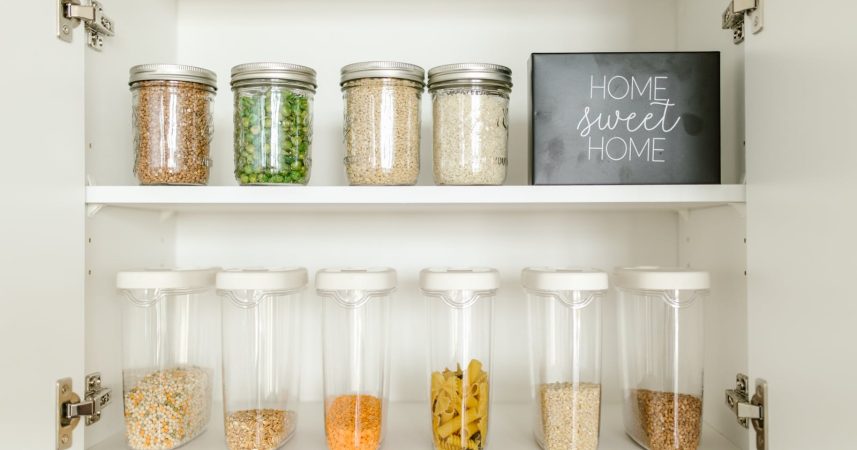
My mother saved glass jars like they were fine china. Pickle jars, jam jars, sauce jars—each one washed, label soaked off, and lined up in the basement on wooden shelves my father built from salvage lumber. She'd send me down there when she needed one, and I'd stand among those rows of glass, catching light from the single bulb, understanding without words that this was our wealth.
These habits weren't quaint or chosen. They were survival, carved into my parents by a time when banks failed overnight and dust storms swallowed entire farms. My mother was eight when the Depression hit. She told me once about her family's Christmas in 1933—her gift was an orange and two walnuts. She kept the orange peel, dried it, and used it to scent her dresser drawer for months. Even sixty years later, she couldn't throw away an orange peel without making something from it first.
When necessity becomes wisdom
I swore I'd be different. In my twenties, newly married and proud of my modern life, I threw things away with liberation. Empty containers went straight to trash. Aluminum foil was single-use. I was breaking free from what I saw as my parents' poverty mindset.
Then my first husband left. Suddenly I was twenty-eight with two toddlers, making a teacher's salary stretch to cover what two incomes barely managed before. Those bread bags my mother saved? They really did keep little feet dry on snowy walks to the bus stop. The margarine containers became my meal-prep salvation, holding portions of Sunday's batch cooking for the thin weeks at month's end.
I found myself doing things that would have horrified my younger self. Adding water to the nearly empty shampoo bottle. Saving the good parts of partially soft vegetables for soup. Cutting open the toothpaste tube to scrape out the last week's worth. I wasn't just becoming my mother—I was understanding her.
Teaching what can't be taught
During my thirty-two years teaching high school English, I kept a drawer in my classroom filled with granola bars and fruit cups, bought on sale and stored in those saved containers. Kids would stop by between classes for a snack. I never asked why they were hungry. Their parents were doing what mine did, what I was doing—performing impossible mathematics with dollars and cents.
One student, Marcus, turned in an essay written on the back of grocery store flyers. "It's all we had at home, Ms. K," he said, his face burning with shame. I told him about my father walking his mail route with cardboard in his shoes when the soles wore through, about my mother darning socks until they were more thread than original fabric. "You're resourceful," I told him. "That's a strength, not a weakness."
Marcus became an engineer. He still sends me Christmas cards every year, written on beautiful stationery. We both know why he never forgets.
The inheritance we don't choose
The habits are bone-deep now. I have a box of ribbon saved from four decades of gifts. Mason jars full of buttons sorted by color. A drawer of twist ties arranged by length. My second husband, during our twenty-three years together, would shake his head and smile. "We can afford new ribbon," he'd say gently. But after watching Parkinson's steal him piece by piece, after those final months when every familiar comfort mattered, he understood. The saved things weren't about money. They were about believing in second chances, third chances, as many chances as something needed.
My daughter recently helped me clean out the basement. We found my mother's collection of coffee cans, each labeled in her careful handwriting: "String," "Wire," "Might Need Someday." My daughter started to throw them away, then stopped. "Actually, these are perfect for organizing my garage," she said. I watched her load them into her car and felt something shift between us—the judgment giving way to understanding.
What the pandemic taught everyone else
When COVID hit and store shelves emptied overnight, my friends suddenly understood my basement full of canned goods, my freezer organized with labeled portions, my ability to make bread from scratch. "You were so prepared," they marveled. But I wasn't prepared—I was raised. There's a difference.
Depression-era children grew up knowing that security is temporary and scarcity is patient. They knew that the gap between enough and not-enough could be one illness, one layoff, one unexpected bill. This knowledge, pressed into them by experience, became a way of being in the world.
Now I volunteer at the women's shelter downtown, teaching what they call life skills but what I call survival. How to make a week's worth of meals from one chicken. How to mend instead of replace. How to see possibility where others see garbage. Last week, I taught them to make vegetable stock from scraps they'd normally throw away. One woman started crying. "My grandmother did this," she said. "I thought it was because she was poor. I didn't know it was because she was smart."
Passing down what matters
My eight-year-old granddaughter helps me in the kitchen now. Last week, we made soup from vegetable scraps I'd been saving in the freezer. "Garbage soup!" she announced, delighted with the concept. "No," I corrected gently, stirring the pot that smelled like comfort and memory. "Everything soup. We don't waste the good parts just because they look different now."
She studied me then with those serious eyes children get when they're learning something important. "Like your aluminum foil," she said. "And Daddy says you wash bags."
"That's right," I told her. "Everything that still has use in it deserves to keep being useful."
I'm teaching her what my mother taught me, not through lectures but through actions. The smoothing of foil. The washing of bags. The saving of jars. These small acts carry large lessons about value, about waste, about respect for the things that serve us.
Final thoughts
At seventy-two, I can afford to buy new everything. But every time I smooth out that used foil, I'm having a conversation with my mother, with her mother, with all the generations who knew that thrift wasn't just about money—it was about honor. Honoring the resources we're given. Honoring the Earth that provides them. Honoring the knowledge that everything has value if you're willing to see it.
My butter containers hold more than leftovers. They hold the wisdom of people who made it through impossible times with creativity and dignity. So yes, I still save them, along with bread bags and aluminum foil. In a disposable world, I'm keeping alive the radical idea that nothing is trash if it still has purpose left in it.
Somewhere, my mother is smiling, surrounded by all her saved containers, finally vindicated. She was right all along. You never know when you'll need a good container. Or the wisdom that comes from knowing how to make something from nothing.