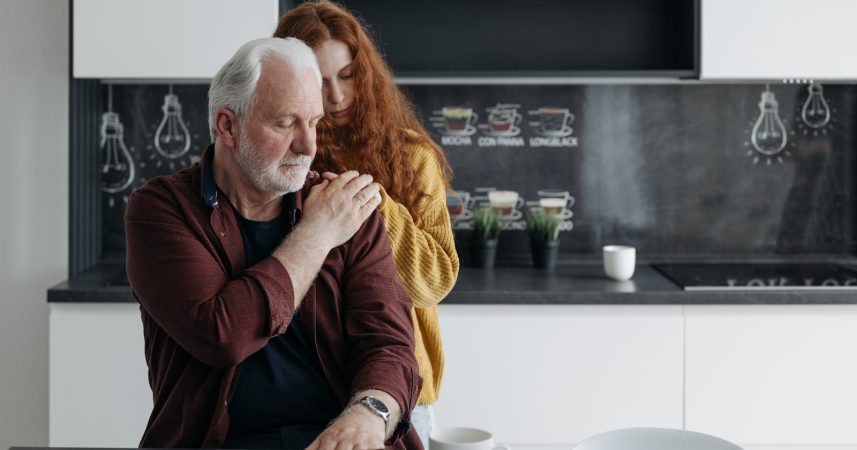
It arrives in quiet moments—a trembling hand, a forgotten word, a jar lid that won't turn—when you realize the people who once carried your entire world can barely carry a grocery bag.

Add VegOut to your Google News feed. 
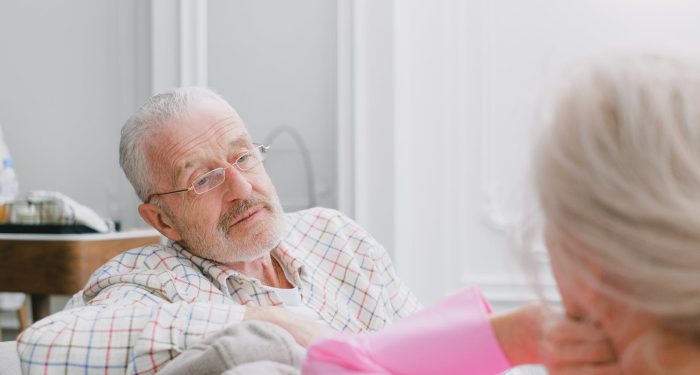
The kitchen smelled like Sunday morning coffee and cinnamon toast, just like it had for forty years. But this time, I watched my father's weathered hands tremble as they wrapped around the pickle jar, his knuckles white with effort. The lid wouldn't budge. He set it down quietly, pretending he hadn't really wanted pickles anyway, and reached for his coffee cup instead. That's when I saw it – the slight shake in his grip, the way he used both hands to steady the mug. The man who had once lifted me onto his shoulders with one arm, who had built our deck single-handedly one scorching summer, was struggling with a coffee cup.
There's a particular quality of silence that fills a room when you realize your parents have become mortal. It's heavier than regular quiet, thick with all the things you suddenly understand but can't bring yourself to say.
The invisible timeline of love
We spend so much time preparing for the milestones we can see coming. First days of school, graduations, weddings, births. But nobody prepares you for the day you notice your mother needs to hold the railing going downstairs, or when your father starts turning the TV volume up just a little bit louder each visit. These moments don't arrive with fanfare or warning. They slip in quietly, like uninvited guests who've somehow always been there.
When did my father's stride become a shuffle? When did my mother start writing everything down because she couldn't trust her memory anymore? The changes accumulated like dust on a bookshelf – imperceptible day by day, shocking when you finally notice.
I remember teaching *King Lear* to my high school students, year after year, watching them struggle to understand why Lear's daughters would treat their aging father so poorly. "He's just getting old," they'd say, as if aging were as simple as changing seasons. Now I understand what Shakespeare knew – that watching our parents age forces us to confront not just their mortality, but the entire architecture of love we've built our lives around.
When strength becomes a memory
Do you remember the last time you believed your parents were invincible? For me, it was watching my mother care for her own mother through Alzheimer's. She seemed tireless then, driving two hours each way to the care facility, managing medications, advocating with doctors, all while maintaining her usual cheerful facade. She was my definition of strength.
But strength, I've learned, isn't a permanent state. It's a resource that gets depleted and replenished, depleted and replenished, until one day the well runs a little drier than before. Now I watch that same mother struggle to remember if she's taken her morning pills, see her pause mid-sentence searching for a word that used to come so easily.
The reversal happens gradually, then suddenly. One day you're calling them for advice about everything from roast chicken to retirement planning. The next, you're gently suggesting they might not need to renew their driver's license, programming their phone for the tenth time, checking their refrigerator for expired food. You become the guardian of their dignity while they pretend not to notice the shift.
The art of loving backwards
There's a tenderness required in loving aging parents that nobody teaches you. It's different from the love you give children, though it sometimes requires similar patience. With children, you're building toward independence. With parents, you're cushioning a gradual release of it.
Last week, I helped my father with his computer – the same man who taught me to change a tire, balance a checkbook, and stand up for myself in a world that didn't always make room for women's voices. As I guided his finger to the right key, speaking slowly and clearly, I felt the peculiar heartbreak of role reversal. He thanked me with such genuine gratitude for something so simple, and I had to excuse myself to cry in the bathroom.
How do you honor someone's dignity while acknowledging their limitations? How do you help without hovering, support without smothering? I find myself walking this tightrope daily, measuring my words, calibrating my assistance to preserve as much of their autonomy as possible.
The unspoken understanding
Perhaps the most profound aspect of this love is what goes unspoken. My parents don't talk about their mounting struggles, and I don't directly acknowledge seeing them. We exist in this space of mutual protection, each trying to shield the other from the weight of what's happening.
My father still insists on carrying groceries, though I make sure to pack the lighter items in his bags. My mother still cooks Sunday dinner, though I arrive early to "keep her company" (and quietly help with the heavy pots). We've developed an elaborate dance of preserved pride and hidden assistance.
Sometimes I wonder if they know that I know. When I catch my father's eye after I've quietly opened a jar he'd been struggling with, there's a flash of something – gratitude mixed with grief, love tangled with loss. But we don't speak it. Some truths are too heavy for words.
In a previous post, I wrote about finding purpose in unexpected transitions. This, too, is an unexpected transition – becoming the caretaker of those who cared for you, finding purpose in reversing the flow of protection.
Final thoughts
This kind of love – watching our parents age – arrives without instruction manual or warning. It asks us to be strong when we feel most vulnerable, patient when our hearts are breaking, present when we want to look away. It teaches us that love isn't just about holding on but also about gracefully letting go, bit by bit.
The pickle jar sits on my father's counter now, opened. I did it when he wasn't looking, loosened the lid just enough so he could finish the job himself. This is love in the autumn of life – subtle, unspoken, and fiercely protective of the dignity we have left to give each other.