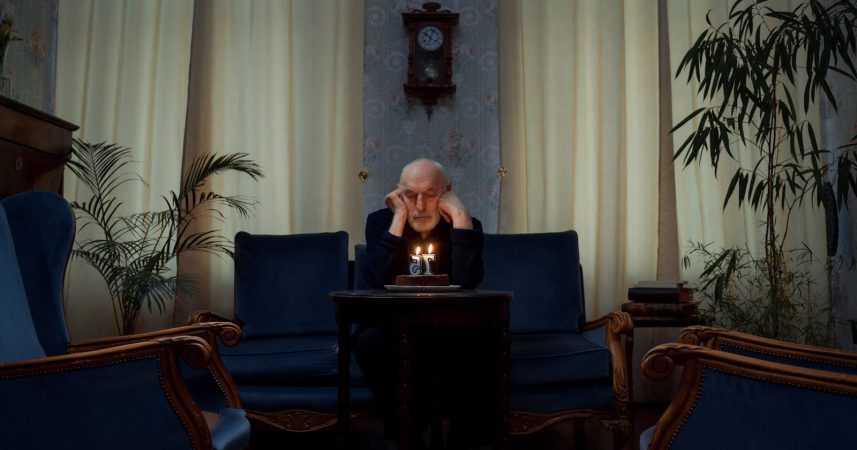
When the handshake ends and the business cards stay in the drawer, successful men discover that forty years of hiding behind "I'm the VP of..." has left them strangers in their own lives—and the terrifying silence that follows might be the first real conversation they've ever had with themselves.
The party was three weeks into retirement, and someone asked the question. "So what do you do?" I stood there with a glass of wine in my hand and my mouth half open, and nothing came out. For thirty-five years I'd had an answer ready before people finished asking. "I own a restaurant." "I run a kitchen." "I feed people." Now I was just a man at a neighbor's birthday party, and the silence stretched long enough that the other person smiled politely and moved on to someone else.
That silence followed me home. It sat with me at the kitchen table the next morning, and the morning after that. I'd spent eighteen years running a restaurant—sixteen-hour days, constant crises, always someone who needed something from me—and I'd mistaken all that noise for a life. Turns out the constant motion hadn't been customer service. It had been self-protection.
When work becomes your witness protection program
Most of us don't realize we're hiding until the thing we're hiding behind gets taken away. For thirty-five years, work gives us the perfect alibi. Can't make it to your kid's recital? Work. Marriage falling apart? Working late. Don't know how to talk about feelings? Let me tell you about tonight's specials instead.
I ran a restaurant for eighteen years, and let me tell you, nothing lets you avoid yourself quite like sixteen-hour days and constant fires to put out. There's always a supplier to call, a schedule to fix, a crisis that needs your immediate attention. You become a professional problem solver for everything except the problems in your own life.
The scary part is how good it feels. You're needed. You're important. You have answers. When someone asks what you do, you have a response that makes sense to everyone, including yourself. "I own a restaurant." "I manage a kitchen full of personalities." "I feed people for a living."
But what happens when that answer expires?
The great unmasking of retirement
Retirement strips you naked in a way that's both terrifying and oddly liberating. Suddenly, you're standing there without your armor of accomplishments, and people are still asking questions. Worse, you're asking yourself questions you've been successfully avoiding since your thirties.
A friend of mine, retired engineer, told me he spent the first six months of retirement still waking up at 5:30 AM, getting dressed in business casual, then sitting at his kitchen table with nothing to do. He'd check emails that weren't coming. He'd organize files that didn't matter anymore. His wife finally asked him what he was doing, and he said, "I don't know how to not be an engineer."
That's the thing nobody tells you about defining yourself by your work. It's not just about ego or status, though those play a part. It's that work becomes the story you tell yourself about who you are and why you matter. Take that away, and you're left staring at a blank page, and most of us haven't written anything real about ourselves in decades.
When success becomes your disguise
I spent two years after my divorce living above the restaurant, and I mean that literally and figuratively. My whole existence revolved around that place. If you'd asked me then, I would have said I was building something, creating value, serving the community. All true. Also all elaborate ways to avoid dealing with the fact that I'd failed at the one thing I'd promised to make work.
The restaurant gave me a perfect excuse. When Anne said I was never present, I could point to the business. When Ethan complained I missed his games, I had receipts to prove I was working for his future. The story I told myself was "I'm doing this for us," but looking back, the honest version was "I'm hiding in the work because I don't know how to handle the rest."
Work success becomes this beautiful disguise. People admire you for it. They reward you for it. Meanwhile, you're using it like a permanent Halloween costume, except the holiday never ends and you've forgotten what your actual face looks like.
The silence that speaks volumes
There's something profound about that moment when you can't answer "what do you do?" with a job title. The silence feels like falling at first. You scramble for something, anything. "I'm retired" feels like admitting defeat. "I used to be..." sounds like you're already writing your obituary.
But if you sit with that silence long enough, something interesting happens. You start to hear things you've been drowning out with the noise of productivity. Maybe it's the recognition that you haven't had a real conversation with your spouse in years. Maybe it's realizing you don't actually know what you enjoy doing when nobody's paying you to do it.
I remember the first time someone asked me what I did after selling the restaurant, and I just said, "I'm figuring it out." The person looked confused, like I'd answered in a foreign language. But it was the first honest thing I'd said about myself in years.
Rebuilding from zero (at sixty)
Here's what nobody tells you about losing your professional identity: it's like being a teenager again, except with worse knees and better credit. You have to figure out who you are when you're not performing for anyone.
Some men handle this by immediately finding another title. Consultant. Advisor. Board member. Anything to avoid the naked truth that they don't know who they are without a business card. Others dive into hobbies with the same intensity they brought to work, turning golf or woodworking into another form of achievement to measure themselves against.
But the brave ones, the ones who really get it, use this time to finally answer questions they've been avoiding. What kind of husband am I when I'm not using work as an excuse? What kind of father am I when I actually have to show up? What kind of person am I when nobody's watching?
The transition from being "Gerry who owns the restaurant" to just Gerry was terrifying. But here's the plot twist: just Gerry turned out to be enough. More than enough, actually. Just Gerry could have real conversations without turning them into networking opportunities. Just Gerry could admit he didn't have all the answers without feeling like a failure.
Final words
That generation of men standing in silence when asked what they do—I'm not sure they're finding themselves. I'm not sure I am either. Some mornings I wake up and feel like I've finally shed something heavy. Other mornings I reach for the old armor out of habit, and the absence of it makes my hands shake.
I still get asked the question at parties. I still feel the pause. The difference now is that I don't rush to fill it. But I'd be lying if I said the silence has become comfortable. It's just become familiar, which isn't the same thing.
Is that progress? I honestly don't know. Maybe the question was never "what do you do" in the first place. Maybe it was always "who are you when you stop doing?" And maybe some of us are going to spend whatever years we have left sitting with that one, turning it over, not quite arriving at an answer.
What’s Your Plant-Powered Archetype?
Ever wonder what your everyday habits say about your deeper purpose—and how they ripple out to impact the planet?
This 90-second quiz reveals the plant-powered role you’re here to play, and the tiny shift that makes it even more powerful.
12 fun questions. Instant results. Surprisingly accurate.