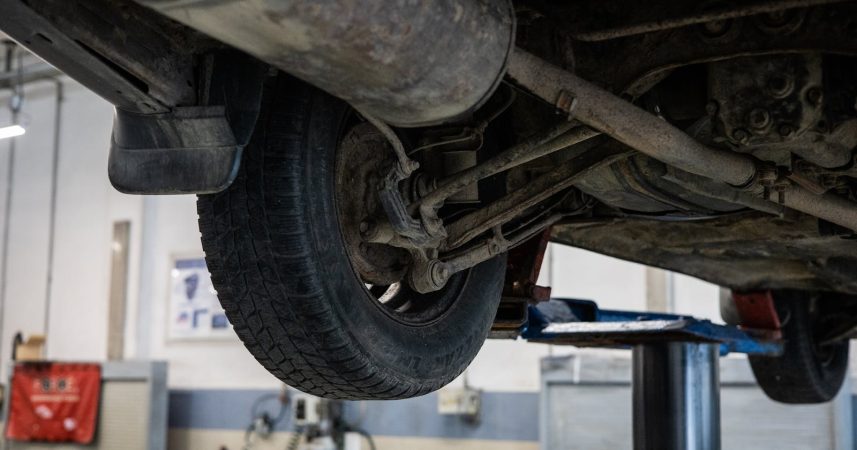
They built entire lives around being indispensable rather than beloved, never realizing that every oil change and fixed hinge was their heart speaking in the only language they were ever taught.

Add VegOut to your Google News feed. 
When I was running the restaurant, Saturday mornings had a soundtrack: the walk-in door opening at 5 AM, prep stations clanking, the grill firing up. By the time the first customers arrived, everything was running smoothly, the mise en place perfect, every station stocked. The kitchen crew turned that space into a well-oiled machine they were constantly maintaining, as if the success of every service depended on their vigilance. Which, in their minds, it did.
During my restaurant years, I worked with a cook who'd come in two hours early every shift to prep vegetables for everyone else. Never asked for recognition, never complained when the younger cooks took credit for the smooth service. One day I asked him why. He looked at me like I'd asked why he breathed. "Someone's gotta do it right," he said, and went back to his onions.
That's the thing about this generation of men: they confused being needed with being loved. They thought if they could just fix enough things, solve enough problems, shield enough people from enough hardship, it would add up to something. It did add up to something. Just not something they could feel.
The currency of competence
These men grew up in a world where your worth was measured in calluses and capability. They learned early that feelings were luxuries, but a broken water heater was an emergency. So they became emergency responders in their own homes, always on call, always ready to solve the next crisis.
I remember helping my neighbor, an old-timer who spent every weekend tinkering in his garage. His wife had passed, his kids lived provinces away. I asked if he ever felt lonely. He pointed to a perfectly organized pegboard of tools and said, "These don't let you down." Later, I realized he wasn't talking about the tools. He was talking about being useful. As long as he could fix things, he had purpose. As long as he had purpose, he didn't have to feel the loneliness.
The psychology behind this is both simple and heartbreaking. When you're raised to believe that your value comes from what you can do rather than who you are, you never stop doing. You become a human utility company, always on, always providing service, never expecting appreciation because utilities aren't supposed to need validation. They're just supposed to work.
The translation nobody taught
Here's what kills me: these acts of service were absolutely acts of love. Every perfectly maintained tire pressure was a prayer for safe travels. Every cleaned gutter was a promise that the house would stand strong. Every fixed appliance was a declaration that this family would not go without. But somewhere between the intention and the reception, the message got lost.
The women and children in these men's lives often saw the tasks but not the tenderness. They saw obligation where there was devotion, duty where there was care. And can you blame them? When someone expresses love in a language you don't speak, it just sounds like noise. Or worse, silence.
Working in restaurants taught me that the best managers were often the ones doing invisible work. Ordering supplies before anyone noticed they were low. Adjusting schedules before conflicts arose. Preventing problems nobody knew existed. But invisible excellence is still invisible. And humans need to be seen.
The cost of emotional illiteracy
This emotional illiteracy came at a price that compounded over decades. These men couldn't say "I'm proud of you" so they rebuilt entire engines. They couldn't say "I'm scared of losing you" so they checked the locks twice each night. They couldn't say "You mean everything to me" so they made sure the oil got changed every 3,000 kilometres without fail.
Their children grew up in the safest, most well-maintained homes possible, yet felt emotionally neglected. Their spouses lived with human Swiss Army knives who could solve any practical problem but couldn't articulate a feeling if their lives depended on it. Everyone was cared for. Nobody felt cared about.
The real tragedy? Many of these men died never knowing they were actually excellent at love. They just spoke it in a dialect that was going extinct. They were poets working in motor oil and lumber, but nobody told them their poems were beautiful.
Breaking the silence
If you recognize your father, grandfather, uncle, or yourself in these words, there's still time. Not to change them or yourself completely, but to build bridges between the languages. Start small. When someone fixes something, say "I see you taking care of us." When someone checks your tire pressure, say "Thank you for watching out for me." When someone leaves the porch light on, say "I know that means you love me."
For those of us who speak this acts-of-service language, maybe it's time to add subtitles. Fix the faucet, but also say, "I want you to have things that work properly because you deserve that." Change the oil, but mention, "I do this because your safety matters to me." Leave the porch light on, and sometimes add, "I sleep better knowing you can see your way home."
Final words
There's no retroactive recognition that can undo a lifetime of unseen love. We can't go back and thank all the silent fixers, the midnight worriers, the Saturday morning maintainers. But we can make sure this particular tragedy doesn't repeat itself.
Love in any language counts. But love that's recognized, acknowledged, and received? That's the kind that actually makes it all the way home. Even if the porch light burns out.