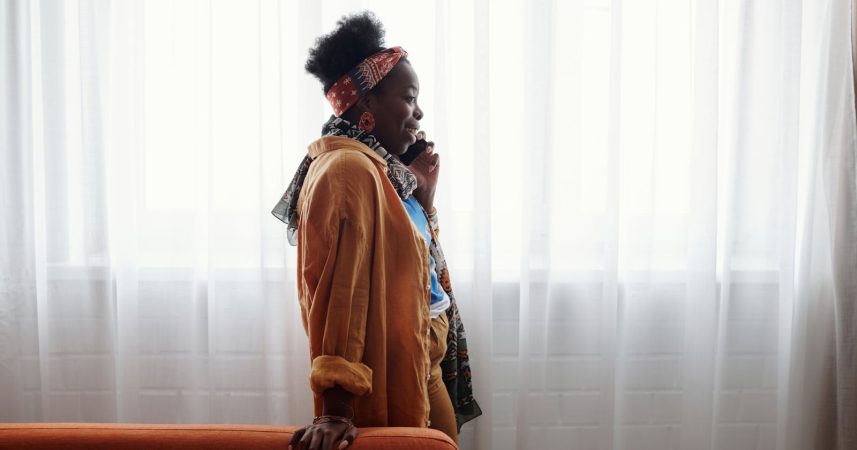
When your aging parent calls to describe the grocery store renovation in excruciating detail, they're not actually talking about groceries — they're navigating the invisible minefield of topics that won't make you impatient, worried, or stop answering the phone altogether.

Add VegOut to your Google News feed. 
Last Thursday, my mom called to tell me about the new checkout system at her local grocery store. For fifteen minutes, she described how they'd moved the self-checkout lanes, how the regular lanes were now on the opposite side, and how this confused everyone, especially Mrs. Henderson from down the street.
I found myself getting impatient. I had deadlines. I had things to do. But then something stopped me from rushing her off the phone.
Because I suddenly remembered a conversation I'd overheard at a coffee shop the week before. A woman, probably in her seventies, was telling her friend: "I call my daughter every day. I tell her about the birds at my feeder, about the mail coming late. She thinks I'm boring now. But if I tell her how scared I am of falling again, or that I forgot where I parked at the store yesterday, she'll worry. And worried children stop answering the phone."
That's when it hit me. These mundane conversations aren't really about grocery stores or weather or the neighbor's new fence. They're carefully curated safe zones where our parents can still connect with us without triggering our anxiety, our advice, or our arguments.
The conversations we've trained them to avoid
Think about the last few times your parent brought up something serious. Maybe they mentioned feeling tired more often, or struggling with technology, or questioned a political view they've held for decades.
How did you respond?
If you're like me, you probably launched into problem-solving mode. Or worse, you got frustrated. You suggested they see a doctor (again). You offered to explain the computer (again). You argued about politics (again).
And slowly, without either of you realizing it, you've taught them that certain topics lead to tension. That vulnerability leads to lectures. That admitting struggle leads to you treating them like a problem to be fixed rather than a person to be heard.
My grandmother once tried to talk to me about being afraid of dying alone. I immediately started listing all the reasons she shouldn't worry, all the family members who loved her, all the years she probably had left. I thought I was being helpful. Looking back, I realize I was just uncomfortable with her fear, and I made that her problem to solve by never bringing it up again.
Why weather is the last safe topic
Weather is perfect. It's universal, non-controversial, and requires no follow-up action. Nobody can fix the weather. Nobody can be blamed for the weather. Nobody's life choices led to the weather.
The same goes for the neighbor's dog barking, the new traffic pattern downtown, or the price of eggs. These topics can't disappoint you. They can't make you worry. They can't start an argument about who should be doing what differently.
I've noticed this pattern intensifies around the holidays. As Thanksgiving approaches, the calls from parents get more frequent but somehow less substantial. They're reaching out more because they miss us more, but saying less because they've learned that's safer.
The weight of unspoken words
Behind every call about the weather might be something heavier:
- "I'm lonely, but I don't want to guilt you into visiting"
- "I'm struggling with technology, but I'm tired of feeling stupid when you explain it"
- "I'm scared about my health, but I don't want you to panic"
- "I miss feeling useful, but I know you don't need my advice anymore"
A friend recently told me her dad calls every Sunday to read her the entire weather forecast for both their cities. She used to find it annoying until she realized he was really saying, "I think about you every day and wonder if you're warm enough, dry enough, safe enough."
Breaking the pattern (without breaking them)
So how do we change this? How do we make space for real conversation without triggering the very dynamics that shut them down?
Start by just listening. Really listening. Not waiting for your turn to talk, not formulating solutions, not checking your phone. When my mom talks about the grocery store renovation, I've started asking follow-up questions. "That must have been frustrating." "Do you like the new layout better?" "Was Mrs. Henderson upset about it?"
You know what happens? Sometimes, nothing. We just talk about grocery stores. But sometimes, she'll slip in something real. "I get confused more easily these days" or "I miss when you used to come shopping with me."
And when those moments happen, resist the urge to fix, advise, or redirect. Just acknowledge. "That sounds hard" or "I miss that too" can be more powerful than any solution you could offer.
Creating new safe spaces
I've started sharing my own mundane stuff too. Not just my achievements or problems, but the boring middle ground. The podcast I'm listening to. The new coffee shop that opened nearby. The book I couldn't finish.
This does two things. First, it shows them that I value small talk, that not every conversation needs to be meaningful. Second, it gives them permission to share their own small moments without feeling like they're wasting my time.
I've also started asking different questions. Instead of "How are you?" which often gets "Fine," I ask "What made you smile today?" or "What's been on your mind lately?" Sometimes they still talk about weather, but sometimes they surprise me.
The time we don't have
Here's what haunts me: One day, I'll want to call and hear about the grocery store. I'll desperately wish I could listen to another weather report, another story about the neighbor's dog, another complaint about the mail being late.
My grandmother used to call me every week to talk about her volunteer work at the food bank, describing in detail who came in, what they needed, how many boxes they packed. I thought these calls were her way of filling time. Now I realize they were her way of sharing her purpose with me, of staying connected to someone who mattered to her, of being heard by someone who (she hoped) cared.
We think we have time to have the real conversations later. After the holidays. After this busy season. After things settle down. But while we're waiting for the perfect moment, our parents are learning to need us less, to say less, to expect less.
Wrapping up
The next time your parent calls with mundane news, remember: they're not calling because they think you need to know about the weather. They're calling because they need to hear your voice, to know you're okay, to feel connected to your life even if it's just for five minutes.
And maybe, just maybe, they're hoping that this time, the conversation might go somewhere deeper. That this time, you might have the patience to listen. That this time, it might be safe to say what they really called to say.
So let them tell you about the weather. Ask about the neighbor's dog. Pretend to care about the grocery store layout. Because one day, you'll realize those weren't small conversations at all. They were love, disguised as small talk, designed to survive in the only space you left available.
If You Were a Healing Herb, Which Would You Be?
Each herb holds a unique kind of magic — soothing, awakening, grounding, or clarifying.
This 9-question quiz reveals the healing plant that mirrors your energy right now and what it says about your natural rhythm.
✨ Instant results. Deeply insightful.

Jordan Cooper
Jordan Cooper is a pop-culture writer and vegan-snack reviewer with roots in music blogging. Known for approachable, insightful prose, Jordan connects modern trends—from K-pop choreography to kombucha fermentation—with thoughtful food commentary. In his downtime, he enjoys photography, experimenting with fermentation recipes, and discovering new indie music playlists.
More Articles by Jordan