Behind every childhood memory of "we're not hungry" parents and creative dinner presentations lies the sound of a calculator clicking in the dark, turning impossible math into another month survived.

Add VegOut to your Google News feed. 
The mathematics of almost enough
You learn a particular kind of math when money is tight. Not the kind they teach in school, but the kind where $347 has to become $500, where you rob Peter to pay Paul and hope Peter doesn't notice for another few weeks. My mother was brilliant at this algebra of poverty, moving numbers around like pieces on a chessboard, always one move away from checkmate but never quite cornered.
The electric company would give you twelve days past due before disconnection. The phone company, eight. Car insurance could lapse for exactly five days before it became illegal to drive. She knew these numbers better than our birthdays. She'd pay just enough to keep each wolf barely outside the door, feeding them scraps to buy another month of pretending everything was fine.
I discovered one of her ledgers years after she died, tucked inside an old cookbook. The pages were filled with calculations that looked like code: "Hydro -$89 (pay $45, promise rest Friday)." "Groceries $73 (use credit at Angelo's)." "Tony shoes $32 (can wait? Check soles)." Each line a small negotiation with necessity.
Credit was personal back then
Before credit scores and online banking, before automatic payments and overdraft protection, there was just your word and your history with the person across the counter. Angelo, who ran the corner market, would let my mother run a tab because he'd known my father since they were kids. The mechanic would fix our car and wait for payment because my mother had hemmed his daughter's wedding dress for free.
This economy of favors and IOUs held our neighborhood together. Everyone was juggling, everyone was behind on something, but we kept each other afloat through an intricate web of delayed payments and remembered kindnesses. My parents never missed returning a favor, even when it meant staying up all night to help someone move or fix their sink. That was currency too, just not the kind you could deposit.
The art of invisible sacrifice
My parents became masters of the invisible sacrifice. My father would skip lunch at work, claiming he'd eaten a big breakfast. My mother would say she wasn't hungry at dinner, that she'd been tasting while cooking. They'd split one coffee at the diner and call it a date. Every dollar saved from their own wants was transformed into something we needed: school supplies, winter boots, the occasional luxury of a rented movie on Friday night.
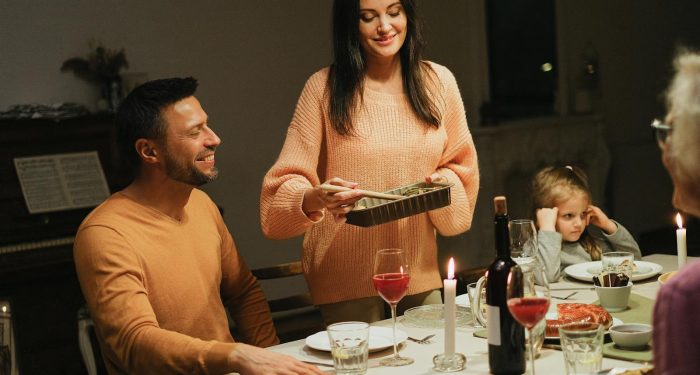
They never let us see the seams coming apart. When the car broke down, it became an adventure to walk to school together. When the phone was disconnected, we were "trying an experiment in family time." When dinner was pasta with butter for the fourth night straight, my mother would present it like she was a chef at a fancy restaurant: "Tonight's special is linguine al burro, a classic Italian delicacy."
We believed her. Kids want to believe their parents have everything under control, and my parents were committed to maintaining that illusion even when control was the last thing they had.
What we pretended not to know
But children know more than they let on. We develop a kind of protective ignorance, understanding instinctively that acknowledging our parents' struggle would only add to their burden. So I pretended not to notice when my father wore shoes with separated soles, held together with duct tape he colored black with a marker. I pretended not to hear my mother on the phone, her voice tight and apologetic, asking for just a few more days.
My sister would slip her babysitting money into my mother's purse when she wasn't looking. My brother would conveniently "forget" to ask for lunch money. I started saying I didn't like new clothes, that I preferred the broken-in feeling of hand-me-downs. We became co-conspirators in our parents' fiction that everything was manageable.
The inheritance of anxiety
That hypervigilance around money stays with you. Even now, decades removed from those kitchen table sessions, I check my bank balance obsessively. I pay bills the moment they arrive, as if waiting even a day might spiral into disaster. I keep enough canned goods in my pantry to survive a month, maybe two. Linda calls it my "depression era thinking," though I'm too young to have lived through that particular catastrophe. I lived through my own smaller version.
When my restaurant started turning a real profit, I still couldn't shake the feeling that it was temporary, that any day someone would show up to take it all back. Success felt like a clerical error that would eventually be corrected. I'd lie awake doing mental math, calculating how long we could survive if everything collapsed tomorrow. The answer was never long enough.
Breaking the cycle means remembering it
Ethan and my stepchildren have never known that particular fear, and I'm grateful for that. They've never seen me and Linda at the kitchen table after midnight, shuffling bills like a losing hand of cards. They've never pretended not to know why the phone doesn't work or why dinner is the same every night for a week.
But I've told them these stories, because privilege without perspective breeds a different kind of poverty. They need to know that their grandfather's calloused hands and grandmother's ledger books built the foundation they stand on. That every opportunity they've had was purchased one sacrificed lunch, one delayed payment, one midnight calculation at a time.
Final words
Sometimes I drive past my childhood home, that little place in Hamilton with the kitchen window that glowed late into the night. New people live there now, and I wonder if they sit at their kitchen table after their kids go to bed, spreading out bills and doing impossible math. I wonder if their children lie awake listening to the calculator clicking, not yet understanding that sound is what love looks like when it has more bills than money.
That kitchen table arithmetic shaped me more than any classroom lesson. It taught me that love is often measured in what you choose to go without, that sacrifice is mostly silent, and that the greatest gift parents can give their children is the absence of their own fear. Even when that fear keeps them up all night, clicking calculator buttons in the dark, turning worry into strategy, poverty into protection, nothing into just enough to make it through another month.
If You Were a Healing Herb, Which Would You Be?
Each herb holds a unique kind of magic — soothing, awakening, grounding, or clarifying.
This 9-question quiz reveals the healing plant that mirrors your energy right now and what it says about your natural rhythm.
✨ Instant results. Deeply insightful.

Gerry Marcos
Gerry spent 35 years in the restaurant business before trading the kitchen for the keyboard. Now 62, he writes about relationships, personal growth, and what happens when you finally stop long enough to figure out who you are without the apron. He lives in Ontario with his wife Linda, a backyard full of hot peppers, and a vinyl collection that’s getting out of hand.
More Articles by Gerry