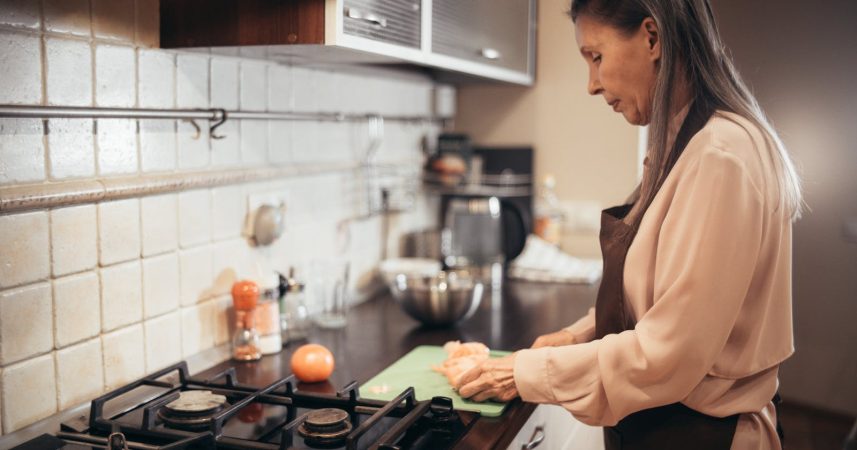
When I stand in my kitchen making garlic and olive oil pasta on a random Tuesday night, I'm not just cooking dinner — I'm unconsciously recreating the exact exhaustion ritual my mother performed every Thursday when she was too depleted to hide how alone she felt carrying our family's weight.
The smell hits me first. Garlic and onion sizzling in olive oil, the sound of pasta water coming to a boil, the mechanical rhythm of chopping vegetables. I'm standing in my kitchen at 7:30 PM on a Tuesday, making the same dinner I've made hundreds of times before.
Spaghetti aglio e olio. Garlic, olive oil, red pepper flakes, and pasta. Maybe some wilted spinach if I'm feeling ambitious. Simple enough that you can make it on autopilot, filling enough to call it dinner.
My mother made this exact meal every Thursday night for years. I didn't know it had a name back then. She just called it "pasta night," and we knew what that meant. Dad was working late again. She'd gotten home from her own job, helped with homework, driven someone to practice, and now faced a kitchen full of hungry kids.
I thought it was just easy cooking. Now I recognize it as something else entirely.
The inheritance nobody talks about
We inherit more than recipes from our parents. We inherit their coping mechanisms, their exhaustion patterns, their ways of getting through the day when there's too much day left.
I've mentioned before that understanding our patterns helps us make better decisions. But some patterns sneak up on you. They disguise themselves as preferences or habits when they're actually inherited survival strategies.
Think about your own go-to meal when you're depleted. What are you actually recreating? Is it just food, or is it a whole emotional state you learned decades ago?
For me, that pasta isn't just pasta. It's the taste of keeping it together when you're running on empty. It's the flavor of "good enough" when perfect isn't possible.
When exhaustion becomes your default setting
Here's what I've learned from years of studying behavioral patterns: we don't just learn behaviors from our parents. We absorb their emotional baselines.
Growing up in suburban Sacramento, dinner was supposed to happen at 6:00 PM sharp. That was the story, anyway. The reality was different. My mother would walk through the door at 5:45, still in her work clothes, already calculating what she could make with whatever was in the pantry.
The Thursday pasta wasn't laziness. It was efficiency born from exhaustion.
Now, decades later, I find myself in my Los Angeles kitchen, reaching for the same ingredients on nights when I can't quite explain why I'm so tired. I don't have kids. My workday ended at a reasonable hour. Yet here I am, recreating her exhaustion ritual like it's encoded in my DNA.
Have you ever caught yourself being tired for no apparent reason? Maybe you're not actually tired. Maybe you're just running an old program that says this is how you're supposed to feel at this point in the day, week, or season of life.
The myth of the effortless meal
Social media loves to sell us "quick and easy weeknight dinners" like they're revolutionary. But every overwhelmed parent has been making their version of aglio e olio for generations. They just didn't Instagram it.
My mother never called herself a good cook. She called herself practical. She knew exactly how long she could leave garlic on the heat before it burned. She knew how much pasta water to save to make everything come together. She had it down to a science because she had to.
I used to judge her for those Thursday dinners. Why couldn't she make something more interesting? More nutritious? More... anything?
Now I understand. Some nights, the victory isn't in what you make. It's in making anything at all.
Breaking the cycle (or at least recognizing it)
Last month, I made aglio e olio three times in one week. That's when it hit me. I wasn't tired. I was performing tired. I was playing out a script written before I was born.
Psychologists call this "transgenerational transmission of trauma," but that feels too clinical for what's essentially inheriting your mother's Tuesday night exhaustion along with her pasta recipe.
The thing about inherited patterns is that recognizing them doesn't make them disappear. I still make that pasta. But now I ask myself: Am I making this because I'm genuinely depleted, or because some part of me thinks I'm supposed to be?
Sometimes the answer surprises me.
The weight of invisible labor
What I didn't see as a kid was everything that happened before that pasta hit the table. The mental load of remembering who needed what for school tomorrow. The emotional labor of keeping everyone's spirits up when she was running on fumes. The physical reality of being the default parent even when there were technically two parents in the house.
She wasn't just tired from work. She was tired from carrying everything alone while pretending she wasn't.
And somehow, I inherited that exhaustion without ever carrying those same burdens. It's like I downloaded the emotional residue without the actual responsibilities that created it.
Do you ever feel exhausted by burdens you're not actually carrying? Maybe you're feeling someone else's old tiredness, passed down like a family heirloom nobody wanted.
Finding your own relationship with simplicity
These days, I'm trying to separate the meal from the exhaustion. Sometimes I make aglio e olio because I genuinely want it. Because it's actually delicious when you make it with good olive oil and fresh garlic. Because simplicity can be a choice, not just a surrender.
I've even developed my own quick meals that don't carry that inherited weight. My lentil soup, which friends request regularly, takes the same amount of time but doesn't taste like giving up. It tastes like choosing ease without the exhaustion narrative attached.
The goal isn't to never make your parent's tired-night dinner. The goal is to recognize when you're cooking from your own tiredness versus theirs.
Wrapping up
That pasta will always taste like Thursday nights in 1995. Like my mother's quiet exhaustion. Like the specific texture of keeping it together when you're barely holding on.
But maybe that's okay. Maybe honoring where we come from includes acknowledging the exhaustion our parents carried, even when we're no longer carrying it ourselves.
I'll probably make aglio e olio again this week. But now I'll know what I'm actually cooking. Not just pasta, but a memory. Not just dinner, but an inheritance.
The difference is, now I can choose when to make it from genuine tiredness and when to make it simply because I want pasta. That's a small distinction, but it matters.
Because breaking cycles doesn't always mean doing something completely different. Sometimes it just means doing the same thing consciously, with awareness of what you're really putting on your plate.