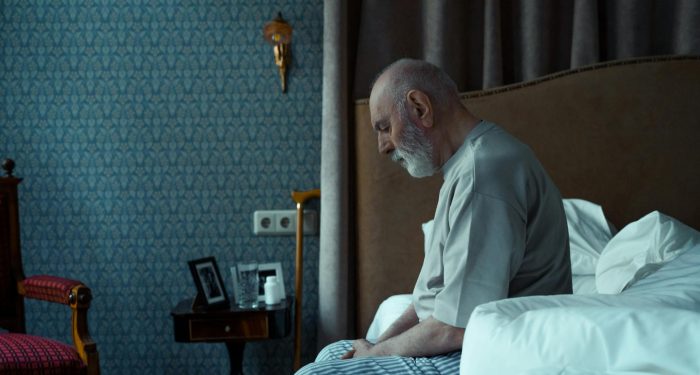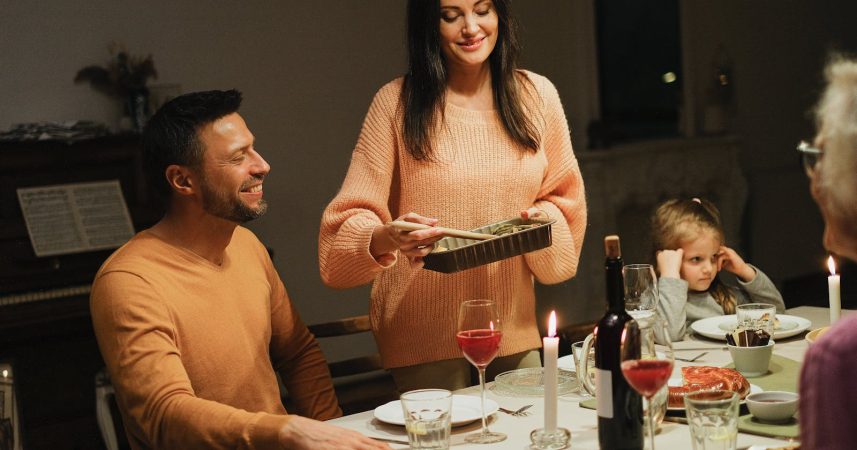
They mastered the art of saying "I love you" without ever speaking the words—through midnight repairs, Sunday dinners, and showing up when showing up was hard—while we've perfected the ability to say it constantly while rarely being present enough to mean it.

Add VegOut to your Google News feed. 
I watched my mother's hands last week as she peeled potatoes for Sunday dinner, the same steady rhythm she's kept for fifty years, each curl of skin falling into the sink with practiced precision. Her wedding ring, worn thin from decades of dish washing and garden soil, caught the afternoon light. She didn't look up when my teenage niece's phone buzzed for the fourth time during our conversation. She just kept peeling, creating something that would feed us all, while somewhere in the digital ether, someone was crafting the perfect response to a text that said simply, "hey."
This is the collision I witness daily now: the generation that speaks love through pot roast meeting the generation that speaks it through carefully curated Instagram posts. And increasingly, I'm watching the former being told their language is defunct, outdated, somehow less valid than a heart emoji sent at 2 AM.
When actions were the only words we knew
My father fixed our neighbor's fence every spring for twenty years. Not because anyone asked him to, but because Mr. Henderson had arthritis and Dad noticed the winter damage before anyone mentioned it. He'd show up with his toolbox on Saturday mornings, and by noon, the fence would be straight again. When Mr. Henderson died, his widow told us those fence repairs had meant more to her husband than any sympathy card ever could.
That was how we learned love in my house. It looked like coffee percolating at 5 AM before anyone else woke up. It sounded like the garage door opening at midnight when Dad finally got home from his second job. It felt like hands checking foreheads for fever at 3 AM, like buttons being sewn back on before the school play, like oil changes happening mysteriously while you were at work.
I think about this when my friend shows me her boyfriend's sweet text from that morning, then mentions he forgot to pick her up from the airport last week. We've somehow decided that saying "I love you" in creative ways matters more than showing up when showing up is hard.
The casserole brigade knew something we've forgotten
Remember when tragedy struck and the casseroles appeared? Within hours of my husband's mother passing, our freezer was full. Each dish came with a woman who hugged me wordlessly, who knew that grief makes even boiling water feel impossible. They didn't post about praying for us. They showed up with food that would last through the fog of funeral planning.
Last month, a colleague's father died. The GoFundMe page got lots of shares and heart reactions. But when I asked if anyone had brought her food, the silence was telling. We've replaced the casserole brigade with crowdfunding, swapped presence for PayPal.
There's efficiency in this new way, sure. But efficiency was never the point. The point was the knock on the door, the human face, the reminder that you weren't alone in your pajamas at 2 PM on a Tuesday. The point was someone taking time from their life to intersect with your pain.
Love that never announced itself
My grandmother pressed flowers between dictionary pages, saving them from every corsage, every funeral, every garden season. She never told us this was love. We discovered it after she died, finding Shakespeare's sonnets separated by her wedding roses, dried but still holding their shape after sixty years.
This was the generation that didn't Instagram their anniversaries or update their relationship status. They just stayed married for sixty years, working through problems without the option of unfriending each other. They fought behind closed doors and presented unified fronts. They forgave without announcement, reconciled without witnesses.
Was it perfect? Absolutely not. Some of that silence hid pain that should have been spoken. Some of that staying was actually stuck. But there was something powerful in love that didn't need constant public validation, that found its worth in the living rather than the telling.
When your word was your bond (and your love was your deed)
My uncle drove two hours every Sunday for three years to mow his mother's lawn after his father died. He never mentioned this to anyone; we only knew because we'd sometimes see his truck in her driveway. When someone finally asked why he didn't just hire someone local, he looked genuinely confused. "She's my mother," he said, as if that explained everything. And for his generation, it did.
This was love as obligation, but not in the burdensome sense we've come to associate with that word. It was obligation as sacred contract, as the price and privilege of connection. You showed up because showing up was what you did. You didn't need to document it, discuss it, or receive credit for it.
The modern translation problem
Now I watch my mother struggle with her smartphone, trying to respond to her grandchildren's texts with the right emoji, worried that her words alone aren't enough anymore. She who once could convey entire conversations with a raised eyebrow now fumbles with cartoon faces, trying to translate her care into this new language.
Meanwhile, her grandchildren document everything but experience little. They photograph the meal she spent hours preparing but barely taste it. They post about visiting grandma but spend the visit on their phones. They say "love you" reflexively while walking out the door, but they don't see her face light up at the words she waited their whole childhood to hear naturally.
How do we bridge this? How do we honor the generation that fixed the dripping tap at midnight while validating the generation that sends good morning texts? How do we explain that both are love, but one requires so much more?
Finding the bridges between worlds
Perhaps the answer isn't choosing sides but building bridges. My mother has started texting photos of her garden to the family group chat, her way of sharing her morning ritual with those who can't be there. My father now calls his grandkids on video, though he still holds the phone like it might explode. They're trying to speak this new language without abandoning their own.
And slowly, I see some of the younger generation beginning to understand. My niece helped her grandfather change his oil last week, her hands covered in grease as he taught her about maintenance as metaphor for care. My nephew has started showing up for Sunday dinners without being asked, understanding finally that presence is its own gift.
Final thoughts
Love has always been multilingual, but we're living through a particularly harsh translation crisis. The generation that communicated through pot roast and presence is aging, taking with them a vocabulary of care we might not fully appreciate until it's gone. They understood that love was weight-bearing, that it required strong backs and willing hands, that it showed up especially when showing up was inconvenient.
Before we dismiss their love language as outdated, perhaps we should consider what we lose when love becomes purely digital, when care requires no sacrifice, when connection demands no presence. Maybe the dripping tap fixed at midnight says something that no text message, no matter how quickly returned, ever could: I notice. I act. I'm here.
The pot roast will still be warm when you arrive. That's not outdated. That's eternal.
What’s Your Plant-Powered Archetype?
Ever wonder what your everyday habits say about your deeper purpose—and how they ripple out to impact the planet?
This 90-second quiz reveals the plant-powered role you’re here to play, and the tiny shift that makes it even more powerful.
12 fun questions. Instant results. Surprisingly accurate.