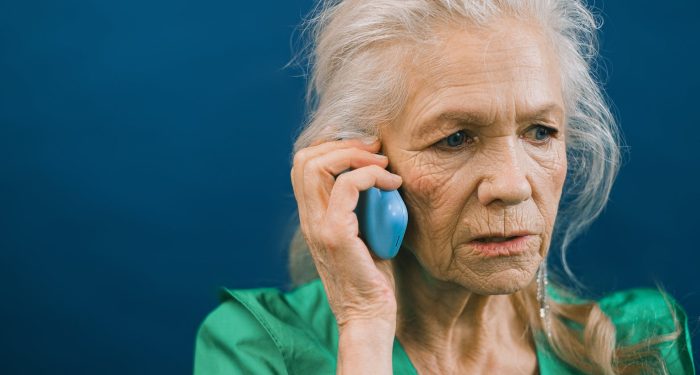
In the fluorescent glare of my kitchen, my father—who once navigated every bureaucracy with mailman precision—handed me his doctor's card with trembling fingers, and we both pretended this reversal of roles was perfectly normal.

Add VegOut to your Google News feed. 
The appointment card was ancient, its edges soft from years in his wallet, the phone number barely legible under the fluorescent kitchen light. My father held it between fingers that once rebuilt our entire back deck in a single weekend, fingers that taught me to tie sailor's knots and fix a leaky faucet. Now those same fingers trembled slightly as he handed me the card, asking a question that changed everything: "Could you help me schedule this?"
We stood there in my kitchen, both of us pretending this was perfectly normal. Just a simple request for assistance. Nothing more.
When independence becomes a moving target
I've spent my entire adult life championing self-sufficiency. During my 32 years as a high school English teacher, I hammered home the importance of taking responsibility, of learning to navigate the world without constantly looking for someone to hold your hand. When my first husband left, I taught my children to cook elaborate meals from scratch, to balance checkbooks, to change their own oil. Independence wasn't just a skill I wanted them to have; it was armor against a world that doesn't always show up when you need it.
My father was the original model for this philosophy. A mailman for forty years, he knew every form, every protocol, every phone tree in existence. This was a man who helped me diagram the entire postal system for a fourth-grade project, who could explain insurance deductibles and mortgage rates with the patience of someone who understood that knowledge was power. He navigated bureaucracy like other people navigated their own driveways.
Standing in my kitchen that Tuesday morning, watching him struggle with his flip phone, I realized that everything I thought I knew about strength and independence was about to be rewritten.
The quiet erosion of capability
What nobody tells you about aging parents is that it doesn't happen all at once. There's no dramatic moment when everything changes. Instead, it's a thousand tiny surrenders: reading glasses left in every room because he can't remember where he put the last pair, names that hover just beyond reach, the GPS that appears in a car that once traveled purely by memory and instinct.
My father's decline has been so gradual that I could almost pretend it wasn't happening. Almost. There were the rides he started requesting "if it wasn't too much trouble." The bills that began arriving with PAST DUE stamps. The refrigerator that contained three identical jars of mayonnaise because he kept forgetting he'd already bought one.
But somehow, the doctor's appointment was different. This wasn't about forgetting or physical limitation. This was about a capable man suddenly unable to navigate a system he'd once mastered. It was watching someone who'd guided me through every major decision of my life suddenly lost in the simple act of making a phone call.
"The number's right here," he said, as if the problem was just finding the right digits. But we both knew the real issue ran deeper. It was the automated menu that would confuse him, the insurance information he couldn't quite remember, the fear that he'd say something wrong or forget something important.
The weight of role reversal
I took the card with the same gentle care I once received broken toys from my children's hands. "Let me help," I said, though the words felt like swallowing glass. This wasn't how our story was supposed to go. He was supposed to remain the father, the fixer, the one with answers.
As I dialed the number, I thought about Virginia Woolf's observation that "growing up is losing some illusions, in order to acquire others." But what happens when the illusion you lose is your parent's invincibility? What new understanding takes its place?
The receptionist's voice was professionally cheerful. "New patient or existing?"
"Existing," I replied, though everything about this moment felt devastatingly new.
My father sat at my kitchen table, studying his hands as if they were strangers. Those hands had taught me everything that mattered: how to hold a pencil, throw a curveball, shake hands firmly while looking someone in the eye. Now they rested on my table, uncertain of their purpose.
Finding grace in the unraveling
I've written before about watching my mother fade into Alzheimer's, about the long goodbye that taught me patience I didn't know I possessed. I've shared stories about my second husband's seven-year battle with Parkinson's, how love sometimes means doing the things someone can no longer do for themselves. But with my father, I'd held onto the fantasy that it would be different. He was too stubborn, too vital, too much himself to succumb to the ordinary indignities of aging.
The appointment was for his knees. "They're not what they used to be," he said, a masterpiece of understatement. Nothing was what it used to be. Not his knees, not his memory, not his unshakeable confidence in his ability to handle whatever life threw at him.
After I hung up, I wrote the appointment details on an index card in large, clear letters. Tuesday, October 15th, 2:00 PM. Dr. Martinez. Bring insurance card and medication list.
"I could have done that," he said quietly.
"I know," I agreed, because what else could I say? Sometimes love means participating in necessary fictions.
The unexpected gift of vulnerability
We sat in comfortable silence, drinking coffee that had grown cold while we adjusted to this new reality. Outside, my garden was preparing for winter, cutting back, going dormant, accepting its limitations with a grace I'm still learning to embody.
"Your mother would have handled this better," he said finally.
I thought about my mother, how she'd hidden her confusion for months, pretending everything was fine until the pretending became impossible. "No," I said. "She would have never asked for help. You did. That's harder."
Have you ever watched someone you love try to reimagine themselves in real time? That's what I saw as my father processed my words, trying to reshape this moment from defeat into something else entirely. Not surrender but strategy. Not weakness but wisdom.
"Do you want me to go with you to the appointment?" I asked.
"Would you mind?" The question cost him something profound. I could see it in the way his shoulders dropped, relief and defeat mingled in equal measure.
"I'll drive," I said. "We can get lunch after, at that place with the good soup."
He smiled then, a real smile that reached his eyes. "Your mother loved their French onion."
Learning the hardest lesson
That evening, I helped my father program my number into his speed dial. We labeled it simply: "Help." We both laughed at the directness of it, the admission it represented. But there was something liberating in naming the thing we'd been dancing around for months.
My daughter called later for our standing Sunday evening chat. When I told her about the appointment, about the moment in the kitchen, I heard in her voice the same careful concern I'd used with my father. The same gentle probing for cracks in the foundation.
"Are you okay?" she asked.
"I'm learning," I said, which was the truest answer I could give.
The appointment is next Tuesday. I've cleared my calendar, planned the route, made a list of questions for the doctor. I'll sit in the waiting room with my father like he once sat with me, and we'll both pretend this is perfectly normal. Because maybe it is. Maybe this is what love looks like after seventy-five years of deepening and shifting, of learning that sometimes the greatest strength lies in letting someone else be strong for you.
Final thoughts
The exact moment I knew my father had gotten old was when he asked me how to schedule his own doctor's appointment. But the exact moment I understood what aging really means was when I realized it's not about losing who you are. It's about trusting someone else to help you hold onto the pieces that matter most.
Standing in my kitchen that morning, I learned that independence isn't a fixed state but a constantly renegotiated relationship with our own limitations. And perhaps the greatest gift we can give each other isn't the illusion of eternal self-sufficiency, but the grace to need and be needed in return.
What’s Your Plant-Powered Archetype?
Ever wonder what your everyday habits say about your deeper purpose—and how they ripple out to impact the planet?
This 90-second quiz reveals the plant-powered role you’re here to play, and the tiny shift that makes it even more powerful.
12 fun questions. Instant results. Surprisingly accurate.