Behind every smoothly-running family gathering and perfectly orchestrated holiday is a woman performing daily miracles while quietly drowning, and we only notice her labor when she finally stops making it look effortless.

Add VegOut to your Google News feed. 
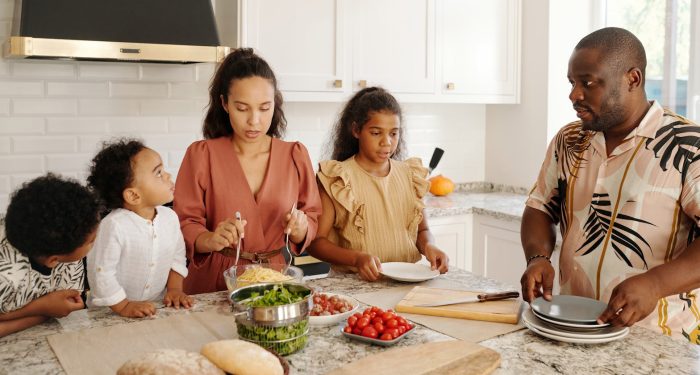
Last Thanksgiving at my parents' house, I watched my mother orchestrate the entire day while making it look like she was simply enjoying herself. She was simultaneously cooking three dishes, setting the table, managing my dad's questions about where things go, keeping track of dietary restrictions for all three of my siblings, and somehow maintaining conversations with everyone.
When someone complimented the meal, she just smiled and said it was nothing special. But I saw her collapse on the couch afterward, utterly exhausted, while everyone else chatted over coffee.
She's been doing this dance for decades. And here's what kills me: everyone thinks she's just naturally good at it. Like she was born knowing how to hold everything together.
But that's not how it works, is it?
The invisible weight that looks like grace
Think about the women in your life who seem to have it all together. The ones who remember everyone's birthdays, know where everything is in the house, coordinate schedules like air traffic controllers, and somehow make dinner appear while helping with homework and planning the weekend.
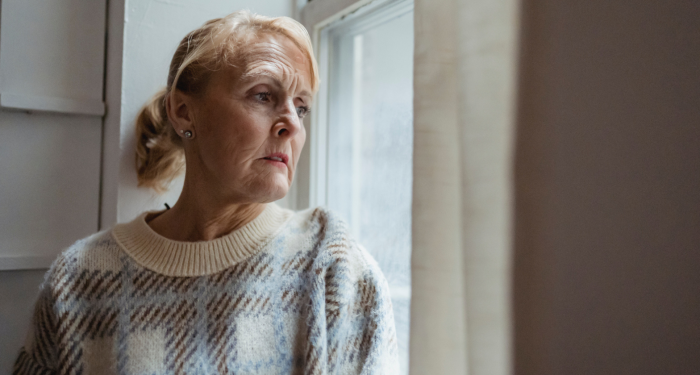
Now think about how often you've seen those same women quietly crying in their cars. Or zoning out during conversations because they're mentally running through tomorrow's impossible to-do list.
Research shows that women are more likely than men to bear organizational responsibility for domestic tasks, report lower satisfaction with this division, and experience higher emotional fatigue, with these burdens often underestimated by their partners.
But here's the kicker: the better someone is at managing chaos, the less anyone notices they're doing it. It becomes background noise. Expected. Invisible.
When holding it together becomes your identity
My grandmother raised four kids on a teacher's salary. Even now, in her eighties, she volunteers at the food bank every Saturday. When I ask her how she managed everything back then, she just shrugs and says, "You just do what needs doing."
But that's the trap, isn't it? When you're good at holding things together, it becomes who you are. People start to depend on your strength. They assume you're fine because you've always been fine.
Lauren Valencia, a therapist, puts it perfectly: "You can be grateful and burned out at the same time. You can be functioning and still falling apart inside."
I've seen this with friends who are mothers. They'll text me about feeling overwhelmed, then show up to school pickup looking completely composed. They've mastered the art of falling apart in private while maintaining the illusion of control in public.
The performance that nobody recognizes as work
Here's what makes me angry: we've somehow convinced ourselves that emotional labor isn't real labor. That remembering doctor's appointments, managing family dynamics, and being the emotional support system for everyone doesn't count as work because it doesn't come with a paycheck.
But keeping a family functional is a full-time job that never ends. There's no clocking out. No vacation days. No performance reviews that acknowledge the skill it takes to juggle everyone's needs while your own get pushed to the bottom of the list.
Think about it. When was the last time someone thanked the woman in your life for remembering that your cousin is allergic to nuts? Or for knowing that the family gathering needs to end by 7 because the kids get cranky? Or for smoothing over the tension between relatives who don't get along?
These things just... happen. Magically. Except there's no magic. There's just someone working overtime to make it look effortless.
Why we only notice when the system breaks
Marlene Martin, a writer, captured this perfectly: "The world saves its flowers and sympathy for the moment she finally collapses, never realizing that every day she didn't break was the real miracle worth celebrating."
We've created a culture where strength is only visible when it fails. Where the daily act of keeping everything running smoothly is so expected that we only notice when it stops.
I've mentioned this before, but during a particularly stressful period, I watched a friend finally hit her breaking point. Suddenly, everyone was concerned. Everyone wanted to help. But where was that energy during the months she was barely keeping her head above water?
The answer is uncomfortable: we didn't see it because she made it look easy. Her competence became her curse.
Breaking the cycle starts with seeing it
So what do we do about this?
First, we need to start recognizing emotional and organizational labor as actual work. Not just "helping out" or "pitching in," but acknowledging that someone is doing the heavy lifting of keeping life functional for everyone else.
Second, check in with the strong women in your life. Not just "How are you?" but really check in. Ask what they need. Offer specific help. Don't wait for them to ask because they probably won't.
Third, if you're one of these women, please know that it's okay to not be okay. Your worth isn't tied to how much you can carry. You don't have to earn your place in the world by being everyone's emotional support system.
And finally, we need to stop romanticizing exhaustion. There's nothing noble about running yourself into the ground for others while neglecting yourself.
Wrapping up
The woman holding everything together and the woman falling apart aren't just the same person. They're the same moment, existing simultaneously. One is the performance, the other is the truth.
Maybe it's time we started applauding the everyday heroics before the breaking point. Maybe it's time we noticed the weight before someone drops it.
Because behind every family that seems to run smoothly, there's usually a woman performing miracles and calling them Tuesday. And she deserves more than our assumption that she's got it handled.
She deserves our recognition that what she's doing is work. Hard work. And she shouldn't have to fall apart for us to finally see it.