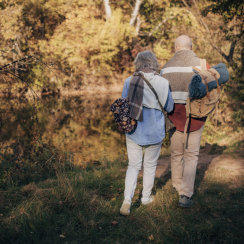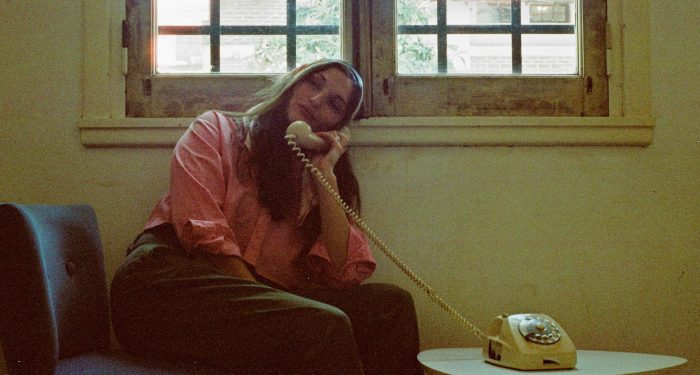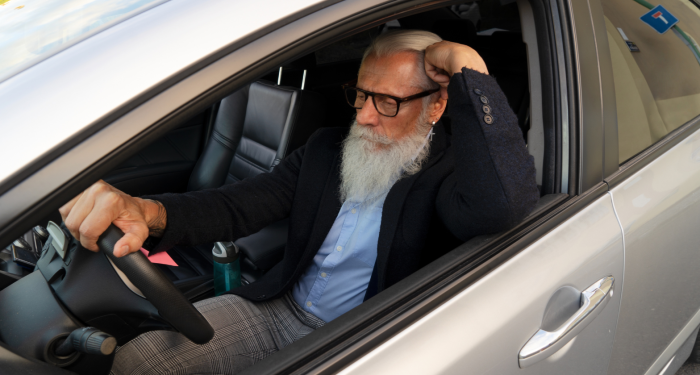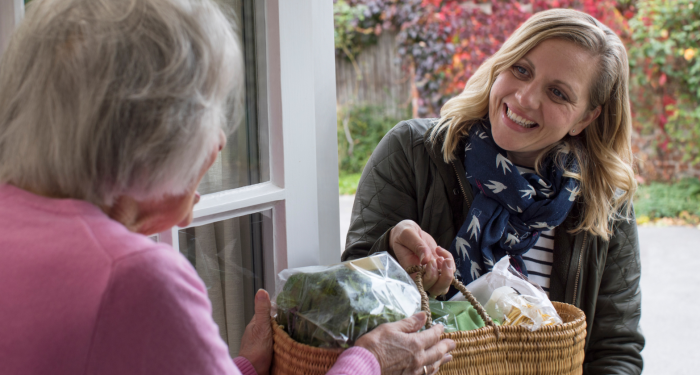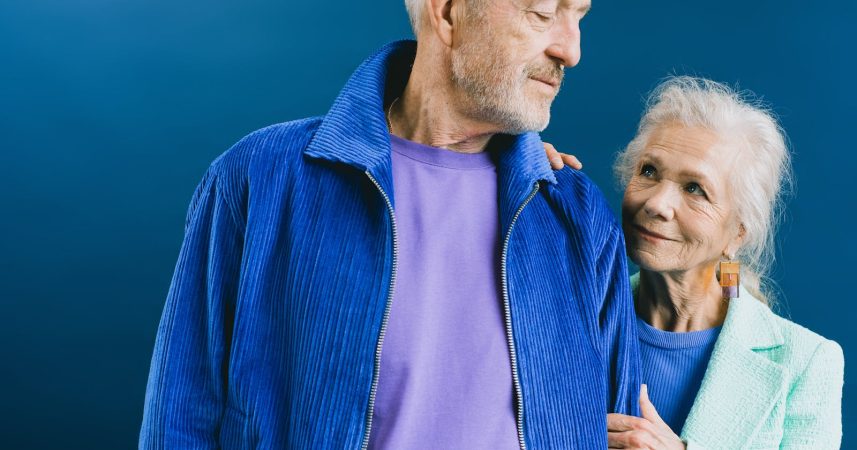
They built entire houses to avoid saying "I love you," renovated bathrooms instead of grieving, and now at sixty-five, these men are finally learning the language of feelings they were forbidden to speak as boys.

Add VegOut to your Google News feed. 
I watched my neighbor's son graduate last week. His grandfather sat in the front row, hands clenched so tight his knuckles went white, jaw working like he was chewing iron filings. When the kid walked across that stage, the old man's eyes filled up—then nothing. He blinked it back, swallowed hard, shook his grandson's hand afterward like they'd just closed a business deal. Later, I saw him in his garage, reorganizing his tool wall for the third time that month. That's where the pride went. Into perfectly aligned wrenches and color-coded screwdrivers.
I know that garage. I've been in that garage. Hell, I've built three decks instead of saying "I'm proud of you."
The great emotional lockdown of the twentieth century
Growing up in the restaurant business, you learn that timing is everything. Too early, the sauce breaks. Too late, everything burns. For men of my generation, our emotional timing got permanently miscalibrated somewhere around age seven, when the world decided we'd had enough practice feeling things.
Healthline puts it perfectly: "Boys are often told (either implicitly or explicitly) to repress certain emotions, like sadness, and embrace the following instead: toughness, strength, dominance, stoicism, aggression."
That word "often" is doing a lot of heavy lifting. For boys in the '60s and '70s, "often" meant every single time. Cry because your dog died? Stop it. Scared of the dark? Grow up. Hurt by what someone said? Don't be so sensitive. By the time we hit thirteen, we'd learned to run every emotion through a very simple processor: convert to anger, convert to action, or delete entirely.
The restaurant kitchen I started working in at 16 was full of men who'd mastered this conversion. Disappointed? Throw a pan. Anxious? Scrub the grill until your arms ached. Heartbroken? Work a double shift. We turned feelings into productivity because productivity was acceptable. A man who cried was weak. A man who worked eighteen hours straight was admirable.
When love looks like labor
My father never said "I love you." Not once in decades. But he did wake up at 4 a.m. six days a week to prep vegetables for the lunch rush at his souvlaki shop. He did save every penny to help his kids. He did show up to every single graduation, game, and event—silent, stoic, present.
Was that love? Of course it was. Was it enough? That's the harder question.
The ACT Group explains what happened to us: "When boys are repeatedly told to suppress feelings, the opposite can occur: They may internalise distress, leading to anxiety, shame, or self-doubt."
Internalize is a clinical word for what felt like swallowing glass. Every unshed tear, every unspoken fear, every unexpressed joy—they didn't disappear. They calcified inside us, creating men who could build you a house but couldn't tell you they missed you, who could work themselves to death for their families but couldn't say why.
The translation problem
A few years ago, my wife asked me how I felt about my mother's death. I responded by completely renovating our bathroom. New tiles, new fixtures, new everything. It took six weeks. She asked me again when I finished. I started on the kitchen.
This is what we do—we translate emotional expression into physical transformation. Grief becomes grout. Love becomes lumber. Fear becomes fifty hours of overtime. We're Google Translate for feelings, and something always gets lost in the conversion.
The men in my cycling group all do this. Jim expresses affection through oil changes. Marcus shows concern by checking tire pressure. Dave's love language is apparently weatherproofing everyone's decks. We're a generation of emotional construction workers, building monuments to feelings we can't name.
Breaking the code with our kids
When Ethan was five, he fell off his bike and scraped his knee pretty bad. Blood everywhere. He started crying, and every atom in my body wanted to say what my father would have said: "You're okay, walk it off." Instead, I sat down on the curb next to him and said, "That must hurt a lot."
Those four words felt like betrayal. Like I was breaking some sacred masculine code passed down through generations. But I said them. And he cried. And the world didn't end. In fact, he stopped crying faster than when I used to tell him not to cry at all.
William Pollack, Professor of Psychiatry at Harvard Medical School, discovered something profound: "Boys are yearning for adult connection." They want emotional engagement, not emotional suppression. They need to know it's safe to feel, safe to express, safe to be human.
But knowing this intellectually and practicing it are different beasts. Even now, when my adult son calls upset about something, my first instinct is to fix rather than feel, to solve rather than sympathize. The programming runs deep.
The sixty-year-old students
Last month, five of us from my old restaurant scene signed up for a workshop on "emotional intelligence." Five men in their sixties, sitting in a circle, learning to identify feelings beyond "fine" and "tired." The instructor asked us to describe how we felt using specific emotion words. Tom said "aggravated." Bill said "frustrated." I said "irritated." She pointed out we'd all chosen variations of anger. Then she showed us a wheel with hundreds of emotion words. We stared at it like it was written in Mandarin.
Melancholy. Wistful. Apprehensive. Tender. Words we knew but had never applied to ourselves. Words that felt too delicate for men who'd spent decades handling hot pans and sharp knives.
But we're trying. Tom actually used the word "melancholy" last week. We all froze, like he'd just spoken in tongues. Then Bill said he felt "apprehensive" about retirement. And just like that, we were men in our sixties, learning a language we should have known from birth.
The grandchild effect
Something happens when you become a grandfather. Maybe it's the distance from daily parenting pressure. Maybe it's the proximity to mortality. Maybe it's just exhaustion from carrying armor for six decades. But the walls crack a little.
With my granddaughter, I can say "I love you" without choking on it. I can admit when I'm sad. I can even—and this still amazes me—cry in front of her. Not often. Not easily. But sometimes.
She doesn't know this is revolutionary. She doesn't know her grandfather spent fifty years believing tears were weakness. She just knows Grandpa is sad about his friend, and sad is okay. She pats my hand with her tiny fingers and says, "It's okay, Grandpa," and for a moment, it actually is.
Final words
We weren't broken by design. We were broken by good intentions—by fathers who thought emotional suppression was strength, by mothers who thought brave boys didn't cry, by a culture that confused numbness with resilience.
Now we're in our sixties and seventies, standing in therapists' offices and community centers, learning to say words that should come naturally. "I feel." "I hurt." "I love you." Simple phrases that require us to dismantle decades of careful construction.
But we're doing it. Slowly, clumsily, imperfectly. We're doing it because we've finally realized that our wives deserved better than partners who spoke only in actions. Our children deserved better than fathers who showed love through labor alone. And maybe, just maybe, we deserved better too.
The door to our feelings wasn't locked by us. It was welded shut by a world that feared male emotion more than male silence. Now we're taking torches to those welds, one conversation at a time, one feeling at a time, one "I love you" at a time.
It's hard work. The hardest we've ever done. But for the first time in sixty years, we're not doing it alone. We're doing it together, in circles of men who understand that strength isn't the absence of feeling—it's the courage to feel anyway, even when every cell in your body tells you to stop, to shut down, to build another deck instead.
What’s Your Plant-Powered Archetype?
Ever wonder what your everyday habits say about your deeper purpose—and how they ripple out to impact the planet?
This 90-second quiz reveals the plant-powered role you’re here to play, and the tiny shift that makes it even more powerful.
12 fun questions. Instant results. Surprisingly accurate.