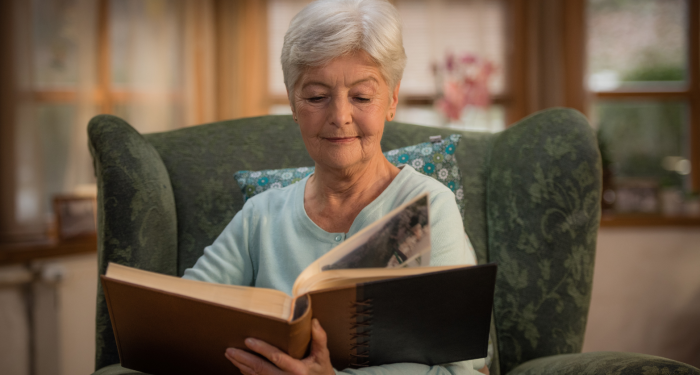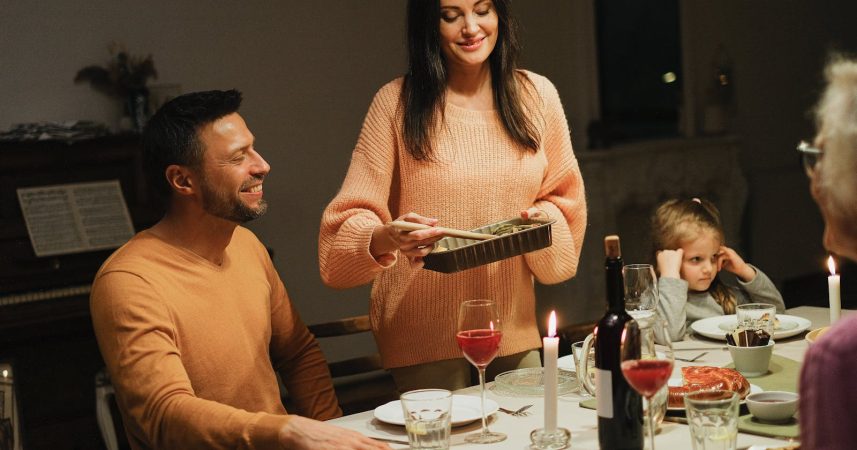
After decades of being the last to eat and the first to clean up, a 71-year-old grandmother discovers that her family's "strongest" member was simply the one who'd been exhausted the longest—until her teenage granddaughter asked the question that changed everything.

Add VegOut to your Google News feed. 
I was standing at the sink, scrubbing the remnants of Thanksgiving dinner from my good china, when my granddaughter appeared in the doorway. Everyone else had migrated to the living room, their laughter mixing with the football game on television. "Grandma," she said, "why are you always in here alone?" I opened my mouth to give the usual response—that I didn't mind, that it gave me time to think—but something in her sixteen-year-old eyes stopped me. She wasn't asking about the dishes. She was asking about something much deeper, something I'd been avoiding for most of my seventy-one years.
The invisible weight of being "the strong one"
Have you ever noticed how certain roles in a family become so fixed that questioning them feels like suggesting the sun might rise in the west? That was me—the one who held everything together, who never seemed to need anything, who was always fine. The exhaustion started early, though I didn't have a name for it then. At nineteen, carrying my first load of his laundry to the washer while he watched television, I thought this was love. By twenty-eight, divorced with two toddlers clinging to my legs, I understood it was something else entirely.
They say strength is lifting heavy things, but nobody mentions that the heaviest things are often invisible. The mental load of remembering everyone's appointments, allergies, and anxieties. The emotional weight of being the family shock absorber, softening every blow before it reaches the others. The physical toll of being the last to sit, the last to eat, the first to notice when the milk is running low.
During my thirty-two years teaching high school English, I perfected the art of invisible strength. Every evening, I'd come home to cook dinner while grading papers balanced on the counter, listening to my children's days while mine went unasked about. Not out of malice—my kids were good kids—but because strength becomes invisible when it's constant. Like air, you only notice it when it's gone.
When caring becomes invisible labor
"Mom never gets tired," my daughter once said to a friend when she was twelve. I was standing right there, exhausted to my bones, having just worked a full day, made dinner, helped with homework, and was starting on the dishes. But I smiled. Because that's what the strongest one does—we smile and continue, not because we're martyrs, but because someone has to hold the center.
The pattern repeated itself even in my second marriage, that beautiful twenty-five-year love story that ended with his Parkinson's. He was a good man who showed love through quiet acts, but even good men sometimes don't see the woman still cleaning the kitchen at 10 PM, her own dinner cold on the counter. We went to couples counseling in year five, and I learned to ask for what I needed. But asking and receiving are different creatures entirely.
I think about Virginia Woolf's words about women needing a room of their own, but what about just needing someone to notice when we haven't sat down all day? When we're eating standing up at the counter while everyone else digests comfortably in the next room?
The moment everything changes
The breaking point came after my husband died. For six months, I barely left the house, and suddenly everyone noticed. Where was dinner? Who would host Christmas? Why wasn't I returning calls? It took disappearing for them to see how much space I'd been filling. My son, then forty-three, stood in my kitchen one evening and said, "Mom, I never realized... you did everything." The recognition felt like both vindication and defeat.
But it was my granddaughter who really changed things. During that Thanksgiving I mentioned, she didn't just ask why I was alone—she stayed. She picked up a dish towel and asked me about my day. My actual day, not just whether I needed anything from the store or if I could babysit next week. She wanted to know what I was reading, what I was thinking about, whether I was lonely.
That question haunted me. At sixty-eight, I finally started therapy, sitting across from a woman half my age who helped me understand that strength and self-sacrifice aren't synonyms. That my worth wasn't measured in how much I could endure silently.
Breaking the generational pattern
I think about my mother now, remembering how she'd stand at the stove eating bits of dinner while serving everyone else. How she'd say she wasn't hungry when there wasn't enough food. How she died at seventy-one, and at her funeral, everyone talked about her strength. I wanted to scream: "She was tired. She was so damn tired, and none of you saw it."
The women in my widow's support group all have the same story with different details. Margaret jokes that she could disappear for a week and her family would only notice when they ran out of toilet paper. Linda says her daughter called her "the family CEO" as if it were a compliment, not recognizing it as an unpaid position with no vacation days. We laugh, but it's the kind of laughter that holds tears at its edges.
But something is shifting. I wrote in a previous post about finding purpose after retirement, and part of that purpose has become breaking this pattern. I sit down for dinner now, even if the kitchen needs cleaning. I let the phone ring sometimes. When my grandchildren visit, I teach them to cook, but also to notice who's doing the cooking. I tell them stories about their grandfather, but also about my own dreams, my own disappointments, my own days.
Learning to be seen
Last week, my son called just to ask how I was doing. Really doing. He waited through my surprised silence, through my automatic "I'm fine," and asked again. "No, Mom. How are you really?" And for the first time in forty-five years of being his mother, I told him the truth. I was tired. I was lonely sometimes. I was proud of the garden but worried about my hip. I missed teaching. I was learning Italian. I was whole and broken and healing all at once.
The strongest person in the family shouldn't be invisible. They shouldn't be the last to eat or the only one cleaning or the one whose day remains unasked about. Strength should be recognized, reciprocated, relieved. Because the truth nobody talks about is that the strongest person is often just the one who's been tired the longest, who's learned to function on empty, who's mistaken exhaustion for love.
Now, at seventy-one, with rebuilt knees and an aching hip, I'm finally learning the radical act of sitting down while others stand, of saying "I need help," of eating while the food is still warm. My granddaughter taught me that real strength isn't about being the last to eat. It's about teaching others that everyone deserves a place at the table, a warm meal, and someone who asks about their day and waits—really waits—for the answer.
Final thoughts
If you're reading this and recognizing yourself, know that your exhaustion is not a badge of honor. Your worth isn't measured in how much you can carry silently. And if you're reading this and recognizing someone in your family, maybe today is the day you ask them how they really are. Then pull up a chair, pour them something warm, and listen to the answer. Because the strongest people in our families have been standing long enough.