After decades of orchestrating every family gathering, mediating every crisis, and being the person everyone turned to for everything, she sits at her own dining table watching conversations flow around her like she's become invisible—and the silence holds both devastation and an unexpected freedom she's still learning to understand.

Add VegOut to your Google News feed. 
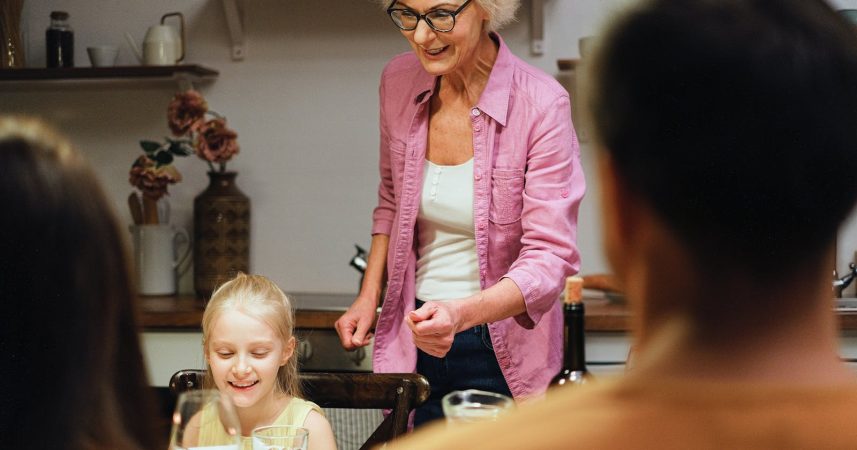
Picture this: A woman who spent three decades orchestrating every holiday meal, mediating every sibling squabble, and knowing exactly which grandchild needed extra hugs sits silently at her own dining table. She watches conversations flow around her like water around a stone. Her adult children debate politics without asking her opinion, though she's voted in more elections than they've been alive. Her grandchildren show their phones to each other, never to her. She could announce she's learning Italian or that she published an essay last month, but she knows no one would really hear her. So she sits, quiet as a held breath, and wonders when exactly she became furniture in her own family's life.
This is happening in dining rooms across America, and nobody's talking about it.
The invisible shift from matriarch to background
I've been thinking about this phenomenon ever since Thanksgiving, when I watched it happen at my own table. For thirty-two years, I stood before classrooms of teenagers, commanding attention with nothing but my voice and presence. I could quiet thirty restless sixteen-year-olds with a look. But now, at family gatherings, I might as well be speaking underwater.
The shift doesn't happen overnight. It's gradual, like losing hearing in one ear. First, they stop asking your opinion on important decisions. Then they stop including you in conversations about technology, politics, culture, assuming you can't keep up. They talk over you when you speak, their attention fragmenting mid-sentence. They love you, you know this, but love and attention have become two very different things.
We spent thirty years being the emotional center of every room. We kissed scraped knees, attended every concert, stayed up through teenage heartbreaks. We were the mediators, the comfort, the solvers of problems. Every conversation seemed to require our input, our approval, our emotional labor. We couldn't tell a story without three interruptions, couldn't make a decision without explaining it five different ways.
And then one day, the questions stop coming. The interruptions cease. The room that once couldn't function without us suddenly runs perfectly fine while we sit silent in the corner.
When exhaustion meets invisibility
Here's what younger generations don't understand: many of us are actually relieved, at least partially. Do you know how exhausting it is to be everyone's emotional support system for three decades? To be the one who remembers birthdays, mediates disputes, keeps track of who's allergic to what, who's fighting with whom, whose marriage is struggling?
I raised two children alone after my first husband left when I was twenty-eight with toddlers and an unfinished degree. For fifteen years, I juggled parent-teacher conferences for my own kids between teaching five periods of English, grading papers at kitchen tables sticky with spilled juice. Every decision fell to me. Every crisis landed in my lap. Every celebration required my orchestration.
But this new invisibility isn't quite relief either. It's something more complex. Virginia Woolf wrote about women needing rooms of their own, but what happens when the room becomes the entire house because nobody notices you're in it anymore?
The irony is thick enough to spread on toast. We fought so hard to have our voices heard, to have seats at tables, to be taken seriously. Our generation broke ceilings, demanded credit cards in our own names, entered professions that had been men's domains. And now, in our sixties and seventies, we're more invisible than our mothers were at our age, because at least their families still needed them for something.
The technology divide that became a canyon
Part of this invisibility stems from assumptions about technology. Our children see us squinting at phones and assume we're digitally illiterate. They don't know that I maintain a blog, that I taught myself video editing to preserve family memories, that I probably read more news than any of them because I have the time and the interest.
They explain things to us like we're children, these basic concepts we understand perfectly well. They assume our silence means confusion rather than what it often is: exhaustion from trying to be heard. They roll their eyes when we ask them to text rather than use whatever new app they're obsessing over, not understanding that we're perfectly capable of learning it; we just don't see the point of fragmenting our communications across fifteen different platforms.
In one of my previous posts about navigating family dynamics, I mentioned how technology can become a bridge rather than a barrier. But that requires effort from both sides, and increasingly, the younger generation seems unwilling to meet us even halfway.
The richness of lives they never ask about
What kills me is how interesting our lives actually are right now, if anyone bothered to ask. At sixty-six, I started writing essays because a friend insisted my stories needed telling. I'm learning Italian for a trip I've dreamed about since reading Elena Ferrante. I volunteer at the women's shelter teaching interview skills, remembering my own desperate job searches after my divorce.
My widow's support group has become my inner circle. These women understand 3 a.m. loneliness, show up with casseroles and stay to eat them. We play poker now, badly but enthusiastically. We share books, swap recipes, hold each other through grandchildren's triumphs and diagnoses we didn't see coming. These friendships have a depth that only comes from surviving real loss together.
I have four grandchildren and one great-grandchild who call me Nana. Each one gets a solo adventure day yearly where we explore museums, hiking trails, bookstores. I've learned their love languages: one needs quality time, another words of affirmation, the third acts of service. I write them birthday letters they'll receive when they turn twenty-five, hoping by then they'll understand what I'm trying to tell them now.
But at family gatherings, none of this exists. I'm just the woman who makes the pie, who can be counted on for holiday checks, who will always say yes to babysitting. The complexity of my current life, the wisdom earned through surviving breast cancer scares, knee replacements, my mother's Alzheimer's, my husband's seven-year battle with Parkinson's, none of it seems relevant to them.
Choosing silence as its own form of power
So we go quiet. Not from defeat but from a different kind of wisdom. We've learned that you can't make people listen, that attention is a gift freely given or not at all. We continue our morning journaling, our evening walks, our weekly coffee with neighbors who actually ask about our writing, our thoughts, our plans.
We tend our gardens with the patience of women who understand that growth takes time. We maintain friendships that span forty-five years, having learned that female friendships require tending like the English cottage gardens we've cultivated for decades. We show up for each other in ways our families no longer seem to need.
Sometimes I excuse myself from the table to make coffee, knowing no one will notice I'm gone until they need something. In the kitchen, I allow myself one moment of grief for the woman who once commanded every room, then return with dessert and a smile. I've learned that some battles aren't worth fighting and some silences are their own kind of peace.
Final thoughts
This quietness isn't surrender. It's a kind of retirement from the exhausting work of being heard by people who forgot how to listen. We're still here, still vibrant, still learning and growing and contributing. We're writing blogs, taking classes, traveling solo, making art. We're living full, complex lives that happen to be invisible to the people who once couldn't function without our constant attention.
Maybe one day they'll notice the silence where our voices used to be. Maybe they'll recognize the space we've stopped trying to fill. Or maybe they won't, and we'll continue building these rich, parallel lives that exist completely separate from our roles as mothers and grandmothers. Either way, we're learning that our worth was never dependent on being heard by people who stopped listening. Sometimes the most powerful thing you can do is stop shouting into the void and start speaking to people who actually want to hear what you have to say.