Twenty-seven worn notebooks revealed not deep secrets or hidden wisdom, but something far more devastating: thousands of tiny, mundane moments I'd walked right past while he stood still, pen in hand, refusing to let a single detail slip away unnoticed.

Add VegOut to your Google News feed. 
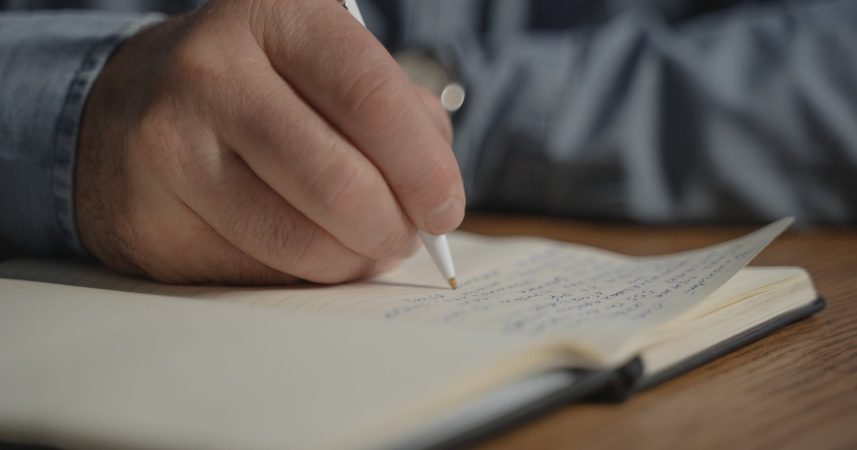
When I was cleaning out my father's study three weeks after he passed, I found them stacked in a dusty cardboard box behind his desk. Twenty-seven pocket notebooks, each one worn soft at the edges, filled cover to cover with his tight, careful handwriting.
My dad carried one of these everywhere. I remember seeing him pull it out at the most random moments. Standing in line at the grocery store. Sitting on a park bench. Even at red lights. As a kid, I thought it was weird. As a teenager, embarrassing. As an adult, I just never asked.
Now, holding these notebooks in my hands, I finally understood what he'd been doing all those years.
Each page was a snapshot of a day. Not grand events or milestone moments. Just life, observed and recorded. "Coffee tastes better in the blue mug." "Mrs. Chen planted tulips." "Saw three cardinals at the feeder today." "The barista has a new tattoo of a compass."
Reading through them, I realized my father had discovered something most of us miss: the extraordinary value of paying attention to ordinary moments.
The art of witnessing your own life
You know that feeling when you can't remember what you did last Tuesday? Or when someone asks about your weekend and you draw a blank even though it was literally yesterday?
That never happened to my dad.
His notebooks weren't journals in the traditional sense. He wasn't processing emotions or working through problems. He was simply witnessing. Recording the texture of daily life before it evaporated into the fog of forgotten days.
I found an entry from a random Wednesday in 2003: "Construction crew on Main Street shares one thermos. Guy with the beard pours for everyone else first. Watched them for five minutes. Nobody rushed him."
Twenty years later, that moment still exists. Not because it was important, but because he noticed it.
This practice reminds me of something Annie Dillard wrote in "The Writing Life": "How we spend our days is, of course, how we spend our lives." My father took this literally. He spent his days noticing, and in doing so, he spent his life fully present.
What small observations reveal about big patterns
The more notebooks I read, the more patterns emerged. Not intentional ones, just the natural rhythm of a life paid attention to.
He noted every time he saw the elderly man who walked his ancient beagle past our house. Over the years, the entries shifted. "Man with beagle walking briskly today." Then later: "Beagle walking man today, very slowly." Finally: "New puppy in the window of the beagle man's house. Golden retriever."
Without trying to, my father had documented the cycle of loss and renewal playing out in our neighborhood. These weren't stories he set out to tell. They revealed themselves because he was watching.
I started seeing how his observations tracked subtle changes. The coffee shop that slowly transformed from local hangout to tourist trap. The tree in our front yard growing imperceptibly until suddenly it was touching the power lines. His own handwriting getting slightly shakier in the last two notebooks.
During my years in Bangkok, I kept similar notebooks, though I didn't realize I was following in his footsteps at the time. Looking back at them now, I see the same thing. The vendor who sold me pad thai every Tuesday. The stray dog I named Charlie who slept outside my apartment. The gradual shift in my own perspective as a long-term visitor became something closer to a temporary resident.
Why most of us sleepwalk through our days
Here's what's crazy: we live in an age where we document everything, but notice nothing.
We take hundreds of photos we'll never look at. We post updates about meals we won't remember eating. We're so busy capturing life for an audience that we forget to actually experience it ourselves.
My dad's notebooks contained zero photos. No hashtags. No desire for likes or comments. Just pure observation.
I think about this whenever I'm in a restaurant now. I spent years in high-end kitchens where every detail mattered. The way a sauce pooled on a plate. The sound of a properly seared steak. The choreographed dance of a dinner rush. These details made the difference between good and exceptional.
But how often do we bring that same attention to regular life? When did you last really taste your morning coffee instead of just drinking it while scrolling through your phone?
My dad wrote about his coffee every single morning. Not lengthy descriptions, just quick notes. "Bitter today, need new beans." "Perfect temperature." "Tastes like chocolate, same beans as yesterday, strange."
Thirty years of paying attention to coffee. And you know what? He never complained about routine or being bored. How could he be? He was too busy noticing that no two cups were exactly the same.
The unexpected gift of slowing down time
Everyone complains that time moves too fast. Years blur together. Decades disappear. But reading my father's notebooks, I realized something: time moved differently for him.
When you document small moments, days stop blending together. Tuesday becomes the day you noticed the new graffiti under the bridge. Thursday is when the couple at the bus stop shared an umbrella. Saturday is when the kid at the farmers market juggled apples.
This reminds me of something I read in Daniel Kahneman's "Thinking, Fast and Slow." He talks about how our brains compress routine experiences but expand novel ones. That's why vacation days feel longer than work days. My father hacked this system. By actively noticing new details in familiar settings, he made every day feel less routine.
I've started carrying a notebook now too. Nothing fancy, just like his. And I'm discovering what he knew all along: when you write down what you notice, you start noticing more.
Yesterday I wrote: "Barista has been practicing latte art, getting better." Today: "Same homeless guy, new shoes, someone's taking care of him." Tomorrow, who knows? But I'll be watching.
Final thoughts
Going through those twenty-seven notebooks, I got to spend three more weeks with my father. Not through memories or old photos, but through his eyes. I saw the world he saw, noticed what caught his attention, understood what made him pause and pull out his pen.
The last entry was dated three days before he went into the hospital: "Cardinals back at the feeder. Fat one must be the same from last spring. Good to see old friends return."
He didn't know it would be his last entry. He was just doing what he'd done every day for decades: refusing to let life pass by unwitnessed.
His notebooks taught me that an ordinary life, closely observed, becomes extraordinary. Not because anything special happens, but because you're special enough to notice it happening.
I keep his last notebook in my bag next to my own. Sometimes I flip it open to a random page and read an entry. "Couple arguing at bus stop ends with a hug." "New flowers in the median, city or guerrilla gardener?" "Rain sounds different on the new roof."
These aren't profound observations. They're not meant to be. They're just proof that he was here, paying attention, finding something worth noting in every single day.
And honestly? That might be the most profound thing of all.
If You Were a Healing Herb, Which Would You Be?
Each herb holds a unique kind of magic — soothing, awakening, grounding, or clarifying.
This 9-question quiz reveals the healing plant that mirrors your energy right now and what it says about your natural rhythm.
✨ Instant results. Deeply insightful.

Adam Kelton
Adam Kelton is a writer and culinary professional with deep experience in luxury food and beverage. He began his career in fine-dining restaurants and boutique hotels, training under seasoned chefs and learning classical European technique, menu development, and service precision. He later managed small kitchen teams, coordinated wine programs, and designed seasonal tasting menus that balanced creativity with consistency.
After more than a decade in hospitality, Adam transitioned into private-chef work and food consulting. His clients have included executives, wellness retreats, and lifestyle brands looking to develop flavor-forward, plant-focused menus. He has also advised on recipe testing, product launches, and brand storytelling for food and beverage startups.
At VegOut, Adam brings this experience to his writing on personal development, entrepreneurship, relationships, and food culture. He connects lessons from the kitchen with principles of growth, discipline, and self-mastery.
Outside of work, Adam enjoys strength training, exploring food scenes around the world, and reading nonfiction about psychology, leadership, and creativity. He believes that excellence in cooking and in life comes from attention to detail, curiosity, and consistent practice.
More Articles by Adam