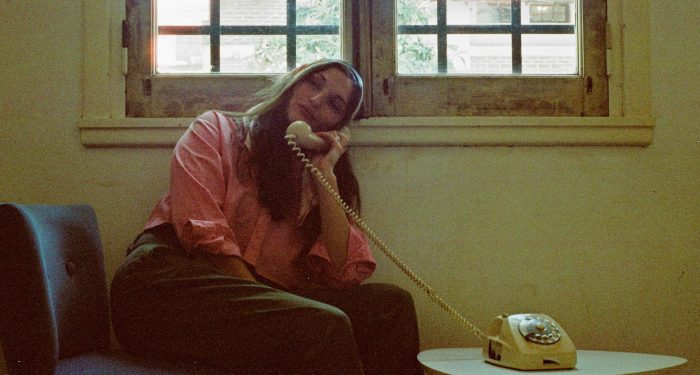
She spent twenty minutes lying injured in her garden with help just a phone call away, paralyzed not by pain but by seven decades of believing that needing others meant she had failed at life.

Add VegOut to your Google News feed. 
There's a particular sound your body makes when it hits garden pavement at seventy. It's not dramatic like in the movies—more of a dull thud followed by the scatter of hand tools and the rustle of disturbed hostas. The smell of mulch fills your nose, mixed with that green scent of broken stems, and suddenly you're looking at your garden from an angle you've never seen before: flat on your back, cheek pressed to stone, watching a beetle navigate the suddenly enormous terrain of a dandelion leaf.
That was me last month. Phone in my pocket, neighbors home, daughter ten minutes away. And for twenty minutes, I lay there with a bruised hip and a throbbing wrist, negotiating with my body and my pride, because my first thought wasn't to call for help. My first thought was the same thought that's run my entire life like a broken record: I should be able to handle this myself.
The inheritance we never asked for
When did it start, this conviction that needing help was failure? I can trace it back through decades like following a crack in the foundation of an old house. Maybe it was watching my mother apologize every time she had to ask my father to open a jar, as if her arthritis was a personal failing. Maybe it was earlier, at seven, when I broke my finger and learned to tie my shoes one-handed rather than ask for help twice.
Or maybe it goes back further than memory, inherited through generations of women who were told to make do, manage, cope, handle it. My grandmother raised six children through the Depression, and I remember her saying, with pride that bordered on defiance, "I never asked anyone for anything." She said it like it was an accomplishment. Now I wonder if it was just exhaustion dressed up as strength.
After thirty-two years of teaching high school English, I know something about stories we tell ourselves. I taught my students to look for the recurring themes, the sentences that repeat. In my own story, that sentence was always there: handle it yourself. Through my divorce at twenty-eight with two toddlers. Through the cancer scare at fifty-two. Through my second husband's Parkinson's diagnosis and his death two years ago. Handle it. Manage it. Figure it out. Myself.
Twenty minutes of reckoning
Have you ever noticed how time moves differently when you're in crisis? Those twenty minutes in my garden felt like hours and seconds simultaneously. I could hear my neighbor's wind chimes. A plane passed overhead. The sun moved just enough to shift the shadow of the garden bench across my legs. And through it all, I argued with myself.
If I could just roll to my left. If I could get to my knees. If I could crawl to that bench. Each attempt sent lightning through my hip, but still I didn't call. The phone was right there, pressing against my ribs through my gardening apron. Everyone was programmed in. One button. That's all it would take.
But I'd spent seventy years believing that pushing that button meant failure. That asking for help meant I'd finally become what I'd fought so hard not to be: a burden. Weak. Needy. Old.
The irony wasn't lost on me, even lying there in pain. Here I was, a woman who'd written about resilience, about aging gracefully, about the importance of community, and I couldn't practice what I preached when it mattered most. The stories we tell others are so much easier than the ones we tell ourselves.
The mythology of handling it all
"You're so strong." People have been telling me that my whole life, and I wore it like armor. Strong when my first husband walked out. Strong when I worked two jobs while finishing my degree. Strong when I sat through parent-teacher conferences as both the teacher and the single mother being quietly judged. Strong when I held my second husband's hand through his final days, telling him it was okay to let go while inside I was screaming that I didn't know how to handle what came next.
But what if strength isn't about handling everything yourself? What if that's just fear wearing a superhero cape?
My granddaughter fell off her bike last week. Without hesitation, she called out, "Grandma, help!" Clear, simple, unashamed. When did we lose that ability? When did asking for help become more painful than lying injured in a garden?
In one of my previous posts about rebuilding after loss, I wrote about the walls we build around ourselves for protection. Lying in those hostas, I realized I'd built mine so high that even when I needed help, I couldn't see over them to ask for it.
The moment the spell broke
It was my neighbor's golden retriever that finally ended my standoff with pride. He'd gotten loose and came bounding into my garden, covering my face with kisses, his tail wagging so hard his whole body shook. His owner came running after him, took one look at me on the ground, and the decision was taken out of my hands.
"Oh my God, are you okay?"
"I fell," I said, and even those two words felt like surrender.
She called 911. Then my daughter. Then sat beside me in the dirt, holding my hand while we waited for the ambulance. I cried then, not from pain but from the relief of finally, finally being helped. Of not having to be strong. Of admitting, at seventy, that I couldn't handle this myself.
The paramedics were kind. Professional. They'd seen this before—not just the fall, but the waiting. One of them, a young woman with gentle eyes, asked how long I'd been down. I lied and said five minutes, because twenty minutes of not calling for help seemed like something that required explanation I wasn't ready to give.
Learning a new language at seventy
Recovery involved more than healing my bruised hip and sprained wrist. It meant confronting the sentence that had run my life, examining it like an artifact from an archeological dig. Where did it come from? What purpose did it serve? What damage had it done?
My physical therapist, young enough to be my daughter, watched me push through exercises, gritting my teeth rather than admitting when something hurt too much.
"Pain is your body asking for help," she said. "Ignoring it doesn't make you strong. It makes you injured."
She could have been talking about more than my hip.
My widow's support group understood without explanation. When I told them about the fall, about the waiting, every head nodded in recognition. We traded stories like battle scars. The woman who drove herself to the hospital with chest pains. The one who walked on a broken foot for a week. The one who hid her depression for a year because she should be handling grief better.
We laughed, but it was hollow. How many hours, days, years had we lost to handling things ourselves? How many connections unmade, bonds unformed, because we couldn't admit we needed each other?
Rewriting the story
Change at seventy isn't easy. The grooves of habit run deep. But I'm practicing. Small things first. Asking my neighbor to grab milk when she's at the store. Letting my son help with technology instead of spending hours frustrated. Accepting my daughter's offer to drive me to appointments even though I can still drive myself.
Each request feels like failure at first. Then, slowly, it feels like freedom.
Last week, my granddaughter was struggling with a pickle jar. She tried for maybe thirty seconds before bringing it to me. "Grandma, can you help?"
The old me would have said, "Try harder first." The words were right there, inherited responses waiting to be passed down like family china. Instead, I took the jar, opened it with difficulty (arthritis doesn't care about life lessons), and handed it back.
"Thank you for asking for help," I said. "That's what strong people do."
She looked puzzled. "I thought strong people didn't need help."
"No, sweetheart," I told her, thinking of myself lying in those hostas, too proud to make a phone call while my hip screamed. "Strong people know when to ask. It's the scared people who try to handle everything alone."
Final thoughts
That fall in my garden wasn't really about falling. It was about lying there for twenty minutes with help literally in my pocket, too imprisoned by seven decades of "handling it myself" to reach for it. It was about recognizing that the sentence that ran my entire life wasn't about strength—it was about fear. Fear of being seen as weak. Fear of being a burden. Fear of discovering that maybe no one would come if I called.
But people do come. They came when I finally fell. They've been waiting to come all along. The three hardest words I've ever learned to say—"I need help"—might also be the most important. At seventy-one, I'm finally learning that we're not meant to handle everything ourselves. We're meant to handle things together. The bruise on my hip has faded, but the lesson remains, tender and necessary: asking for help isn't falling. It's flying with someone else holding the net.
What’s Your Plant-Powered Archetype?
Ever wonder what your everyday habits say about your deeper purpose—and how they ripple out to impact the planet?
This 90-second quiz reveals the plant-powered role you’re here to play, and the tiny shift that makes it even more powerful.
12 fun questions. Instant results. Surprisingly accurate.