When my daughter started discussing Christmas plans for "the years after" with that careful pause that meant the years without me, I realized the cruelest part of turning 70 isn't my creaking knees—it's becoming a ghost at my own dinner table while my family practices loving me in past tense.

Add VegOut to your Google News feed. 
Last Thursday, my daughter called to discuss Christmas plans for "next year and... well, the years after." She paused before saying "the years after," as if the words themselves might shatter something. I knew what she meant. She meant the years when I might not be here. I'm 70, not 90. My knees are replaced but my mind is sharp. I walk two miles every evening and still tutor at the literacy center twice a week. But somewhere between 65 and 70, I crossed an invisible line where people started talking about my future in maybes instead of whens.
The invisible shift from "when" to "if"
The strangest part of aging isn't the arthritis that makes opening pickle jars an Olympic event, or the way I now make that little "oof" sound when standing up. The hardest part is sitting in my living room while my children discuss who will get my grandmother's china, catching them exchange worried glances when I mention starting Italian lessons, or hearing my son tell his wife, "We should visit Mom more while we can."
While we can. As if I'm already halfway gone.
After 32 years teaching high school English, I learned that language matters. The shift from "when Mom visits" to "if Mom is able to visit" isn't just semantic. My family has started grieving me while I'm still here, planning around my absence, creating contingencies for a future where I'm past tense. They mean well. They're being practical. But practicality can feel like erasure when you're still very much alive.
When love looks like letting go
The pre-grieving started subtly. My son began insisting on driving when we go anywhere together, even though I've never had an accident and my reflexes are fine. My daughter started saying things like "Remember when you used to make that amazing apple pie?" as if my pie-making days are behind me. (I made one last Tuesday.) My grandchildren suddenly want to record videos of me telling family stories, which is lovely but also feels like they're creating an archive of a person about to become history.
At Thanksgiving, I overheard my daughter-in-law suggesting they host Christmas "from now on" because "it's getting to be too much for Mom." I've hosted Christmas for 25 years. I have it down to a science. But I saw the relief on my daughter's face at the suggestion, and I understood. They're practicing for my absence.
Have you noticed how the pre-grieving shows up in smaller ways too? Friends say, "You look great!" with surprise, as if looking great at 70 is a magic trick. Doctors end every statement with "for your age." The young clerk at the grocery store speaks slowly and loudly, assuming I'm confused rather than contemplating whether to try that new olive tapenade.
The contagious nature of anticipatory grief
Even at the senior center, there's a hierarchy of pre-grieving. Those of us in our early 70s look at the 80-somethings with that same concerned tilt of the head. We make the same plans around their potential absence, the same conditional statements about their future. I catch myself doing it to my friend who's 78 and sharper than most 50-year-olds I know, and I'm ashamed. The pre-grieving is contagious, a kind of social contract we all participate in once someone reaches a certain age.
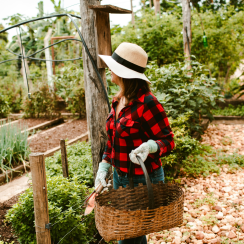
But here's what I want to say when my children talk about me in that careful, future-conditional tense: I'm right here. I'm not a ghost haunting my own life. I wake at 5:30 every morning and spend an hour journaling. I'm learning Italian through an app my granddaughter helped me download. I'm reading Elena Ferrante and Sally Rooney. I volunteer, I garden, I bake bread every Sunday. I'm falling in love with watercolors even though I'm terrible at them.
Understanding their fear doesn't make it easier
My mother lived to 89, spending her last three years in the fog of Alzheimer's. I watched her disappear by degrees, and I understand my children's fear. They're pre-grieving because they love me, because they want to prepare themselves for a loss that feels both inevitable and unbearable. They're trying to titrate their grief, administering it in small doses now so it won't overwhelm them later. I understand this. I did it with my own parents.
But understanding doesn't make it easier to bear when your son talks about your garden in past tense while you're actively planning next spring's plantings, or when your daughter keeps asking if you want to "downsize" from the home you love and can still maintain. Every conversation about the future includes the caveat "if you're still able," turning your ongoing existence into a question mark rather than an exclamation point.
I think about my grandmother, who lived to 94 and told me once that the hardest part of being old was becoming invisible, not to strangers, but to family. "They love me," she said, "but they love the idea of me. The real me, the one who still has opinions and desires and plans, that person makes them uncomfortable because she doesn't match their image of what a 94-year-old should be."
Pushing back against the narrative
I'm starting to understand what she meant. There's a version of me my family is comfortable with: the sweet grandmother who bakes cookies and tells stories about the old days. But the version who's learning Italian, who joined a hiking group, who's thinking about traveling solo to Rome next spring disrupts their narrative of my decline. When I mentioned the Rome trip, my son immediately offered to come with me, not as a companion but as a caretaker. The conversation shifted from my adventure to my limitations.
Last month, I attended my 50th high school reunion. Those of us who showed up were vibrant, funny, engaged. We talked about books and politics and travel. We laughed about our grandchildren and our aching joints with equal measure. Nobody pre-grieved anyone. We were all just present, alive, occupying our bodies and our stories without apology.
I've started pushing back, gently. When my daughter talks about "if" I make it to her daughter's high school graduation, I say "when." When my son suggests I might want to think about selling my house, I tell him I'm thinking about putting in raised garden beds instead. When they exchange those worried glances, I name what I see: "I'm old, not fragile. There's a difference."
Still becoming at 70
Because here's what I know at 70 that I didn't know at 40: Life is always conditional. We're all temporary. The difference is that at 70, I can't pretend otherwise. And that clarity, that keen awareness of time's passage, makes everything more vivid. The morning light through my kitchen window is more beautiful because I don't know how many more mornings I'll see it. My granddaughter's laugh is more precious because I understand how quickly childhood passes. The Italian subjunctive is more exciting to learn because learning it at 70 feels like rebellion against the narrative of decline.
The truth is, treating older people like they're already partially gone doesn't prepare us for loss. It just robs us of presence. I want to be celebrated while I'm here. I want to be included in plans without asterisks. I want my future discussed in hopeful tones, not careful ones. I want to be seen as someone still becoming, not just someone who has been.
Final thoughts
The hardest part of aging isn't what you lose. It's fighting to remain visible in your own life, to insist on your own presence when everyone around you is practicing for your absence. I'm still in the room, still planning to plant tomatoes next spring and learn the Italian subjunctive and maybe even take that trip to Rome. The sentence of my life doesn't have an expiration date yet. It's still being written, present tense, active voice. I'm not a memory in the making. I'm a person in the living. And I'd like to be treated as such while I'm still here, still part of the conversation, still very much alive.
What’s Your Plant-Powered Archetype?
Ever wonder what your everyday habits say about your deeper purpose—and how they ripple out to impact the planet?
This 90-second quiz reveals the plant-powered role you’re here to play, and the tiny shift that makes it even more powerful.
12 fun questions. Instant results. Surprisingly accurate.