She knows her daughter thinks she's lost in grief, but the truth is she's found the only way to make the unbearable silence of widowhood feel like a choice rather than a sentence.

Add VegOut to your Google News feed. 
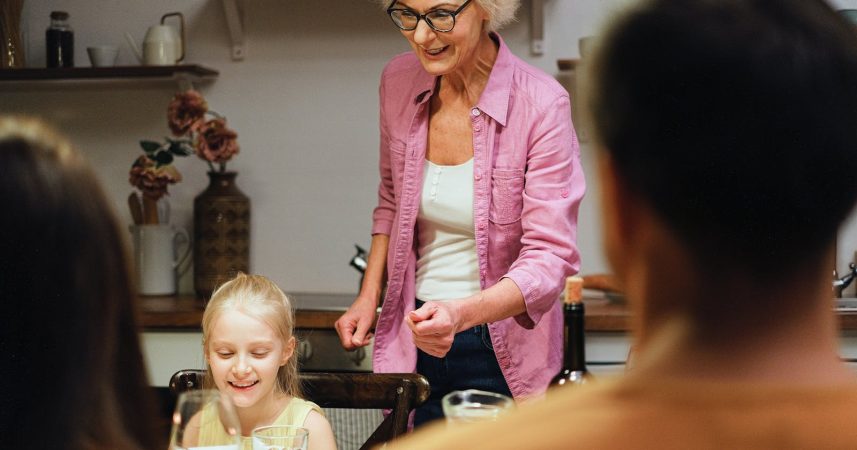
Every evening at 5:45, I pull two plates from the cabinet. Two sets of silverware. Two napkins. The routine is muscle memory now, carved into my bones by decades of marriage. The kitchen still smells faintly of the lavender sachets we tucked into drawers years ago, mixed with tonight's soup simmering on the stove. My hands know exactly where everything lives - the good forks on the left, everyday ones on the right, napkins folded just so.
I set my husband's place across from mine, same as always. The neighbors probably think I've lost my mind. My daughter certainly does.
The weight of an empty chair
"Mom, it's been two years," she says gently, as if I don't wake up every morning acutely aware of how many days have passed. As if the calendar doesn't mock me with its relentless forward march, each page turned another month without him.
I know he's gone. Believe me, I know. I was there for every moment of his decline, watching Parkinson's steal him piece by piece. First his steadiness, then his voice, then his ability to do the simplest things - buttoning a shirt, holding a coffee cup steady. When the doctor said "end-stage," I nodded like I understood, but you never really understand until you're helping your husband with everything, and he's looking at you with eyes full of apology for something that was never his fault.
But this isn't about forgetting. This is about something else entirely.
You don't realize how much noise two people make just existing together until one of them stops. The gentle percussion of shared meals - the soft clink of his spoon stirring sugar into coffee, the way he'd tap his knife against the plate while thinking, the rustle of reaching for the salt. These sounds formed the soundtrack of our life, so ordinary I never thought to memorize them.
The first time I ate alone after his funeral, I sat at our kitchen table with a single plate of leftover casserole. The scrape of my fork against ceramic sounded like fingernails on a chalkboard in that silence. It announced to the empty room: You are alone now. This is your life.
Learning the language of loss
I tried everything those first months. Eating in front of the television, where canned laughter could fill the void. Taking meals outside where birds provided nature's commentary. Playing jazz albums during dinner - the ones he loved, though they just made me cry into my soup. I even tried sitting in different chairs around the table, as if changing my position could change my reality.
Nothing helped. The absence of his presence was louder than any distraction I could create.
Six months after he died, I started setting his place again. Not because I was delusional or stuck in denial, but because it made the silence feel chosen rather than imposed. An empty place setting suggests someone has just stepped away - maybe to answer the phone or check on something in the oven. They'll be right back. Any minute now.
My friend Martha understands. She's been widowed five years and still makes coffee for two every morning, pouring the extra cup down the drain. "It's not crazy," she told me over lunch last month. "It's survival. We do what we need to do."
We all find ways to soften the edges of absence. Some people keep their spouse's voicemail greeting active just to hear their voice. Others sleep on their partner's side of the bed or wear their cologne. I set a table for two and eat my dinner for one, and somehow the math of loss feels less absolute.
The difference between leaving and being taken
During my 32 years teaching high school English, I watched teenagers create elaborate coping mechanisms for their pain. The girl who wrote fantasy stories during math class, escaping into worlds where she had control. The boy who wore his father's too-big jacket every day after his dad left. We judge these behaviors as unhealthy, but sometimes they're just bridges across impossible gaps.
I understand this deeply. When my first husband walked out - just left one Tuesday afternoon without warning - I was suddenly alone with two small children. I kept setting out three bowls for breakfast even though my five-year-old son would only eat toast. Three bowls meant we were still a complete family, just temporarily reorganized.
That was different, though. That was about anger and abandonment, about someone who chose to leave. This grief I carry now has a different texture. My second husband didn't choose to go. Disease took him in increments, but his essence - the thing that made him himself - stayed until his final breath. Even when words failed him, he'd still try to make me laugh with his eyebrows, doing this silly wiggle he'd perfected over the years.
Finding love after loss
I met him at a charity auction when I was 40, twelve years into single parenthood. I accidentally outbid him on a weekend getaway I didn't even want - I was just trying to drive up the price for charity. He kept bidding, I kept raising my paddle out of stubbornness, and finally he let me win.
Afterward, he found me and said, "I hope you enjoy my anniversary trip." He'd been planning to surprise his late wife with it before cancer took her. We talked until the janitors kicked us out, two people who understood that hearts could break and still have room for more love.
It took three years before I introduced him to my children. By then, my son was 20, my daughter 17, old enough to understand that my happiness didn't diminish my love for them. He won them over quietly, consistently. Fixed my son's car without being asked. Attended every one of my daughter's theater performances. Learned to make my mother's soup recipe when I had the flu.
We had 25 good years. Not perfect - we needed counseling in year five when old wounds from our first marriages surfaced. He could be stubborn about the silliest things. I could be too independent, too used to doing everything alone. But they were good years, full of Sunday crosswords and garden tomatoes and eventually, grandchildren's laughter.
The ritual of remembering
Now I have my evening ritual. I set two places. I serve my portion - usually something simple. I tell the empty chair about my day, about the peonies finally blooming, about the book I'm reading. About our granddaughter getting into college, about our grandson's first complete sentence.
Some nights, I argue with the empty chair. "You would have hated this movie," I'll say. Or "You were wrong about the neighbor - he's actually quite nice." It feels good to maintain our conversational patterns, the gentle back-and-forth that marriage becomes.
Last week, my granddaughter asked if she could have dinner with just me. At 19, she's studying to become a teacher, following in my footsteps. We sat at the table, her in her chair, me in mine, his place set between us.
"Tell me about Grandpa," she said. "Not the sick parts. The real parts."
So I told her. About the auction. About his terrible shower singing. About how he read every one of my students' essays I brought home, genuinely interested in teenage thoughts. About the apple tree he planted because I mentioned once missing the ones from my childhood.
"Do you think you'll ever stop setting his place?" she asked.
I really considered it. "Maybe. When the sound of one fork on one plate stops being the loneliest sound in the world."
She understood in that way young people can understand things they haven't lived yet. When we cleared the table together - all three settings - it didn't feel like erasing him. It felt like teaching her something about love, about how it continues.
Final thoughts
Tomorrow night, I'll set two places again. Not because I forget he's gone, but because I remember he was here. The neighbors can think what they want. This is what love looks like at 70 - a table set for two, a meal for one, and a heart that refuses to let go. Not out of weakness, but out of strength. The strength to hold absence and presence together, to find comfort in ritual, to choose the shape of my own grief.