Seven decades of conditioning crumble in a single moment at a bank counter, where a young cashier's simple question — "Why are you apologizing?" — exposes the invisible prison built by a generation that taught us feelings were flaws to be fixed, not truths to be honored.

Add VegOut to your Google News feed. 
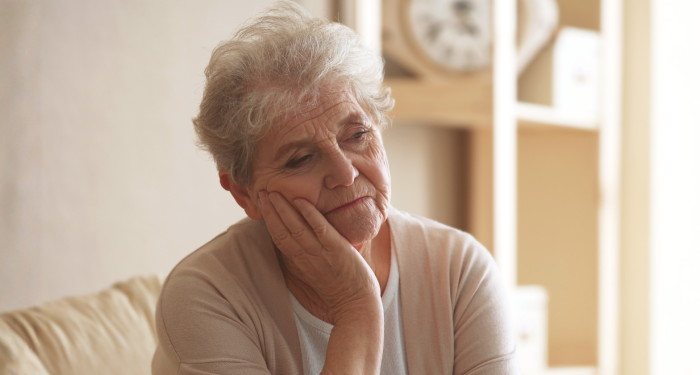
Last week, I found myself apologizing to the cashier at the bank for tearing up while discussing my late husband's account closure. "I'm so sorry," I said, dabbing at my eyes with a tissue. "I don't know why I'm being so emotional about paperwork."
She looked at me with genuine confusion. "Why are you apologizing? You lost someone you love."
Her simple question stopped me cold. At seventy, I was still doing what I'd been trained to do since childhood: treating my emotions like an embarrassing bodily function that should never happen in public. The realization hit me harder than the grief itself.
The lessons that shaped a generation
Growing up in the 1950s meant learning that feelings were something to manage, not express. My father, who worked double shifts at the steel mill, had exactly two acceptable emotional states: exhausted or quietly content. My mother, raising five children on a shoestring budget, would say "crying doesn't cook dinner" whenever one of us got upset.
In our house, emotions had a hierarchy. Anger was "unladylike," sadness was "wallowing," fear was "being dramatic," and even excessive happiness was "showing off." By the time I turned ten, I'd mastered the art of the pleasant smile, the reassuring "I'm fine," the quick swallow of tears before they could fall.
This wasn't cruelty. This was survival. My parents had lived through the Depression and a world war. They believed that emotional control was a form of protection, a shield against a world that could turn brutal without warning. They were teaching us what had kept them alive: how to endure.
The cost of constant apologies
For decades, this training seemed like a superpower. When my first marriage fell apart at thirty-two, leaving me with three young children, I didn't fall apart. I got a second job. When breast cancer struck at fifty-four, I scheduled my chemotherapy around parent-teacher conferences. I was the teacher colleagues called "unflappable," the friend everyone turned to in crisis because I never seemed to have any of my own.
But here's what happens when you spend sixty years apologizing for your emotions: the apologies burrow into your bones. They become reflexive, automatic. "Sorry for crying." "Sorry for being upset." "Sorry for taking up your time with my problems." Sorry, sorry, sorry, until the word loses meaning but never loses its power to diminish you.
I started noticing it everywhere. The way I'd add "but I'm probably overreacting" to every concern. How I'd follow any expression of need with "but it's really not a big deal." The automatic "I'm fine" that came out even when I was drowning.
When the dam finally breaks
My awakening came gradually, then all at once. It started in my sixties when I began therapy after my second husband's Parkinson's diagnosis. My therapist, young enough to be my daughter, would stop me constantly. "You just apologized for feeling angry that your husband can't remember your anniversary," she'd point out. "Why?"
I couldn't answer. The apology had come so automatically that I hadn't even noticed it.
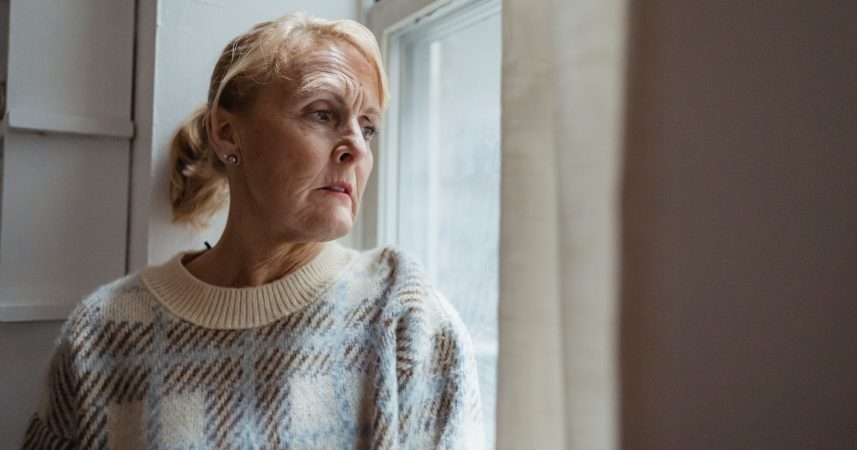
Then came the pandemic, my husband's death, and suddenly I was alone for the first time in forty years. Without anyone to perform "fine" for, the emotions I'd been filing away for decades came flooding out. Grief, yes, but also rage at old injustices, fear I'd never acknowledged, even joy I'd tamped down as "too much."
I cried for three days straight after finding a box of love letters from my first husband. Not because I wanted him back, but because I'd never let myself properly grieve that loss when it happened. I screamed into a pillow when I remembered how my principal in 1987 had tried to push me into early retirement. I laughed until my sides hurt watching old comedy shows, something I'd always considered "undignified" before.
Learning from the next generations
My grandchildren are my greatest teachers in this late-life emotional education. They feel everything with their whole bodies. When they're happy, they vibrate with it. When they're sad, they collapse into it completely. When they're angry, the whole neighborhood knows.
Last month, my ten-year-old granddaughter called me crying because her best friend had moved away. "I know it's silly," she started to say, and I heard my own training beginning in her voice.
"No," I said firmly. "It's not silly. It's sad when people we love leave. Cry as much as you need to."
The surprise in her voice broke my heart. "Really?"
Really. Because what I've learned at seventy is that the emotions we push down don't disappear. They calcify. They turn into headaches and insomnia and that tight feeling in your chest that never quite goes away. They become the arthritis that no doctor can explain, the anxiety that appears from nowhere, the depression that feels like weather.
The freedom in feeling
I'm not saying I've become someone who emotes at the drop of a hat. Seventy years of training doesn't disappear overnight. But I'm practicing. In my widow's support group, we actually celebrate when someone cries without apologizing. We cheer when someone expresses anger without immediately softening it. We're all relearning how to be human beings instead of emotional contortionists.
Last week, I laughed so loud in a restaurant that people turned to look. My first instinct was to apologize, to shrink, to contain myself. Instead, I kept laughing. My friend had told a story about accidentally dyeing her hair green, and it was genuinely hilarious. Why should I apologize for finding joy?
Yesterday, I told my doctor I was scared about an upcoming procedure. Just "I'm scared," not "I'm scared but I know I'm being silly" or "I'm scared but I'm sure it's fine." She thanked me for being honest, said fear was completely normal, and spent extra time explaining everything. Who knew that admitting feelings could actually lead to better care?
Final thoughts
At seventy, I'm finally understanding that the generation who raised me did the best they could with the tools they had. They taught us to suppress emotions because they believed it would protect us. But we're living in a different world now, one where emotional honesty is strength, not weakness.
I still catch myself mid-apology sometimes. Old habits die hard, especially ones etched so deeply. But more and more, I'm stopping before the "sorry" escapes. I'm learning to say "I'm sad" or "I'm angry" or "I'm frustrated" without cushioning it for everyone else's comfort.
To anyone else who grew up learning that feelings were meant to be outgrown by age ten: it's not too late to unlearn this lesson. Your emotions aren't character flaws or childish impulses. They're your truth, your response to a life fully lived. And that's nothing to apologize for.