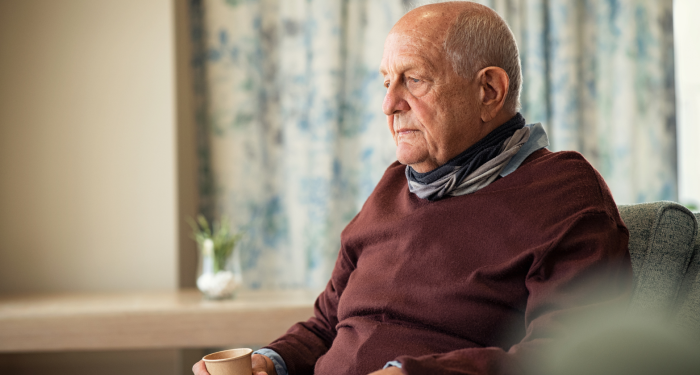
For thirty-eight years, I was the glue that held my family's Easter together—until the year I didn't cook, didn't call, didn't show up, and discovered that not a single person in my family of thirty-five noticed I was gone.

Add VegOut to your Google News feed. 
Last spring, I stood in my kitchen at 5 AM on Holy Saturday, the way I had for thirty-eight years, and realized I couldn't remember why I was there. The muscle memory of my hands reached for the drawer where I kept my planning notebook, the one with sticky notes marking dietary restrictions and seating charts. But instead of opening it, I just stood there, watching the sunrise paint my countertops gold, and felt something I hadn't felt in nearly four decades: the possibility of not doing this at all.
The Easter table had become my identity somewhere along the way. Not all at once, but slowly, like gaining weight or losing hearing – so gradually that you don't notice until one day you can't button your favorite coat or everyone seems to be mumbling. I'd become "the one who hosts Easter," as fixed in my role as the ham in the center of the table.
When tradition becomes invisible labor
I started hosting Easter dinner in 1985, the year after my divorce, when I was determined to prove that our broken family could still create whole traditions. Just me, seven-year-old Daniel, and four-year-old Grace around a table meant for six, with enough food for twelve because I hadn't yet learned to cook for three. My hands shook as I carved the ham that first year, but Daniel said, "Good job, Mom," and I knew we'd be okay.
What began as an act of defiance against circumstance evolved into something else entirely. Each year, the table grew. My parents drove down from Pennsylvania with their pyrex dishes. My sisters joined with their families. When I married Robert in 1998, his adult children joined us, polite strangers who eventually became family over shared meals and inside jokes about my tendency to burn the rolls.
By 2015, we were up to thirty-two people. I kept a notebook with everyone's dietary restrictions, which grandchild was going through a phase where they'd only eat white foods, who needed strategic seating arrangements. Robert would start helping me cook three days ahead, his Parkinson's making his movements slower but his seasoning still perfect. "We're feeding an army," he'd say, but I'd catch him smiling as he counted place settings.
The thing about invisible labor is that it's only invisible to those who aren't doing it. To me, Easter dinner was three weeks of planning, a week of shopping, three days of cooking, and a full day of recovery. To everyone else, it was simply what happened at my house every spring, as reliable as the daffodils.
The year everything changed without changing
After Robert died in 2020, everyone insisted I shouldn't cook that first Easter alone. But I needed the ritual, the meditation of peeling potatoes, the distraction of timing everything perfectly. Twenty-eight showed up that year, and my daughter-in-law whispered, "We're here for you," as if my grief was the guest of honor.
By Easter 2022, all thirty-five of them packed into my house, louder than ever, as if volume could make up for lost time. My knees, both replaced by then, screamed as I carried platter after platter from kitchen to table. This was what I did. Who I was. The keeper of traditions, the one who held everyone together with gravy and determination.
But last spring, something shifted. The arthritis in my hands had gotten worse, and the thought of peeling forty pounds of potatoes made me want to cry. The weeks of planning, shopping, cooking – it all felt like a mountain I no longer wanted to climb.
So I didn't.
I didn't send my usual email in February asking about dietary updates. I didn't order the ham from the butcher. I didn't borrow the church chairs or polish the silver that Robert's mother had passed down to us. Instead, I booked myself a room at a small inn two hours away, one with a garden view and a restaurant that served lamb on Easter Sunday.
The silence that speaks volumes
Have you ever waited for something that never comes? Not in the dramatic sense of waiting for test results or a phone call about a job, but in the quiet way of expecting acknowledgment for something you've always done?
I waited for someone to notice. Surely by March, someone would text about the menu. Grace might call to claim her traditional green bean casserole assignment. The grandchildren would ask if I was making my coconut cake. March passed in silence. By early April, I was certain someone would check in. I even cleaned the house just in case, bought a few extra groceries, pressed one good tablecloth.
Nothing.
On Palm Sunday, I sat through church waiting for someone to ask about Easter plans. Several families discussed their gatherings, and when Martha Patterson said, "Thirty-eight years running!" admiringly, I didn't correct her.
Easter morning arrived gray and drizzling. At the inn, I ate breakfast alone, watching a family with young children try to keep their toddler from grabbing everything on the buffet. The lunch service was elegant – lamb with rosemary, roasted vegetables, a delicate lemon tart. I ate slowly, savoring the novel experience of food I hadn't prepared.
My phone stayed silent all morning. By evening, the silence had transformed from anticipation to revelation. Not one person had wondered where I was. Not Daniel, who I'd taught to be thoughtful. Not Grace, who called every Sunday but apparently not this one. Not the grandchildren I'd helped raise, not the in-laws I'd welcomed, not the extended family I'd fed for decades.
Discovering you're not the glue you thought you were
When I returned home, my answering machine was empty except for political robocalls. It took until Tuesday for anyone to reach out, and that was Daniel calling about something unrelated. "How was your Easter?" I asked. "Oh, fine. Quiet. We just did Chinese takeout," he said.
Chinese takeout. After thirty-eight years, they ordered Chinese takeout and didn't even wonder why the tradition had stopped.
Grace finally called that Sunday for our weekly chat. "Easter was weird this year," she said, and my heart lifted slightly. But then: "Tom's mother insisted on ham instead of turkey. Can you believe it?"
I made sympathetic noises while staring at the empty spot where my dining room table had held thirty-eight years of celebrations. After the call, I sat in my garden until dark, thinking about all the ways we show up for each other, and all the ways we don't.
There's a peculiar freedom in discovering you're not as essential as you believed. All those years I thought I was the glue holding everyone together, when really I was just the restaurant they'd gotten used to frequenting. When it closed, they simply found somewhere else to eat.
Choosing yourself after choosing everyone else
This year, Easter is approaching again. I've already made plans to visit my college roommate. We're going to order room service and watch old movies and not cook a single thing. Yesterday, Daniel called to ask what time he should come over for Easter dinner, and I said, "Oh, I won't be here. I have plans."
The silence on his end lasted long enough for me to understand that he's beginning to understand. Finally, he said, "Should we plan something together before you go?"
"That would be nice," I said, and meant it. But this new thing will be different from those thirty-eight years of exhausting myself for tradition.
What I know now, at seventy, is that I spent decades feeding people who were happy to eat but never wondered about the cost of the meal – not financial, but the cost in time, energy, love poured out like wine that no one thought to savor. I confused being needed with being loved, confused exhaustion with devotion, confused tradition with connection.
That silence told me everything grace never could. It told me that sometimes the most important person to show up for is yourself. That sometimes the feast that matters most is the quiet meal eaten alone in peace. That sometimes love looks like letting go of what you thought held everything together, only to discover that nothing falls apart – it just rearranges itself without you at the center.
Final thoughts
This Easter, while my family figures out their new traditions, I'll be a thousand miles away, raising a glass to the woman who cooked for thirty-eight years straight, and to the woman who finally set down her apron and chose herself. Both of them are me, and both of them matter, but only one of them is free. If you've been the keeper of traditions in your family, ask yourself: are you hosting out of joy or obligation? The answer might surprise you, and that surprise might be the beginning of your own freedom.
What’s Your Plant-Powered Archetype?
Ever wonder what your everyday habits say about your deeper purpose—and how they ripple out to impact the planet?
This 90-second quiz reveals the plant-powered role you’re here to play, and the tiny shift that makes it even more powerful.
12 fun questions. Instant results. Surprisingly accurate.