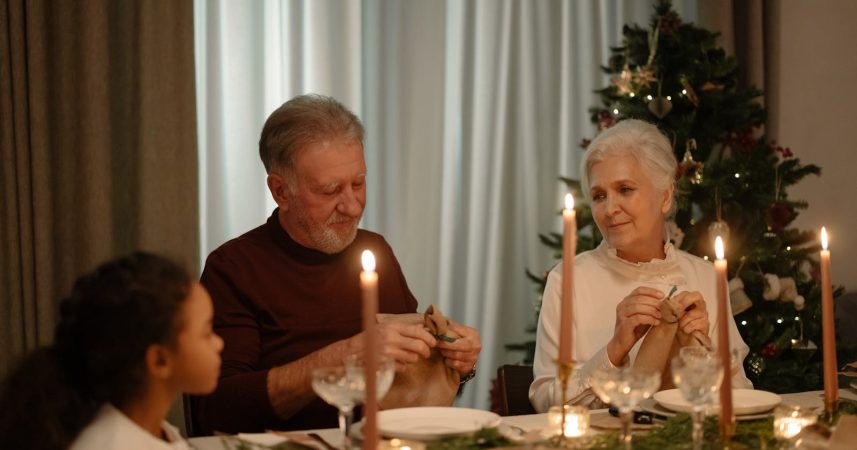
For nearly four decades, I transformed raw turkeys and family chaos into Christmas magic—until last year when I texted that I couldn't cook, and my children simply ordered takeout without asking why their indestructible mother had finally broken.

Add VegOut to your Google News feed. 
The smell of sage and onions still triggers something primal in me, even when I'm just walking past the spice aisle at the grocery store. It takes me back to all those December mornings when I'd wake before dawn, the house still sleeping, and begin the ritual that defined me for nearly four decades. The butter softening on the counter. The celery waiting to be chopped. The turkey, massive and expectant, demanding to be transformed into something worthy of memory.
For 37 years, that was my Christmas. Not the presents or the carols or even the laughter around the table. It was the weight of tradition resting on my shoulders, measured in pounds of potatoes peeled and hours spent standing on aching feet.
Last year, I broke that tradition. And not one person in my family asked if I was okay.
When tradition becomes invisible labor
Have you ever noticed how certain roles in families become so expected that they disappear? Like breathing or heartbeats, they only get attention when they stop.
I became the Christmas dinner person in 1986, the year my first marriage ended and I had something to prove. My children were young enough to believe in magic, and I was desperate enough to create it from scratch. That first solo Christmas, I cooked as if my life depended on it. Turkey with all the fixings, homemade rolls that took three rises, two kinds of pie because my son hated pumpkin but my daughter loved it.
The menu evolved over the years, but the expectation crystallized into stone. Mom cooks Christmas dinner. The sky is blue. Water is wet. These were the unchangeable facts of our family universe.
Through morning sickness that had me running to the bathroom between basting sessions. Through the chemotherapy that made me dread the smell of food but cook it anyway. Through my mother's final Christmas when dementia had taken everything except her certainty that no one made stuffing like her daughter. Through the progressive tremors that stole my second husband piece by piece until even holding a carving knife became impossible.
I adapted. I endured. I delivered.
What I didn't do was teach anyone to wonder what it cost me.
The fall that changed everything
Three weeks before Christmas last year, I was deadheading roses in my garden when I lost my balance. Nothing dramatic, just a 70-year-old woman meeting the ground harder than expected. The bruised ribs made themselves known immediately, sharp and insistent with every breath.
I sat there among the mulch and wondered if this was finally my exit ramp from decades of exhausting performance. The doctor confirmed nothing was broken, prescribed rest and pain medication, and probably assumed someone would take care of me.
When I texted my children that I couldn't manage Christmas dinner, their responses were swift and practical. My daughter Grace immediately pivoted to logistics. My son Daniel delegated to his wife. Problem solved. Christmas saved.
Neither asked what happened. Neither offered to come over. Neither wondered if their mother, who had cooked through cancer scares and grief and surgical recoveries, might need more than a quick text exchange.
The dinner that broke my heart
Christmas Day arrived gray and mild. I drove myself to Daniel's house, ribs still protesting, carrying a store-bought pie that felt like a white flag of surrender. My daughter-in-law Hannah had assembled a meal from the grocery store's pre-made section. The turkey was the kind that comes pre-sliced in a foil pan. The mashed potatoes had that peculiar uniformity that screams "just add water." Even the gravy came from a jar.
My grandchildren treated dinner like an interruption from their phones. Grace spent the entire meal negotiating with her eight-year-old about vegetables. Daniel and his boys discussed hockey statistics as if the playoffs were tomorrow instead of months away.
"This is so nice," Grace said at one point, not looking at me. "We should do this every year. So much less stress."
Less stress. As if my 37 years of creating Christmas from scratch had been some kind of recreational choice, like taking up watercolors or learning the ukulele.
I wanted to tell them about the Christmas when their father had just left and I had $47 to make magic happen, how I'd made a feast from creativity and food bank donations. About the year I worked doubles all through December to afford the exact toys they'd circled in catalogs. About standing in my kitchen at midnight on Christmas Eve, icing cookies with hands so tired they shook, because traditions matter when everything else is falling apart.
Instead, I smiled and complimented the store-bought cranberry sauce that tasted like colored sugar.
Learning to matter beyond the menu
After dinner, I found myself alone in their living room while everyone scattered to their separate screens and conversations. My granddaughter sat with me for exactly long enough to be polite before escaping to her boyfriend's family. No one asked about the novel I'd started writing. No one wondered how I was managing the holidays without my husband. No one noticed I'd lost fifteen pounds or that my hands shook slightly when I reached for my coffee.
I drove home to my empty house thinking about something I wrote in one of my previous posts about purpose after retirement. I'd written about finding new meaning when your primary roles end. What I hadn't anticipated was that some roles never end; they just become invisible.
That night, I sat with my journal and wrote a single question: "If I stopped showing up tomorrow, how long would it take for anyone to wonder why?"
The answer terrified me more than any diagnosis ever had.
Final thoughts
This year, I've already received the text: "Mom, what's the plan for Christmas dinner?" No inquiry about my health, my ribs, or my heart. Just the assumption that the machinery of tradition will continue running.
I haven't answered yet. I'm still deciding whether to tell them about the tears in their driveway last year, about the loneliness of being loved but not seen, about the difference between being needed and being known.
Or maybe I'll just send them a postcard from Rome, where I'll be eating someone else's cooking and remembering that I existed before I became everyone's soft place to land. Sometimes the greatest gift you can give your family is the chance to miss you enough to really see you when you return.